All posts by Keith Call

What Does Our Speech Reveal?

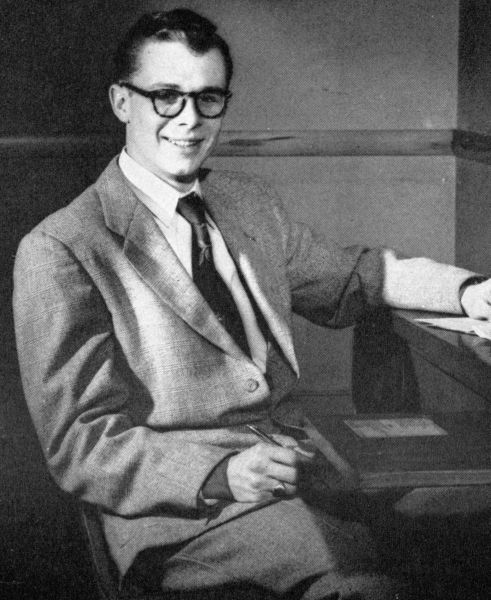
by Dr. Edwin A. Hollatz G.S. ’55
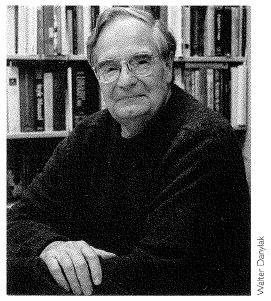
The Bible has much to say about human speech, about the way we use this wonderful gift that God has given us. This investment of creative expression through language is perhaps one dimension of the image of God imbued in the very nature of human beings, spoken of in Genesis 1-2.

It is this which lifts us from the level of the dumb brute and enables us to express not only what we think and feel, but who we really are. We can conceive of anything in words and images, with limitless possibilities of fact and fantasy. The panoply of literature throughout human history gives evidence of that which is most exalted as well as most debased.

During this past Christmas season we were reminded again of God’s supreme communication to us in His Son, Jesus Christ. The Apostle John, in Chapter 1 of his Gospel, speaks of Jesus Christ as the Word of God, which became flesh–a veritable transmutation of the eternal, divine, creative Word, now come in human form. That Word, full of grace and truth, has the power to redeem us, bringing light and life so that we might receive Him and become children of God.

As new creations in Christ, what about our words? How true and clear are their statements in revealing the character of the life of a follower of Jesus Christ? Are our words an adornment to the power of the gospel of Christ?

In Matthew’s Gospel, Peter twice denied being one of Jesus’ followers, even using and oath. But others standing by said, “Surely you are one of them; for your speech betrayeth you” (Matt. 26:73 KJV).

The Book of Judges relates another incident in which one is betrayed by one’s speech. The Gileadites could distinguish an Ephraimite if he mispronounced the word “Shibboleth.” If he said “Sibboleth,” he would be seized and killed (Judg. 12:5-6).

These two episodes from Scripture vividly portray how one’s speech accent may have unfortunate consequences. But at a more significant level, the “accent” provided by our manner of living can be crucial. Around 40 B.C. the Roman Publius Syrius said, “Speech is the mirror of the soul. As a man speaks so is he.”

Some 70 years later Christ said, “Out of the abundance of the heart the mouth speaks. The good person brings good things out of a good treasure, and the evil person brings evil things out of an evil treasure. I tell you, on the day of judgment you will have to give an account for every careless word you utter; for by your words you will be justified, and by your words you will be condemned” (Matt. 12:34-37, NRSV).

The Apostle Paul warns us, “Do not let any unwholesome talk come out of your mouths, but only what is helpful for building others up accordmg to their needs, that it may benefit those who listen” (Eph. 4:29, 31-32, NIV).

May the eloquent words of the old Anglican hymn be true of us as gifted human beings, created in the image of God:

God be in my heart,
and in my thinking;
God be in my head,
and in my understanding;

God be in my mouth,
and in my speaking.

———-

Twenty years ago, the Wheaton Alumni magazine began a series of articles, titled “On My Mind”, in which Wheaton faculty told about their thinking, their research, or their favorite books and people. Former Professor of Communications Emeritus, Edwin A. Hollatz ’55 (who taught at Wheaton from 1954-2000) was featured in the Winter 1998 issue.

Having worked at the College since 1955, Dr. Edwin A. Hollatz has taught speech, coached award-winning debate teams, served as faculty advisor to WETN radio, and helped establish the theater program. He has held offices in professional organizations, authored numerous journal articles, and been chosen for membership in several honorary societies. Dr. Hollatz is a frequent speaker at Wheaton Club meetings and received the Alumni Association’s 1993 Distinguished Service to Alma Mater Award. He and his wife, Joanne Simon Hollatz ’55, whom he met when Joanne joined Wheaton’s faculty, held their wedding reception in the Memorial Student Center. They are the parents of Cheryl Hollatz-Wisely ’85 and Celia Hollatz Bergman ’87.
Wheaton College and Global Warming

Oak Park, Illinois, located eight miles west of the Chicago Loop, is the home of notable contributors to national and world culture. For example, here lived novelist Ernest Hemingway, as did Edgar Rice Burroughs, creator of Tarzan and John Carter of Mars. Architect Frank Lloyd Wright designed several of his famous structures at his Oak Park studio; and James Dewar, inventor of the late, lamented Twinkie, resided amid the solace of its tree-lined avenues. Oak Park is also the childhood home of Dr. Wallace Broecker, who coined the now-ubiquitous phrase “global warming” in a 1975 essay titled “Climate Change: Are we on the brink of a pronounced global warming?”

As a child, Broecker attended Harrison Street church in Oak Park with his parents. The small assembly was led by T. Leonard Lewis, who would later serve as pastor of First Baptist Church of Hammond, Indiana, before serving as president of Gordon-Conwell Seminary in Masschussetts until his death in 1959.

Broecker, encouraged to attend Wheaton College because his neighborhood friend, “Ernie” Sandeen, enrolled, recalls campus mischief in Fixing Climate: What Past Climate Changes Reveal About the Current Threat – And How to Counter It (2008), written with Robert Kunzig:

It has a reputation as the Harvard of evangelical colleges, an ambitious but also a godly place, where students signed a pledge to adhere to the same set of rules that applied to Harrison Street…It was a serious place…and it seemed to force into full flower the most profoundly unserious aspect of Broecker’s character, one that can still be startling today to the uninitiated…At Wheaton the pranks got more elaborate. In his junior year he was business manager of the yearbook, which position of influence allowed him to sign excuses that got him and his friends out of daily chapel. It also got him a key to the attic of Blanchard Hall, where college memorabilia was stored. That October, Broecker discovered an unused door leading from the attic into the bell tower, which was off-limits to students; the custodian kept the main entrance carefully padlocked. At midnight on Halloween night Broecker, Sandeen and their roommates woke the campus with a loud tolling. When the custodian came racing into the bell tower, they exited through the attic and locked him in. He was forced to ring the bells again to summon the police. By the time the law arrived the Broecker gang had retreated to a ground-floor classroom. Broecker remembers vividly the flashlight beams coming through the windows and playing along the walls as he and his friends hugged the floor, out of sight.

Broecker offers an interesting perspective on the 1951 revival…and his subsequent drift from Evangelical Christianity:

In addition to going to chapel every day, Wheaton students were required to spend a week every year rededicating themselves to Christ under the guidance of a visiting preacher. That year the event took an extraordinary turn – it became a mass public confession. For three days and nights students lined up in the choir loft and behind the pulpit, waiting for their chance to proclaim their sins. The pressure to participate was intense. Broecker sat there in turmoil, brooding more seriously than he had ever brooded over anything. He certainly had sins – violations of the Wheaton pledge, for instance, that went beyond dancing. (He has never liked dancing.) But he knew some of of the people who were confessing, and he knew they weren’t being honest. They were holding back on the juicy stuff. The hypocrisy of the whole spectacle revolted him – people were pretending to believe in rules they couldn’t really live by, and then pretending to confess their violations of those rules. Hypocrisy and dishonesty, Broecker realized, were the sins he could least abide. That day in chapel, he slipped the fragile line that had tied him to the Rock.

Moving into the field of scientific research, Broecker found a substitute:

[Science] is the belief that if we observe the world carefully, test our ideas skeptically, and communicate honestly, we can figure things out. That summer of 1952, Broecker was converted to science. In time he would come to think of it as something sacred.

Wallace S. Broecker attended Wheaton College for three years before transferring to Columbia where he graduated. He is the Newberry Professor of Earth and Environmental Sciences at Columbia University. In 2006 he received the Crafoord Prize in Geosciences.

Thankful for the Thorns

by Dr. Cynthia Jones Neal

How easy it is to forget to be thankful for suffering and weakness. We are so often more thankful for the good things, the comforts in life, things that go well. But the weaknesses and sorrows ought to be received with thankfulness, for the weaknesses point us to God, reminding us of how much we need God’s amazing and sufficient grace.

Paul wrote in 2 Cor. 12:5-10 that the thorn in his side reminded him of God’s grace. What was it that would remind him of his weakness and need for God?

Paul was caught up into Paradise and heard that which no mortal is permitted to repeat. He had reason to boast, but a thorn reminded him of his particular weakness. Perhaps that thorn was the painful awareness that he had killed Christians. Living with the horror that he had murdered, especially those who loved Christ, must have been a terrible sorrow, one Paul would live with the rest of his life.

In my own life, weakness and needs have been hard to recognize and acknowledge. Suffering just was not in the script, at least the script that I wrote. God has had a different script for me, however, one that includes suffering and sorrow and reminds me of the many ways I hold onto idolatries and false supports rather than seek His holy will.

Remember the journey of Much-Afraid (Hinds’ Feet on High Places by Hannah Hurnard) as she faced her fears and began to follow the great shepherd. The first step in her journey, however, required her to take the hands of her companions, Sorrow and Suffering. Only as she journeyed with these companions would she be transformed, able to receive a new name along with the feet that would enable her to prance on the mountain with the shepherd. Through many trials and travails, Much-Afraid received new feet and a new name, Grace and Glory. Sorrow became Joy, and Suffering became Peace. How many of us look for our new names as we enter our journeys? In Rev. 2:17b, God says, “To everyone who conquers I will give some of the hidden manna, and I will give a white stone, and on the white stone is written a new name that no one knows except the one who receives it.”

One final thought comes from Henri Nouwen’s book, The Inner Voice of Love:

“The situation which brought about your pain was simply the form in which you came in touch with the human condition of suffering. Your pain is the concrete way in which you participate in the pain of humanity.

Paradoxically, therefore, healing means moving from your pain to the pain. When you keep focusing on the specific circumstances of your pain, you easily become angry, resentful, and even vindictive. You are inclined to do something about the externals of your pain in order to relieve it…But real healing comes from realizing that your own particular pain is a share in the humanity’s pain. That realization allows you to forgive your enemies and enter into a truly compassionate life.”

As I journey through this life, I hope to receive sorrows and suffering with greater thanksgiving, participating in the pain of humanity while awaiting my new name as I continue to look to God for His sufficient grace.

———-

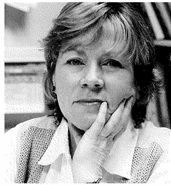
Twenty years ago, the Wheaton Alumni magazine began a series of articles, titled “On My Mind”, in which Wheaton faculty told about their thinking, their research, or their favorite books and people. Current Associate Professor of Psychology, Cynthia Neal Kimball (on faculty since 1990) was featured in the Winter 1999 issue.

The following statement was included at the time of publication:

Dr. Cynthia Jones Neal, chair of Wheaton’s psychology department, has been at the college since 1990. She received bachelor’s, master’s and doctoral degrees from the University of New Mexico. Her work has been published in several professional journals, including Personality and Social Psychology, and Merrill-Palmer Quarterly. She also co-authored chapters in Vygotsky and Education and A New Vision for Welfare Reform and Nurture That Is Christian: Developmental Perspectives on Christian Education. Dr. Neal received Wheaton’s Junior Teacher of the Year Award in 1990.

Two Hopes

Twenty years ago, the Wheaton Alumni magazine began a series of articles, titled “On My Mind”, in which Wheaton faculty told about their thinking, their research, or their favorite books and people. Former Professor of Education Richard Turner (who taught at Wheaton from 1981-1994) was featured in the Winter 1994 issue.

It was as a high school student that I first heard of Wheaton College. In a magazine called Christian Life and Times I found articles written by people from all walks of life–pastors, housewives, missionaries, medical personnel–diverse both in occupation and in theological perspective within a broad Christian context. They loved the Lord and articulated this eloquently. Many of the biographical notes declared they were graduates of Wheaton College. I decided if Wheaton College graduated Christians of such quality, Wheaton was where I wanted to attend college.

After four years in the Air Force, and as a married student at Wheaton College and Graduate School in the fifties, I studied with professors who had both academic rigor and a Christian graciousness. Kantzer, Tenney, Mickelsen, Holmes, and Hawthorne taught their students to think critically and fairly at issues where there was disagreement. Cairns taught us to look at cultures through history. Taylor and Buswell taught us to look at cultures in various areas of this earth. Wheaton College provided us with a wonderfully broad, rather than provincial, outlook on the world.

Following more than twenty years as a teacher and principal in local schools, I returned to teach in the department of education. I have found that academic rigor and Christian graciousness are still alive and well at Wheaton College, along with the same reverence toward Scripture and willingness to look at issues openly, critically, and fairly.

As I retire from Wheaton at the end of this college year, I have two hopes. One is that more people of color will be both attracted to the College and made to feel welcome. Having spent most of my military time in Asia and the last twenty-five years attending and inner-city church, I have appreciated the diversity of God’s people. About the turn of the century, ninety percent of the world’s Christians were said to be white and western. In the nineties over half are said to be people of color.

Wheaton has a rich heritage in students who have lived in other countries, primarily as missionary kids. They add to the multicolored mosaic known as the body of Christ. But they are mainly white and western. Only about ten percent of the Wheaton student body come from a different racial or ethnic background. Without more of this type of diversity our students are deprived of the full richness that God’s people have to offer. The College has attempting [sic] to attract those of various backgrounds to come as students, staff, and faculty.

A second hope is that Wheaton will maintain a balance in attracting students from and preparing students for both private and public schools. Much has been written in recent years denigrating the public schools of this country. Conditions in the schools do mirror conditions in society. This is often true in private Christian schools as well as in public schools. The difference I have observed between Christian and secular school students is that Christian school students know more Bible content than Christian students in public schools. There seems to be little difference in behavior. Since eighty to ninety percent of American’s youth attend public schools we have an obligation to them. There are many Christian teachers in the public schools who by their lives are influencing America’s youth and our society in general. The public schools are just as much a mission field as an overseas destination. God will call some to public schools. We should be obedient to his call.

———-

The following statement was included at the time of publication:

Dr. Richard Turner ’52 received his B.A. in Bible from Wheaton, his M.A. in theology from the Wheaton Graduate School, and his C.A.S. and Ed.D. from Northern Illinois University. He has served as chair of Wheaton’s department of education since 1981. He was a principal in Wheaton public schools from 1969-81 and a teacher in Glen Ellyn and Wheaton schools from 1960-69. From 1948-52 he worked in air traffic control for the U.S. Air Force. He and his wife, Connie, live in Wheaton and have three children and three grandchildren.

Blessed are the Merciful

by Dr. Zondra Lindblade ’55

The great blue heron is perfectly camouflaged against the lakeshore pines. The green caterpillar is protectively colored on the begonia leaf. Camouflaged treasures are everywhere, but experienced northwoods eyes see beyond the pines and begonias to recognize the disguised.

In many ways, a “sociological imagination” resembles northwoods eyes and wilderness expediency. The imagination first examines obvious features of how we live together in families, corporations, and in society, and then probes beneath the surface to “see” camouflaged functions and meanings. What is camouflaged often surprises and sometimes contradicts conventional wisdom.

The sociological imagination is a filter, a directional lens that focuses on the obvious and hidden human experiences. Once awakened to the reality of groups being more than the sum of individual parts, the filter questions and educates the illusive realities that question “what everyone knows.”

For some time the issues of social welfare reform have occupied our “imagination.” These stimuli have opened my eyes and heart to a particular phrase in Micah 6:8.The call to “do justice” in this verse is resounding for sociologists who study cause and effect of social stratification, stigmatized education, or inner-city miseries. These are vacuous academic activities if there is no heart cry for justice. God’s command in Micah 6 to do justice is daunting.

In the next phrase, God requires believers to actually love mercy. A desire for justice may overlook and camouflage God’s compelling love for mercy. Mercy is assistance given to those who do not deserve help–or who think they do not. Mercy is a reflection of God’s character (Ps. 69:16) and part of His plan for repentance (Rom. 2:4).

What does it mean–to love mercy? Discussions of welfare reform usually ignore the priority God places on mercy. Do we consider mercy nalve, ill-informed, and shortsighted because mercy is offered before merit? Mercy does not consider independent responsibility as a first–order priority. Do we focus on eradicating dependency and setting the welfare mother on is both fulfilling to her and good for society? Are we occupied with making sure that sinful choices bring hard consequences? Are we slow to persevere when lessons experienced are not learned, when positive change is one step forward followed by four steps back?

Mercy may well invoke a “reckless advocacy” for the marginalized and undeserving. Mercy might offer help with no questions asked or answers expected. The example of the Savior is strong and convincing. He is a reckless advocate who “while we were yet sinners died for us.”

In my 34 years of teaching, occasionally there have been undeserving Wheaton students who have requested academic mercy from me. I have found that the students who received that mercy remember this help with greater appreciation than most of the assignments diligently pursued. And mercy remembered is often mercy later given.

———-

Twenty years ago, the Wheaton Alumni magazine began a series of articles, titled “On My Mind”, in which Wheaton faculty told about their thinking, their research, or their favorite books and people. Former Professor of Sociology Emerita, Zondra Gale Lindblade Swanson ’55 (who taught at Wheaton from 1964-1998) was featured in the Autumn 1998 issue. Dr. Lindblade was former department chair and retired in May 1998 after serving the College for more than 34 years.


Dr. C. Everett Koop and Wheaton College

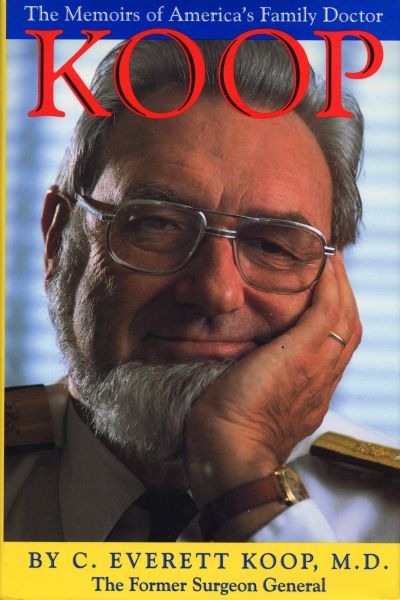
Dr. Charles Everett Koop, former Surgeon General of the United States, died on February 25, 2013, at age 96. Sporting a crisp, double-breasted military uniform, Amish beard and stern aspect, he was an instantly recognizable father-figure during the 1980s, his expert eye continually examining the health trends of the nation. President Ronald Reagan, recognizing Koop’s extraordinary accomplishments in the field of pediatric medicine, appointed him as Surgeon General in 1982. Koop was affiliated with the Children’s Hospital of Philadelphia.

An outspoken Christian, Koop relates the circumstances of his 1948 conversion under the ministry of Dr. Donald Grey Barnhouse, pastor of Tenth Presbyterian Church of Philadelphia:

The next Sunday…I finished grand rounds early, and found my feet taking me to Tenth Presbyterian Church, just a few blocks north of the hospital. I entered a back door and quietly slipped up to the balcony. I was just going to observe. I liked what I saw, and I was fascinated by what I heard….I heard teaching from one of the most learned men I ever knew, a true scholar who also possessed a gift of illustrating the complexity – and simplicity – of Christian doctrine by remarkable and incisive stories and similes….I understood that we are all sinners, unable to satisfy God’s standard of righteousness and justice, no matter how hard we try….The preaching from the pulpit made it all clear: that the essence of Christianity was not what we did, but what Christ had done for us. I understood the meaning of the crucifixion, I understood the meaning of Christ’s sacrifice, I understood the meaning of divine forgiveness…Most of all, I understood the love of God….This spiritual awakening had a profound effect on my life and influenced everything that happened thereafter.

Interestingly, Tenth Presbyterian was later pastored by Dr. Philip Ryken, who resigned from its pulpit in 2010 to assume the presidency of Wheaton College, an institution with which Koop enjoyed friendly relations.

As a prominent evangelical engaged in societal issues, Koop, staunchly pro-life, was invited to deliver the address for the 1973 Wheaton College Commencement, during which his daughter, Betsy, graduated. He warned his audience about the disastrous consequences of Roe vs. Wade, predicting that laws will be ridiculous. Soon, he said, teens requiring permission for ear piercing would not need permission for abortions, which will become increasingly common. Also, this legislation will accelerate moral laxity; of course, unknown at the time, it paved the way for the onslaught of AIDS in the 1980s.

Returning to Edman Chapel at Wheaton College for a public forum in 1990, Koop spoke on “Ethical Issues Arising from the AIDS Epidemic.” Discussing challenges and opportunities, he asked, “What better evangelical target than the sick, the homeless, the abandoned and the despised?” As always, he advocated abstinence and monogamy. Throughout the 1990s Koop occasionally appeared on the Wheaton campus, usually in conjunction with events sponsored by the Center for Applied Christian Ethics (CACE).

During a 1989 interview, Christianity Today asked Koop about his famous beard. He replied: “…I grew the beard as a lark when I went with my son Norman to Israel for two weeks. The night before we came home he shaved off his beard and kept his moustache; I shaved off my moustache and kept my beard. We did it just to shock our families. A few days later, when I looked at a picture of myself taken…before I started growing a beard, I realized I had three chins! And I didn’t have them with a beard.”

In 2002 he visited campus for “An Evening with C. Everett Koop,” conducted by Wendy Murray Zoba, heard here.

The papers of Dr. C. Everett Koop (SC-58), comprising manuscripts and correspondence, are housed at Wheaton College Special Collections, available to researchers.

The Faith That Informs Learning

by Dr. Carl F.H. Henry ’38, M.A. ’41, Litt.D.’68

What earlier generations considered a noble evangelical endeavor–the integration of faith and learning–now easily deteriorates into an academic cliche that obscures essentials of the Christian view. Faith becomes a rubber word. It accommodates so many options that it readily invites the notion of faith in faith. It can embrace faith in Allah, faith in Buddha, or even faith in New Age, no less faith in Christ.

For some of its champions, integration need not involve an indispensably unique cognitive content but rather only an openness to reality that escapes rational exposition of the self- revealing God of the Bible. The emphasis on faith instead implies only the challenge of the transcendent, the necessity of religion, the advocacy of the nonrational, the priority of the paradoxical.

If faith is essentially a term of infinite nuances (and not necessarily of a fixed inherent meaning), the term “learning” similarly is laden with ambiguity. It is hardly a summary term for an unchanging body of knowledge, nor need Christians applaud it as the timeless wisdom of the ages. Moses was familiar with the learning of the Egyptians and Daniel with that of the Babylonians, but these biblical spokesmen hardly exalted this into universal truth to be “integrated” with the revelation of Yahweh.

Human learning is subject to ongoing revision and displacement. A science textbook only a decade old is now usually considered outdated, whereas the word of the Lord–so the inspired biblical writers insist–is fixed and final, and Jesus Christ is “the same yesterday, today, and forever” (Heb. 13:8).

Yet some contemporary religionists correlated Jesus Christ the God-man with faith and not with learning, and they internalize rather than objectify all specific religious claims.

The term “integration” raises an additional network of questions. Does it mean a correlation of data that is testable for logical consistency and validity, or simply an open-ended presentation of claims that can be reconciled only in some respects? Are logic and systematic consistency something alien to the Christian revelation? In recent years not a few professedly evangelical theologians have argued that one rationalizes and falsifies Christian truth if one aims to present it as a logically consistent world-life view.

Some mediating scholars emphasize that the Christian revelation must not be confused with the “eternal truths” affirmed by pantheistic and idealistic philosophers. That is assuredly the case. But when this is made to imply that Christian truth is not eternally true, one falls into costly error.

Even the fact that the gospel was temporally and historically revealed and was conveyed in a particular language does not imply that it is not eternally true. It is in fact true yesterday, today, and forever–eternally true–that Jesus’s crucifixion and third-day resurrection are integral to the divine redemption of sinners.

Some confusion over integration of faith and learning seems to have found its way even into Christian colleges and universities. As a consequence the very epistemological foundations of the Christian revelation are misstated or ignored. The unbroken authority of Scripture, that is, the inerrancy of the divinely inspired writings, is minimized or obscured.

Another example of this is the growing tendency to view the insistence of scriptural inerrancy as merely an evangelical distinctive instead of the bedrock of evangelical doctrine. Yet if the canon of Scripture includes erroneous teaching, the process of integration is frustrated since problematically unreliable Scripture cannot be logically correlated either with faith or learning.

Another consequence of affirming biblical errancy is that evangelical campuses are tempted to neglect, or even to avoid, formation of the Christian worldview; on the mistaken premise that this would involve an unjustifiable rationalization of the biblical revelation.

As a result Christian truth is formulated not alone in opposition to speculative philosophies, as is necessary, but regrettably also in opposition to an explicit evangelical world-life view predicated consistently on the teaching of Scripture. Sometimes this maneuver involves a substitution of natural law speculation for an explicitly biblical theology, the minimization of which has implications for the entirety of a revelatory system.

In any event, the epistemological foundations of Christian faith are endangered when Scripture teaching is neglected or considered problematical. In the biblical view; only if one begins with the knowledge of the self-revealing God does one become wise in the knowledge of life.

“The beginning of wisdom is connected with the fear of the Lord” (Prov. 9:10).

—–

The following statement was included at the time of publication in the Alumni Magazine (Autumn 1999):

Dr. Carl F.H. Henry was a Long Island newspaperman when he became a Christian in 1933. He is recognized as a foremost author, educator, lecturer, and theologian. He taught or lectured on college campuses throughout the United States and in countries on every continent. He has written 43 books, some translated into Japanese, Korean, Mandarin, Romanian, and Russian.

Cheap Doubt

On February 8, 2013, Clayton Keenon spoke in the Wheaton College Chapel on the subject of doubt. Twenty years ago, the Wheaton Alumni magazine began a series of articles, titled “On My Mind”, in which Wheaton faculty told about their thinking, their research, or their favorite books and people. Clyde S. Kilby Chair Professor of English Alan Jacobs (who has taught at Wheaton since 1984) was featured in the Summer 1996 issue and also wrote on the same subject of doubt.

——————————

Several years ago I came across a comment by Frederick Buechner that has stuck in my mind: “Doubts are the ants in the pants of faith. They keep it awake and moving.”

When I first read those words, I thought–how reassuring! Times of spiritual struggle are a lot easier to get through when you believe that God is working, not just despite them, but through them. And of course, I still believe that God is not only present, but present with special power in every kind of suffering, including the suffering that comes from doubt. The Apostle Paul tells us to “work out [our] salvation in fear and trembling” (Phil. 2:12), which suggests that the attainment of a living faith will be painful.

But I have come to reconsider Buechner’s words. If you were to ask me today what I think about his comment, I would say it all depends on what you mean by “doubt.”

Donald Bloesch has written a book called Faith and Its Counterfeits in which he describes substitutes for genuine Christian faith, for instance, legalism or formalism. Doubt too has its counterfeits–that is, surrogates that lack the integrity and the potential productivity of the real thing. Few spiritual temptations are more dangerous, and more insidiously attractive, than “cheap doubt.”

What is cheap doubt, and how does it differ from productive doubt? In my experiences as a teacher, talking to Christian students in and out of the classroom, I’ve seen both kinds, and I think that I’ve learned to distinguish them.

One day my class on seventeenth-century English literature was considering Sir Thomas Browne, who in his book Religio Medici (“The Faith of a Physician”) considers how doubts may be overcome. Browne’s ideas are strange, but they created an interesting discussion. After a few people had commented, one student raised his hand and asked, “Why would we want to overcome our doubts? If you’re doubting, then you’re thinking; if you’re not doubting, then you’re probably dead, spiritually and intellectually. Surely that’s not what God wants us to be.” At once I remembered Buechner’s words, and I was quick to acknowledge the value of this comment. But I was also a bit bothered, though only later did I figure out why: it was the implication (probably unintentional) that it is appropriate to remain in a state of doubt.

That doubt can be productive doesn’t make it desirable in itself. Doubt can only be useful if we contend against it. Real doubt hurts. Yes, it can spur us to prayer and study of the Scriptures. But there is also a cheap doubt that tends to bring a certain pleasure to its possessor–the pleasure of self-satisfaction, of confident spiritual superiority.

It’s easy to see how tempting this can be. If we see another Christian praying with an intensity and concentration that we cannot match, isn’t there some comfort in believing that she can be so earnest because she has never seriously considered the logical conundrums posed by petitionary prayer to a sovereign God? We doubt, we tell ourselves, because we have thought through these problems, these theological puzzles, and she hasn’t. But if our thinking about these matters leads us to pass confident judgment on the spiritual and intellectual condition of our fellow Christians, we are in real danger.

And even if that earnest prayer warrior is intellectually lazy, it’s not clear that intellectual arrogance is a superior condition, In fact, the doubts in which we take pride may themselves result from laziness–an unwillingness to confront doubts with reflection, Bible study, and prayer. The person who accepts doubts without challenge may be just as lazy as the person who pushes them aside without consideration.

Real doubt will indeed, as Buechner says, keep our faith alive, by forcing us to confront our own frailty. When we cannot, by our own power, silence the inner questioner, then we may be reminded to seek God’s will and to trust in his strength and grace. But if we come to accept our state of doubt, we may be cutting ourselves off from God’s sufficiency.

A Christian liberal arts education does not shy away from tough questions and complex issues; it will therefore always tend to produce doubts. But that makes it all the more imperative that we teachers emphasize also the importance of overcoming doubt and growing in faith. We need to remember the tone of frustration in Jesus’ voice when he tells his disciples of the great things they could do if they had a mustard seed’s portion of faith. We need to remember his astonished joy when the Roman centurion tells him, “You need only say the word and my servant will be cured. Nowhere in Israel have I found such faith” (Mt. 8:8,10). Doubt is part of the road; but it’s not our destination.

—–

The following statement was included at the time of publication:

Dr. Alan Jacobs, Associate Professor of English, is a staunch, true Southerner, having received his Ph.D. from the University of Virginia and his B A. from the University of Alabama. He has authored numerous essays and articles for academic and literary journals and magazines, including The American Scholar and First Things. Widely read and listened to, Dr. Jacobs is also a frequent contributor to Mars Hill, an audio cassette literary journal. Currently, he is completing a book on tile poet W. H. Auden, His interests and abilities are diverse, ranging from those of a well-informed scholar, to those of an aspiring basketball star, to those of a restaurant connoisseur. He and his wife, Teri, have one son, Wesley, age 4.

George McGovern and Wheaton College

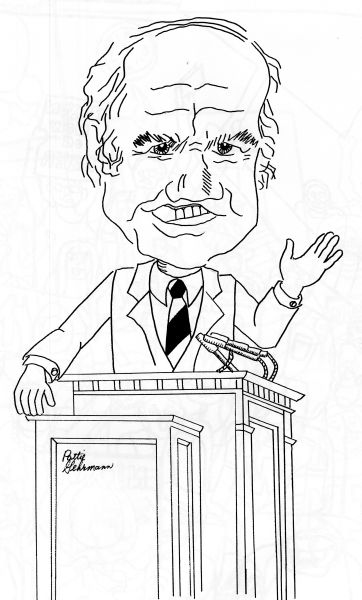
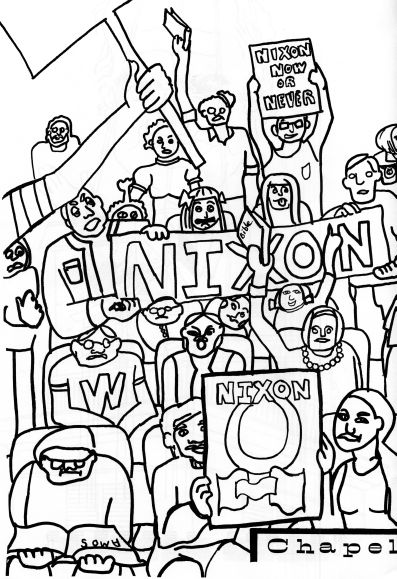
George McGovern, historian, senator and representative from South Dakota, died on October 21, 2012. Forty years ago, on October 11, 1972, he spoke at Wheaton College, a rather unlikely campaign stop for the Democratic presidential nominee against Republican Richard Nixon. The event was initially suggested by McGovern’s staff, asking for a venue in which he might engage Evangelicals. Activist Jim Wallis, attending Trinity Evangelical Divinity School, was asked to organize the senator’s visit, arranging a breakfast with prominent Christian leaders, in addition to an engagement at Wheaton College. “Actually,” writes Wallis, “the Wheaton Student Council, which issued the invitations to both candidates, accidentally switched the letters, sending Nixon’s by mistake to McGovern.” However, only McGovern accepted. A quiet man raised in a devout Methodist family, McGovern soon found himself in the pulpit of Edman Chapel, standing before an atypically divided house. A few supportive students cheered his unpopular anti-Vietnam War position, but many more booed, waving pro-Nixon banners.
Wallis had asked black evangelist Tom Skinner to introduce McGovern:

…Skinner…was a strong supporter of the senator and also, remember, I was banned from speaking at Wheaton. In an embarrassing moment, the students almost booed Skinner off the stage. McGovern’s aides were astonished. When the senator finally came out, the Wheaton students booed him too — a candidate for President of the Unites States.

Despite a rude reception from this portion of the campus community, McGovern calmed the noise, speaking knowledgeably and even charmingly, stating that he had once considered attending Wheaton College, but did not because his family could not afford it. Wallis recalls: “McGovern then…gave a speech that was perhaps the best I have ever heard about the relationship between Christians values and public life.”

The speech is heard here.

Wallis also remembers:

…a question McGovern got from an aggressive professor of Christian apologetics who asked the senator how somebody who attended the liberal Garrett Theological Seminary could have an adequate view of the fallen state of human nature. McGovern surprised the evangelical leaders by giving a theologically knowledgeable and biblically balanced exegesis of the Apostle Paul’s view of the human condition and then ended with a joke that broke up the house: “So because I don’t fully subscribe to the theology of complete human depravity and because Richard Nixon practices it, you’re going to vote for him?”

According to English professor Paul Bechtel, “Challenging ideas were set before the students with conviction, with charitable fairness, with no evidence of hollow political cliches.” Alas, McGovern lost the election with 17 electoral votes against Nixon’s 520. McGovern’s books include Abraham Lincoln (2008) and What It Means to Be a Democrat (2011).

Jim Wallis’s essay, “The George McGovern I Remember,” is published in the October 25, 2012, online edition of Sojourners: Faith in Action for Social Justice. The papers of Jim Wallis (SC-109) and Sojourners (SC-23) are housed in the Wheaton College Special Collections, available to researchers.

The cartoons are scanned from Coloring Book of Wheaton College, Spring 1973.

Three Cheers for Prexy

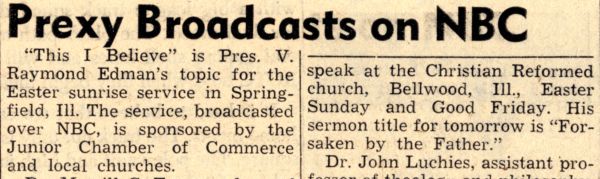
Since its origin in 1855-60, the word “prexy,” representing a shortened term for “president,” was invoked for decades by students on American college campuses as a term of endearment for their administrative leader. At Wheaton College the term was applied to presidents Charles Blanchard, J. Oliver Buswell and, most familiarly, V. Raymond Edman. While visiting campus for reunions, generations of older Wheaton College alumni happily swap stories, often casually referring to the piety and dedication of their beloved prexy, not needing to explain his identity. Interestingly, “prexy” is not applied to subsequent presidents Hudson Armerding, Richard Chase, Duane Litfin or Philip Ryken, perhaps because it has simply fallen out of style.