All posts by Keith Call

Charles W. “Chuck” Colson (1931-2012)

In the early 1970s during the days of Watergate and the waning years of Richard Nixon’s administration, Charles “Chuck” Wendell Colson was Special Counsel to the President and notoriously feared as the White House “hatchet man.” He was brazenly labeled as “incapable of humanitarian thought” according to the media of his day and freely admits playing political dirty tricks on behalf the President and the Republican Party. After word of Chuck Colson’s dramatic conversion to Christianity, the Boston Globe reported “if Mr. Colson can repent of his sins, there just has to be hope for everybody.” Nonetheless, justice prevailed and he was the first member of the Nixon administration to be incarcerated for Watergate-related charges in 1974. As a convicted felon Colson was sentenced to a one to three-year sentence, fined $5,000 for obstruction of justice, disbarred in the District of Columbia and prohibited from using his licenses from Virginia and Massachusetts. Colson eventually served seven months in Maxwell Correctional Facility in Alabama and was released in January 1975. Later that year his memoirs Born Again were published. On April 28, 1976 Colson was invited to address Wheaton College in Edman Chapel where he shared his testimony and urged evangelical students to engage the political process.

Listen to the unedited audio of Colson’s Wheaton College Address (excerpted below)

It’s no time for despair…We live in America, in the most priceless freedom that man has ever known, because this country was begun by disciples of Christ. The pilgrims that came here cam to have the freedom that Jesus Christ offers every single human being, the most radical, revolutionary experiment in the history of mankind, the radical idea that “No…God doesn’t rule through a divinely ordained king, but God rules, His sovereign rule is in the ilfe of every single human being, that every single human being draws his power from God, that the individual is supreme in the eyes of the sovereign God, and that government is created to provide the needs of the aggregate collection of God endowed individuals, endowed with the power of God.” And look back upon the history of the Great Awakening in 1740, the cradle of the American Revolution. What was it? It was a spiritual revial that George Whitfield led, riding up and down the colonies from Savanna to New Hampshire and back south again, preaching a rebirth in Jesus Christ, that every American might know the human freedom of having Christ in his life…

What a priceless freedom we have, and it isn’t going to be saved for us by any human being. We can’t cop out, we can’t expect Washington to do it, we can’t expect the government to suddenly have the power of God; that was the very thing our forefathers rejected. We can’t expect one of our number of born-again believers to lead this nation on his back unless the hearts of the American people are turned to God…God’s secret plan for the nations is Christ in you, and it begins here today, this day. May the Love of the Lord Jesus be with you.

Twenty-five years later, Chuck Colson returned to Wheaton College and gave both the undergraduate and graduate Commencement addresses to the Class of 2000.

He continued to work tirelessly with Prison Fellowship, a non-profit organization devoted to prison ministry he founded in 1976. Colson was a public speaker, author, radio commentator, and founder of the Wilberforce Forum (now the Chuck Colson Center) as the teaching and advocacy arm of Prison Fellowship. Colson has received 15 honorary doctorates and in 1993 was awarded the Templeton Prize, donating the $1 million award to further the work of Prison Fellowship. In 2008, Colson was honored by President Bush with the Presidential Citizens Medal for his years of work with prisoners and their families. Chuck Colson died on April 21, 2012 at the age of 80.

The Papers of Charles Wendell Colson are located at the Billy Graham Center Archives on the campus of Wheaton College, Illinois. Additional materials pertaining to Colson and the Watergate hearings are contained in the Wesley G. Pippert Papers at the Wheaton College Archives & Special Collections.
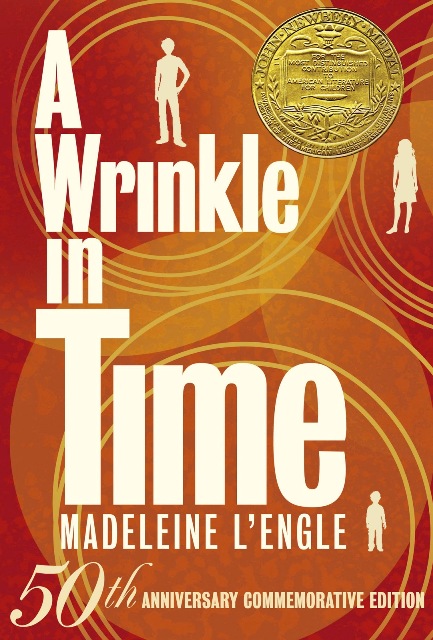
50th Anniversary of “A Wrinkle in Time”

In celebration of the 50th anniversary of “A Wrinkle in Time”, this Newbery Award-winning novel written by Madeleine L’Engle has over 10 million copies in print. The following article was written by the author at the novel’s 25th anniversary.

It’s been twenty-five years since the publication of A Wrinkle in Time, and longer than that since I wrote it, and it is hard to believe that more than a quarter of a century has passed.

When I wrote Wrinkle, I was in a state of transition. We had been living in northwest Connecticut for nearly a decade, and were ready to move back to New York City. When we left the frustrations and stresses of Manhattan and decided to raise our family in the protected environment of a small, dairy-farm village where there we more cows than people, my husband thought he had left the theater forever. But forever (to my joy) was over, and Hugh was going back to the theater, and this move was going to be what is now called “culture shock” for our children. So we bought a tent and five sleeping bags and set off on a cross-continent camping trip.

As we crossed the North American continent I continued the thinking that had begun a few months earlier when I had stumbled across a book of Einstein’s and discovered that for me higher math is easier than lower math. My background in science was nil, and in any case the new sciences that excited me weren’t being taught when I was in school and college.

There’s nothing like marriage, children, leaving home (I was born in Manhattan) to start one asking all the old questions: What does life mean? Does it matter? What is the universe like? Is there a pattern and a plan? And am I a part of it?

The old philosophies left me unsatisfied. The religious establishment made the mistake of answering the great questions to which there are no answers, only new questions. I would walk the dogs at night, looking at the incredible sweep of stars above me, and philosophies and theologies centered only on his planet, and usually on only a small segment of the population, seemed totally inadequate. They left me hungry for something more marvelous.

We left on our cross-country trip in the early spring of 1959 and the first idea for Wrinkle came to me as we were driving across the Painted Desert. The names Mrs. Whatsit, Mrs. Who and Mrs. Which simply popped into my head. I turned around in the car and said, “Hey, kids, I’ve just thought of three great names, Mrs. Whatsit, Mrs. Who and Mrs. Which. I’ll have to write a book about them sometime.” And so the names of the three cosmic bag ladies went into the subconscious creative slow cooker. In the evenings, in the tent, I read from the box of books I had brought with me: more Einstein; Planck, and his quantum theory; books on the macrocosmic world of astrophysics; books on the microcosmic world of particle physics. There I found ideas about the nature of being which stimulated and fascinated me. When we got home, my husband went right into a play, and I sat down at the desk and typed out, “It was a dark and stormy night,” and the book poured out of my fingers. Evenings, I would read to my children what I had written during the day, and they would say, “Oh, Mother, go back to the typewriter!” (They didn’t always say that.)

When I finished the manuscript, I was drained and excited. I believed it to be not only totally different from my six previously published books but by far the best thing I had ever written. My children loved it; my husband loved it; my agent loved it. I hope that its publication would end a decade during which I had received countless rejection slips for more traditional books, half a dozen of which are still in typescript upon my shelves.

Well, I was kept hanging for two years, by many different publishers.
“What is it?” I would be asked. “Is it fantasy or science fiction?”
“It’s a book.”
“But who is it for? Is it for children, or adults?”

Over and over again, I received nothing more than the formal, printed rejection slip. These cold, impersonal rejections hurt. I began to doubt myself. Didn’t any of what I saw in the book get onto the typewritten page?

I had written Wrinkle beginning in the late summer of 1959 and finished in early 1960. The world was still in chaos. While my husband was reestablishing himself in the theater, the children and I stayed in the country. War with Russia seemed imminent. At school, the children were taught to crouch under their little wooden desks, their hands over their heads, in case an atom bomb fell on the school. What insanity! Some of my feelings about this insanity are expressed in Wrinkle. In it, I was trying to write about my own questions, my own affirmation of meaning despite seeming chaos.

(After Wrinkle was published, I was frequently asked if Camazotz didn’t represent Soviet Russia. Interesting: nobody asks that anymore.)

We moved back to New York, which no longer seemed more insane than the rest of the world. Air-raid sirens going off every day at noon, signs for air-raid shelters, for closed highways “in case of enemy attack,” seemed no more realistic than crouching under a desk.

And the rejection slips continued. How could they seem important against a background of a planet gone mad? They did. My book was a candle in the dark for me, and a hope.

A form rejection slip came on the Monday before Christmas 1961. I was sitting on the bed, wrapping Christmas presents and trying to feel brave, and thinking I was succeeding. After Christmas, I discovered that I had sent a necktie to a three-year-old girl and a bottle of perfume to a bachelor uncle. I called my agent. “Send it back. It’s too different. Nobody’s going to publish it. It’s too hard on my family. Every time it’s rejected, I bleed all over the living room rug.”

He sent it back, and that ought to have been the end of it. But my mother was with us for Christmas, and I gave a party for some of her old New York friends, and one of them happened to belong to a small writing group led by John Farrar, co-founder of Farrar, Straus and Company. She insisted that I meet him. I was, at that moment, not particularly interested in meeting any publisher. But she set up an appointment, and I took the subway down to Union Square, bearing my very battered manuscript.

John had already read my first novel, The Small Rain, and had admired it. I told him that Wrinkle was very different, but he was eager to read it. In two weeks I heard from my agent that he had read it, and really liked it, but was afraid of it. My heart sank. I had been so hopeful, after leaving John’s office, that the long wait might be at an end.

John and Hal Vursell (who was to be my editor from then on until his death) sent the worn manuscript to a librarian for assessment. She wrote back, “I think this is the worst book I have ever read. It reminds me of The Wizard of Oz.”

I’m not sure how many more weeks it was before John called me to tell me that he was going to publish the book. I went back downtown to have lunch with him and Hal, and they warned me, “Now, dear, we don’t want you to be disappointed, but this book is not going to sell. It’s much too difficult for children. We’re publishing it as a self-indulgence because we love it, and we don’t want you to be hurt.”

And then, in the spring of 1962, A Wrinkle in Time was published, and it took off like a skyrocket.

The problem wasn’t that it was too difficult for children. It was too difficult for adults.

———-

The Papers of Madeleine L’Engle are housed in the Wheaton College Archives & Special Collections and are available for research.

Embracing the Love of God

From November 1-3, 2000 James Bryan Smith delivered five messages to the Wheaton College audience based upon his book “Embracing the Love of God, The Path and Promise of Christian Life.” The text of Smith’s first message was from 17th century Christian poet, George Herbert and his third poem on love.

Love bade me welcome, yet my soul drew back,
Guilty of dust and sin.
But quick-ey’d Love, observing me grow slack
From my first entrance in,
Drew nearer to me, sweetly questioning
If I lack’d any thing.
“A guest,” I answer’d, “worthy to be here”;
Love said, “You shall be he.”
“I, the unkind, ungrateful? ah my dear,
I cannot look on thee.”
Love took my hand, and smiling did reply,
“Who made the eyes but I?”
“Truth, Lord, but I have marr’d them; let my shame
Go where it doth deserve.”
“And know you not,” says Love, “who bore the blame?”
“My dear, then I will serve.”
“You must sit down,” says Love, “and taste my meat.”
So I did sit and eat.

A synopsis of the book is found on the publisher’s website: “Unfortunately, in today’s world many people fail to experience the freedom and healing power of God’s grace. Even Christians too often experience judgement, rather than the love that is the vital essence of Christian life. A visionary guide in the spirit of Celebration of Discipline, Embracing the Love of God calls Christians back to the basics — to understanding the promise of God’s love to transform our most important relationships and fulfill our deepest spiritual needs. Here James Bryan Smith launches readers on a revitalizing spiritual journey. He distills the basic principles of Christian love and provides a new model for relationship with God, self, and others that is based not on fear and judgement, but rather on acceptance and care. Smith’s moving insights illuminate the gentle nature of God’s love and teach readers how to continue on the path of love by embracing it day by day. For both new Christians and those desiring renewal, Embracing the Love of God offers hope, peace, and guidance for spiritual growth.”

James Bryan Smith (M.Div., Yale University Divinity School, D.Min., Fuller Seminary) is a theology professor at Friends University in Wichita, KS and a writer and speaker in the area of Christian spiritual formation. He also serves as the director of the Aprentis Institute for Christian Spiritual Formation at Friends University. A founding member of Richard J. Foster’s spiritual renewal ministry, Renovare, Smith is an ordained United Methodist Church minister and has served in various capacities in local churches. In addition to Embracing the Love of God, Smith is also the author of A Spiritual Formation Workbook, Devotional Classics (with Richard Foster), Rich Mullins: An Arrow Pointing to Heaven and Room of Marvels.

Audio icon LISTEN to James Bryan Smith’s first lecture from November 1, 2000 (mp3 – 23:41)

The Crafty Mr. Ulricson

Throughout his teaching career at Knox College in Galesburg, Illinois, Dr. R. Lance Factor, George Appleton Lawrence Distinguished Service Professor and Chair of Philosophy, had noticed several odd flourishes adorning the interior and exterior of Old Main, the historic central campus hall where Lincoln debated Douglas in 1858. Investigating its history, Factor unearthed fascinating secrets permeating the very foundation of the building.

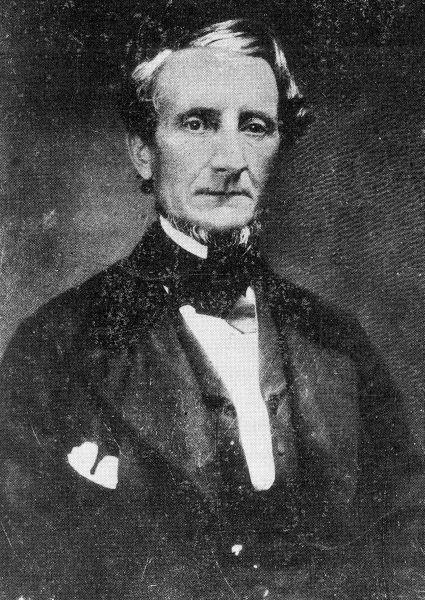
Charles UlricsonKnox College, founded by rock-ribbed Presbyterian pioneers who despised both slavery and oath-bound fraternities, had existed for nearly twenty years when its crosstown competitor, Lombard College, founded by Unitarian Universalists, erected in 1855 an attractive central building. Anxious to equal or exceed this accomplishment, then-president Jonathan Blanchard and the Knox trustees concentrated on raising funds and locating an architect. Rejecting plans presented by a Calvinist firm in Chicago, Blanchard sought Mr. Charles Ulricson, the project’s contractor who had also designed churches, mansions and offices in Galesburg and other midwestern locations. A Swedish immigrant, Ulricson’s cool, competent demeanor appealed to Blanchard and the board, who nicknamed him “the urbane Mr. Ulricson.” Working quickly and efficiently, Ulricson presented an agreeable plan to the administration and construction commenced. Completed in 1857, the three-storey hall, topped by a temple-like belltower, commanded a magnificent view of the prairie, a benefit which the Lombard building did not offer, much to the delight of Knox constituents.

Professor Factor, continuing his careful perusal of ledgers, journals, correspondence and other documents, discovered that Ulricson had studied under renowned architectural masters in New York City, learning the principles of sacred geometry and alchemical engineering. A loyal disciple, he departed their tutelage a member of “the sacred priesthood of architecture” and eventually settled in Peoria, Illinois, happily applying his vast knowledge of mystic ratios and sacred numbers to his projects – chiefly Knox College. In brief, Old Main is a purely Masonic talisman. Its existence as a beloved landmark is particularly ironic considering that Jonathan Blanchard, later president of Wheaton College, founded in 1868 the National Christian Association as an instrument dedicated to eradicating the influence of Freemasonry from American church life. Undoubtedly he and the trustees were entirely unaware of the hidden esoteric meanings and sacred symbology woven into every tile, window and doorway. According to Factor, Ulricson likely believed that his building might capture the positive energies of the “the Great Geometer,” sanctifying and edifying its occupants. Through the influence of occultic design Ulricson might have sought to mystically unify the opposing, aggressive forces of Jonathan Blanchard and George Gale, founder of the college and the city. Both were strong-willed and often locked horns, fomenting division among the Galesburg citizenry. If Charles Ulricson was “urbane,” he was also surely crafty as he advanced the “craft” of Freemasonry through means both brazen and surreptitious.

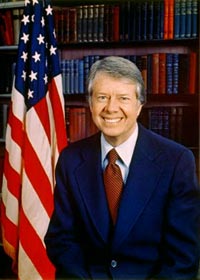
“Hopelessness can be overcome” said Jimmy Carter in 1992 Pfund lecture

Nearly twenty years ago, President Jimmy Carter delivered the LeRoy H. Pfund Lecture on February 24, 1992. The following article “President Carter urges Christians to compassion and action on behalf of others” by Margaret Irish documented the event and was featured in the April/May 1992 issue of the Wheaton Alumni magazine.

As a young person, Jimmy Carter had two ambitions. The first he accomplished when he attended the U.S. Naval Academy, becoming an officer in the Navy.

The second was to teach at a college or university. “Thanks to Ronald Reagan, I reached that ambition four years earlier than I’d anticipated,” Carter quipped, speaking to the packed house gathered in Edman Memorial Chapel for the LeRoy H. Pfund Lecture. His defeat in the 1980 election spelled the end of his presidency, but it gave him opportunities to serve that he would never have had if he had remained in office. And service, for Jimmy Carter, is more significant than his job title.

“The essence of Christianity, as described by Christ himself, is not preaching which is important hut is action on behalf of others,” Carter said. “Jesus reached out to the outcast, the despised, the people who were different. How do we translate that compassion into our own culture?” Carter emphasized that Christians must serve others and minister to their needs, rather than associating only with people like themselves.

He emphasized that much of the nation’s and the world’s suffering could be alleviated if its affluent citizens would more willingly share with those who had little or nothing. “The greatest discrimination today is that of rich people against poor people.”

The Carter Center at Emory University in Atlanta is one example of an institution whose purpose is to address the needs of the poor, the homeless, the illiterate, the sick, and the outcast both in the United States and abroad. Carter challenged his audience to find ways to make a difference in the lives of others, one at a time. He cited the Atlanta Project, which is coordinating efforts between private enterprise, businesses, churches and government agencies in the city of Atlanta to react to disadvantaged people. Individuals can make a difference, “adopting” those in need, getting to know them, taking them to the doctor, teaching them to read, or taking time to be available for a child at risk.

Carter also expressed his conviction that the United States, in its role as a superpower, should he addressing problems such as hunger, disease, war, and human rights abuses in the world, “Our country should he totally committed to peace, not war … we have a direct responsibility to use our influence, whatever it might he.” He mentioned the Carter Center’s work in these areas, monitoring world conflict, working to improve the health of children in the Third World, finding ways to alleviate hunger. He warned, “When we think we’ve got it made, and that we are particularly blessed because we deserve to be blessed, then we have abandoned a major part of the faith in Christ that we claim is a driving force in our lives.”

At a press conference preceding the lecture, President Carter responded to questions from both journalists and students. He said he is encouraged that the United States is urging new Middle East peace talks, but felt that final settlement at this time is unlikely. Carter considers the Democratic presidential candidates to be capable leaders who should not be characterized as political “lightweights.” He had no strong preference among them, he said, “but once we choose one, I will give him my support.” He also felt that the contenders are “fair game” for the press, which “has an obligation and a right to scrutinize their past actions and let the American people make a judgment.”

The key theme of this year’s Pfund Lecture became Carter’s message of action on behalf of others. Listeners heard it stressed repeatedly by a man intent on meeting the challenges of a needy world with hope, enthusiasm, and Christian commitment.

“Something can be done,” Carter said. “We can prove that hopelessness can be overcome. We can do it with justice, humility, service, compassion, love, and peace.”

———-
The Leroy H. Pfund Lectureship was established in 1987 by Mr. Fred Bostrom, Sr., in memory of his wife, Ragnhild; it was named for Coach Lee Pfund ’49, who served the College for more than 38 years, first as a coach and then as director of the alumni association. The lectureship brings to Wheaton College’s campus leaders of American political and public life to enhance the students’ awareness of public Policies, issues, and views, and offer them a broad range of perspectives. The 1992 Pfund Lecture brought former President Jimmy Carter to Wheaton.

The Wesley G. Pippert Papers in the Wheaton College Buswell Library Special Collections has a wealth of information about the former president. Wes Pippert came to Washington, D.C. in 1976 in order to cover Jimmy Carter’s presidential campaign as the principal UPI reporter. Pippert followed Carter to the White House and was assigned there from 1977 to 1981. He also wrote “The Spiritual Journey of Jimmy Carter: In His Own Words” (1978).

LISTEN to President Carter’s 1992 Pfund lecture (mp3 – 01:04:09)

.

On My Mind – Beatrice Batson

Twenty years ago, the Wheaton Alumni magazine began a series of articles in which Wheaton faculty told about their thinking, their research, or their favorite books and people. Professor of English Emeritus E. Beatrice Batson (who taught at Wheaton from 1957-1987) was featured in the August/September 1991 issue.

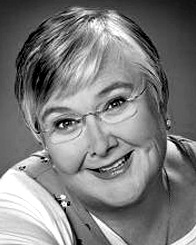
Beatrice BatsonWhen I came to teach at Wheaton in the autumn of 1957, I discovered a nucleus of professors and students charged with excitement over Wheaton’s mission as a Christian liberal arts college. Combined with this concern was the belief that mind and spirit should he so constantly and consistently nurtured that complacency would be highly unlikely to make permanent inroads. I found the atmosphere extraordinarily exhilarating. Admittedly, some of us were idealists; perhaps such idealists that not a few individuals determined to find new and different ways of talking about the whole educational process. Through the decades, however, there were still those who were unable to think dispassionately of Wheaton’s mission. Similar zeal is by no means absent in 1991.

Several years following that autumn of 1957, I met at a professional conference one of my former students, then an advanced graduate student at Yale. Among the first questions he asked me were: ‘What are Wheaton students really like now?” and “Is the faculty remembering the mission of the College?” Or in paraphrase, “Are faculty members consciously aware that they are teaching human beings who must make moral and spiritual responses in life ?”

My reply to him was another question: “What kind of student do you wish to see at Wheaton?” Quick as a flash, he answered, “Hungry students. Let them he cynical, and let them be angry.” He continued, “But whatever they are, be sure they are hungry–hungry for nourishment that feeds mind, heart, and spirit.” What came clear was that somebody had a heavy and joyous responsibility. “To study at a college like Wheaton,” he insisted, “is to he exposed to a faculty and a curriculum that will not let students forget the large human questions of meaning and purpose.” However excellent the speakers at that professional conference may have been, it was the urgent tone of my former student’s pleas that lingered longest in my memory.

With the onslaught of unparalleled campus unrest in many colleges and universities during the late sixties and early seventies, prophets of doom began to declare that the liberal arts ideal would wither away or bit by bit literally slip from consideration in the strongest liberal arts colleges. Problems were far too complex, we were frequently told, for contemporary students to spend time on “the arcane vestiges of the past,” as critics pejoratively titled the liberal arts. To jettison every thinker and artist prior to the late twentieth century seemed no solution to some of us. Minds and imaginations burnished on Plato and Aristotle, Aeschylus and Shakespeare, Augustine and Kierkegaard (and scores of others) might well be the sort of informal minds and lively imaginations that should be working on different issues, we reasoned. Besides, students hungered for meaning and purpose.

What my former student urged still persisted in my mind in more recent years when numerous educational leaders held that students were in college to acquire a passport to immediate pleasure, instant success, and economic affluence. This indictment, however, failed to dissuade some of us from our firm belief in the mission of a Christian liberal arts college.

When I left close contact with the thinking of students and faculty for retirement in 1988, I continued to teach one course in Shakespeare. Although I was aware of new theories that pervaded scholarly writing and knew of the abuse that pseudo-scholars heaped upon those who affirmed the liberal arts ideal, I continued to discover that students did not consider Shakespeare’s works to be anachronisms. They perceived that his inimitable writings embodied large human questions and always-contemporary subjects even though the great artist wrote 400 years before they were horn.

In October 1990, I came from active retirement to serve as Kilby Professor of English and from October to May as acting chair, due to the serious illness of my colleague, Dr. Joe McClatchey. In these responsibilities, I had a closer contact with students and more interaction with faculty.

Since that autumn in 1957, many changes have occurred. In this year, 1990-91, faculty were challenging luminaries on their own ground, discussing terms not even named in 1957; students were wrestling with new issues, thinking hard on complexities born of their technological age. As before, there was still a nucleus who saw themselves as “privileged inheritors of a rich legacy” the mission of the Christian liberal arts college. I have a deep conviction, even in my most pessimistic moments, that Wheaton has in its community particular individuals who know that they are “custodians of something immensely valuable,” and they sense a dire need to keep it alive.

———-
Dr. E. Beatrice Batson, Professor Emerita of English, was chair of the department for 13 years. During the academic year 1990-91, she served as Kilby Professor of English and as acting chair. Since her retirement she continues her work as coordinator of the Shakespeare Collection and has organized bi-annual institutes for undergraduate teachers of Shakespeare, sponsored by the Shakespeare Special Collection, since 1992. She received the Wheaton College Alumni Association Distinguished Service to Alma Mater Award in 2007.

Let’s Celebrate

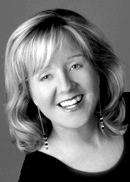
Dr. Lori Salierno is a nationally recognized public speaker and founder and CEO of Celebrate Life International, a non-profit organization committed to helping young people become leaders of integrity. Founded in 1996, CLI’s mission is “dedicated to transforming at-risk kids into responsible citizens through the building of their character based on practical leadership skills and universal ethical principles.” The organization is headquartered in Atlanta, Georgia with offices in California, Colorado, Louisiana, Cape Town (South Africa) and volunteer chapters established in metropolitan areas throughout the United States. Lori Salierno earned her BA in Biblical Studies from Seattle Pacific University and was presented the Distinguished Alumni Award in 1997. She later completed her Masters Degree in Theology at Fuller Theological Seminary in 1992. In 2003, Dr. Salierno received her Doctor of Ministry degree in Leadership Development from Asbury Theological Seminary. She has authored six books and currently resides in Kennesaw, Georgia, with her husband Kurt.

Lori spoke at Wheaton College on October 9, 1991 from Philippians 4 on the theme of celebrating our lives in Christ with joy.

.
Audio icon (mp3 – 00:22:50)
.

Sue Thomas: F.B.Eye

Sue Thomas was born in 1950. At the age of 18 months she experienced an instant and total hearing loss. With the support of her parents she spent years with therapists learning to communicate and read lips despite being profoundly deaf. Instead of being relegated to an institution her parents were determined to help their only daughter become a success among the hearing. Although having academic challenges as the only deaf child in her public school district near Boardman, Ohio, she focused her energies on skating and became the youngest Ohio State Champion free-style skater.

She persevered through her schooling and finally graduated from Springfield College in Massachusetts with a degree in Political Science and International Affairs. She was hired by the Federal Bureau of Investigation as a fingerprint examiner and then as an undercover investigator doing surveillance work reading lips for the FBI agents in Washington D.C.

In 2002 her inspiring story was adapted for television and aired as a weekly drama. At its peak, “Sue Thomas: F.B.Eye” was watched by more than 2.5 million viewers in the United States and was syndicated in 60 countries. It has since generated a loyal fansite, Facebook, and Twitter pages.

Prior to her international acclaim, Sue Thomas spoke in Edman Chapel in December 1991 to the Wheaton College family and shared her Christian testimony. She had recently written her autobiography “Silent Night” which has since been updated for it’s 20th anniversary edition.

[excerpted from Wikipedia and Sue Thomas Productions]

Audio icon (mp3 – 00:38:26)


Thoughts of Irina

It is very important when one has a real aim. Sometimes this aim is more important than life. –Irina Ratushinskaya

Irina RatushinkayaIn April 1987, Russian poet and human rights advocate Irina Ratushinskaya spoke at Wheaton College while she and her husband, Igor Gerashchenko, were guests of Northwestern University in nearby Evanston, Illinois. Irina was sentenced to seven years in a labor camp in 1983 followed by five years of internal exile. The main pieces of evidence presented at her trial were six poems rich in Christian imagery. According to her husband the poems were as remote from politics as the Lord’s Prayer, yet Irina was charged with subverting and weakening the Soviet regime. At the time Irina stated “our people take literature very seriously. It is our Russian tradition. No wonder when our government take literature very seriously, too. It moves people.”.

During her imprisonment, Irina endured beatings, forced feedings, and long periods of solitary confinement. She continued to write poetry, despite being instructed otherwise, and scratched lines on a bar of soap and committed them to memory before washing them away. The women in the labor camp helped her to pass completed poems to Igor, who in turn smuggled them via underground couriers to the West for publication. Irina and her fellow prisoners, most of whom were also believers, appealed to the West for help in a similar fashion. Irina attests that Western pressure was the cause of her release: “The KGB knew that if they killed us, there would be too much noise in the West. So they decided to release us.” She was freed, along with 108 other political prisoners, two days before the U.S. | U.S.S.R. Summit in Reykjavik, Iceland between President Ronald Reagan and Soviet President Mikhail Gorbachev in October 1986.

During her appearance at Wheaton, sponsored by the Slavic Gospel Association and the (former) Institute for the Study of Christianity & Marxism, and World Christian Fellowship at Wheaton College, Irina read three poems she had written while imprisoned. She also fielded questions about the Soviet Union, especially Soviet Christians. When asked about glasnost, the new Soviet policy of openness, Irina simply stated that there was no openness in the prison camps; Russian people generally do not believe the changes exist “because those changes are more in newspapers and TV sets than in the lives of Soviet people.”

Nearly twenty-five years later Irina’s life has taken her full-circle back to the land which once held her captive. In December 1998 she and her husband moved with their twin boys from London back to Russia in the former Soviet Union. She chose to educate her two sons in Russian school after years of procedures to restore her Russian citizenship and currently lives in Moscow.

Audio icon (mp3 – 00:43:24)………………………..[Excerpted by Wheaton Alumni magazine, August 1987]

.

For Your Gift of God the Spirit

On February 21, 2010 an announcement was made to the congregation of Tenth Presbyterian Church in Philadelphia that their Senior Minister, Dr. Philip G. Ryken had accepted the presidency of Wheaton College. During Pastor Ryken’s remarks, he read these words: “Father, grant your Holy Spirit in our hearts may rule today, grieved not, quenched not, but unhindered, work in us his sovereign way.” This quote is part of the fifth verse of the hymn ‘For Your Gift Of God The Spirit‘, written by Margaret Clarkson. According to Hymnary.org, an online hymn and worship music database created as a collaboration between the Christian Classics Ethereal Library and the Calvin Institute of Christian Worship,

Margaret ClarksonMargaret Clarkson wrote this text about the work of the Holy Spirit during the summer of 1959 at the Severn River, Ontario, Canada upon request by Stacey Woods, General Secretary of Inter-Varsity Christian Fellowship in Canada and the United States. “For Your Gift” is the best teaching text on the Holy Spirit. Inspired by biblical passages about the work of the Spirit in creation, the church, and our personal lives, this text reads like a study of the doctrine of the Holy Spirit. It is a splendid example of sung theology, which brings our heart’s confession onto our lips. In liturgical settings it is appropriate for Pentecost and many other services (Psalter Hymnal Handbook).

The papers, library, and assorted materials of E. Margaret Clarkson, teacher, author and hymnwriter, are held in the Wheaton College Archives & Special Collections. The collection contains personal papers, articles, manuscripts, hymns, books reviews, and correspondence, as well as her personal library of over 600 books on theology, poetry, hymnody, and many other subjects. The full lyrics of the hymn are as follows.