Dr. C. Everett Koop and Wheaton College

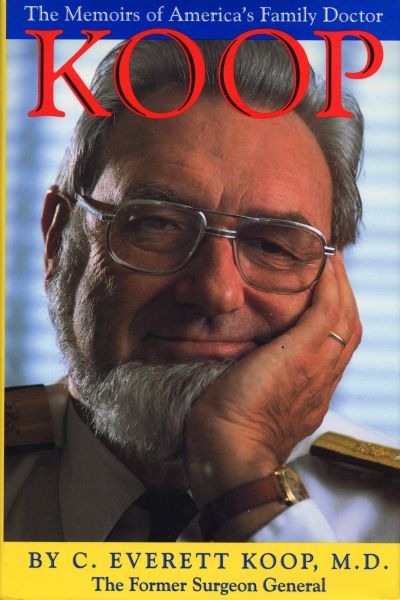
Dr. Charles Everett Koop, former Surgeon General of the United States, died on February 25, 2013, at age 96. Sporting a crisp, double-breasted military uniform, Amish beard and stern aspect, he was an instantly recognizable father-figure during the 1980s, his expert eye continually examining the health trends of the nation. President Ronald Reagan, recognizing Koop’s extraordinary accomplishments in the field of pediatric medicine, appointed him as Surgeon General in 1982. Koop was affiliated with the Children’s Hospital of Philadelphia.

An outspoken Christian, Koop relates the circumstances of his 1948 conversion under the ministry of Dr. Donald Grey Barnhouse, pastor of Tenth Presbyterian Church of Philadelphia:

The next Sunday…I finished grand rounds early, and found my feet taking me to Tenth Presbyterian Church, just a few blocks north of the hospital. I entered a back door and quietly slipped up to the balcony. I was just going to observe. I liked what I saw, and I was fascinated by what I heard….I heard teaching from one of the most learned men I ever knew, a true scholar who also possessed a gift of illustrating the complexity – and simplicity – of Christian doctrine by remarkable and incisive stories and similes….I understood that we are all sinners, unable to satisfy God’s standard of righteousness and justice, no matter how hard we try….The preaching from the pulpit made it all clear: that the essence of Christianity was not what we did, but what Christ had done for us. I understood the meaning of the crucifixion, I understood the meaning of Christ’s sacrifice, I understood the meaning of divine forgiveness…Most of all, I understood the love of God….This spiritual awakening had a profound effect on my life and influenced everything that happened thereafter.

Interestingly, Tenth Presbyterian was later pastored by Dr. Philip Ryken, who resigned from its pulpit in 2010 to assume the presidency of Wheaton College, an institution with which Koop enjoyed friendly relations.

As a prominent evangelical engaged in societal issues, Koop, staunchly pro-life, was invited to deliver the address for the 1973 Wheaton College Commencement, during which his daughter, Betsy, graduated. He warned his audience about the disastrous consequences of Roe vs. Wade, predicting that laws will be ridiculous. Soon, he said, teens requiring permission for ear piercing would not need permission for abortions, which will become increasingly common. Also, this legislation will accelerate moral laxity; of course, unknown at the time, it paved the way for the onslaught of AIDS in the 1980s.

Returning to Edman Chapel at Wheaton College for a public forum in 1990, Koop spoke on “Ethical Issues Arising from the AIDS Epidemic.” Discussing challenges and opportunities, he asked, “What better evangelical target than the sick, the homeless, the abandoned and the despised?” As always, he advocated abstinence and monogamy. Throughout the 1990s Koop occasionally appeared on the Wheaton campus, usually in conjunction with events sponsored by the Center for Applied Christian Ethics (CACE).

During a 1989 interview, Christianity Today asked Koop about his famous beard. He replied: “…I grew the beard as a lark when I went with my son Norman to Israel for two weeks. The night before we came home he shaved off his beard and kept his moustache; I shaved off my moustache and kept my beard. We did it just to shock our families. A few days later, when I looked at a picture of myself taken…before I started growing a beard, I realized I had three chins! And I didn’t have them with a beard.”

In 2002 he visited campus for “An Evening with C. Everett Koop,” conducted by Wendy Murray Zoba, heard here.

The papers of Dr. C. Everett Koop (SC-58), comprising manuscripts and correspondence, are housed at Wheaton College Special Collections, available to researchers.

The Faith That Informs Learning

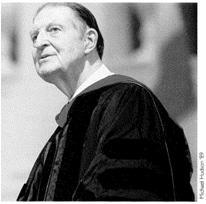
by Dr. Carl F.H. Henry ’38, M.A. ’41, Litt.D.’68

What earlier generations considered a noble evangelical endeavor–the integration of faith and learning–now easily deteriorates into an academic cliche that obscures essentials of the Christian view. Faith becomes a rubber word. It accommodates so many options that it readily invites the notion of faith in faith. It can embrace faith in Allah, faith in Buddha, or even faith in New Age, no less faith in Christ.

For some of its champions, integration need not involve an indispensably unique cognitive content but rather only an openness to reality that escapes rational exposition of the self- revealing God of the Bible. The emphasis on faith instead implies only the challenge of the transcendent, the necessity of religion, the advocacy of the nonrational, the priority of the paradoxical.

If faith is essentially a term of infinite nuances (and not necessarily of a fixed inherent meaning), the term “learning” similarly is laden with ambiguity. It is hardly a summary term for an unchanging body of knowledge, nor need Christians applaud it as the timeless wisdom of the ages. Moses was familiar with the learning of the Egyptians and Daniel with that of the Babylonians, but these biblical spokesmen hardly exalted this into universal truth to be “integrated” with the revelation of Yahweh.

Human learning is subject to ongoing revision and displacement. A science textbook only a decade old is now usually considered outdated, whereas the word of the Lord–so the inspired biblical writers insist–is fixed and final, and Jesus Christ is “the same yesterday, today, and forever” (Heb. 13:8).

Yet some contemporary religionists correlated Jesus Christ the God-man with faith and not with learning, and they internalize rather than objectify all specific religious claims.

The term “integration” raises an additional network of questions. Does it mean a correlation of data that is testable for logical consistency and validity, or simply an open-ended presentation of claims that can be reconciled only in some respects? Are logic and systematic consistency something alien to the Christian revelation? In recent years not a few professedly evangelical theologians have argued that one rationalizes and falsifies Christian truth if one aims to present it as a logically consistent world-life view.

Some mediating scholars emphasize that the Christian revelation must not be confused with the “eternal truths” affirmed by pantheistic and idealistic philosophers. That is assuredly the case. But when this is made to imply that Christian truth is not eternally true, one falls into costly error.

Even the fact that the gospel was temporally and historically revealed and was conveyed in a particular language does not imply that it is not eternally true. It is in fact true yesterday, today, and forever–eternally true–that Jesus’s crucifixion and third-day resurrection are integral to the divine redemption of sinners.

Some confusion over integration of faith and learning seems to have found its way even into Christian colleges and universities. As a consequence the very epistemological foundations of the Christian revelation are misstated or ignored. The unbroken authority of Scripture, that is, the inerrancy of the divinely inspired writings, is minimized or obscured.

Another example of this is the growing tendency to view the insistence of scriptural inerrancy as merely an evangelical distinctive instead of the bedrock of evangelical doctrine. Yet if the canon of Scripture includes erroneous teaching, the process of integration is frustrated since problematically unreliable Scripture cannot be logically correlated either with faith or learning.

Another consequence of affirming biblical errancy is that evangelical campuses are tempted to neglect, or even to avoid, formation of the Christian worldview; on the mistaken premise that this would involve an unjustifiable rationalization of the biblical revelation.

As a result Christian truth is formulated not alone in opposition to speculative philosophies, as is necessary, but regrettably also in opposition to an explicit evangelical world-life view predicated consistently on the teaching of Scripture. Sometimes this maneuver involves a substitution of natural law speculation for an explicitly biblical theology, the minimization of which has implications for the entirety of a revelatory system.

In any event, the epistemological foundations of Christian faith are endangered when Scripture teaching is neglected or considered problematical. In the biblical view; only if one begins with the knowledge of the self-revealing God does one become wise in the knowledge of life.

“The beginning of wisdom is connected with the fear of the Lord” (Prov. 9:10).

—–

The following statement was included at the time of publication in the Alumni Magazine (Autumn 1999):

Dr. Carl F.H. Henry was a Long Island newspaperman when he became a Christian in 1933. He is recognized as a foremost author, educator, lecturer, and theologian. He taught or lectured on college campuses throughout the United States and in countries on every continent. He has written 43 books, some translated into Japanese, Korean, Mandarin, Romanian, and Russian.

What a Privilege

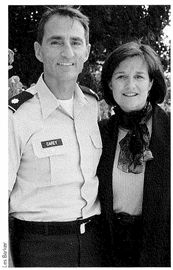
by LTC Randy Carey (ret.)

Adam Smith asked, “What can be added to the happiness of a man who is healthy, who is out of debt, and who has a clear conscience?”

I can think of at least another thing: the privilege of coming alongside someone and encouraging him on his journey through life. This will be my last opportunity to do that at Wheaton College in my current capacity, as I begin my fourth and final year serving as the College’s professor of military science for Army Reserve Officers’ Training Corps–or ROTC. However, my wife, Beth, and I look forward to another year of meeting more Wheaton College students, engaged couples, and ROTC cadets experiencing God in their own unique ways.

The opportunity to mentor someone is one of the greatest privileges we have. Although I am often discouraged by my own sinfulness and feelings of inadequacy, I am energized by those who have a hunger to grow in the ways of the Lord and are eager for someone to encourage them along the way.

I relish the opportunity to explain to a young man or woman who is considering serving his or her country that the military is desperately in need of godly leaders. Students often do not consider the military as a mission field, so I tell them the Army is in need of leaders who can share the gospel of grace with their fellow officers and soldiers all over the world.

Beth and I have made some lasting memories with students who have befriended us. We try to encourage them as they prepare for an uncertain future. And although we may think we know the right answer for some dilemma, instead of telling them directly, we try to guide them through the process, letting them figure it out.

As Beth and I have opened our home to students, we have found that regardless of what we feed them, they are quite content just to be in a family environment. I say it is Beth’s gourmet cooking they enjoy, but she says it’s because they just want a home–cooked meal.

We have been blessed through our facilitating the engaged couples’ seminar alongside Dean of Students Rich Powers and his wife, Jennifer. It is so gratifying to see young people work out their plans to make a lifelong commitment to a future mate. Another opportunity for mentoring has come during the gatherings of Women Who Make a Difference, a group that meets twice a semester and allows women of all generations to come together with women students for fellowship.

This Puritan prayer has helped to guide me for many years, and I pray it will be the heart–cry of my students:

Thou hast given Thyself for me,
may I give myseif to Thee;
Thou has died for me,
may I live to Thee,
in every moment of my time,
in every movement of my mind,
in every pulse of my heart.
May I never daily with the world and its allurements,
but walk by Thy side,
listen to Thy voice,
be clothed with Thy graces,
and adorned with Thy righteousness.

—–

Twenty years ago, the Wheaton Alumni magazine began a series of articles, titled “On My Mind”, in which Wheaton faculty told about their thinking, their research, or their favorite books and people. Former Professor of Military Science, Randy Carey (who taught at Wheaton since 1996-1999) was featured in the Autumn 1999 issue.

The following statement was included at the time of publication:

Lieutenant Colonel Randy Carey has been Wheaton’s professor of military science since 1996. He holds a bachelor’s degree from Washington State University in business administration, an M.B.A. from the Florida Institute of Technology, and an M.A. in theology from Wheaton. He was commissioned in the artillery in March 1978 and was assigned to Germany. His last assignment before coming to Wheaton was in the Pentagon, working for the Chief of Staff of the Army. LTC Carey also was an assistant professor of military science at Rochester Institute of Technology in New York. He and his wife, Beth, have three sons: Ryan (12), Tyler (10), and Max (4).

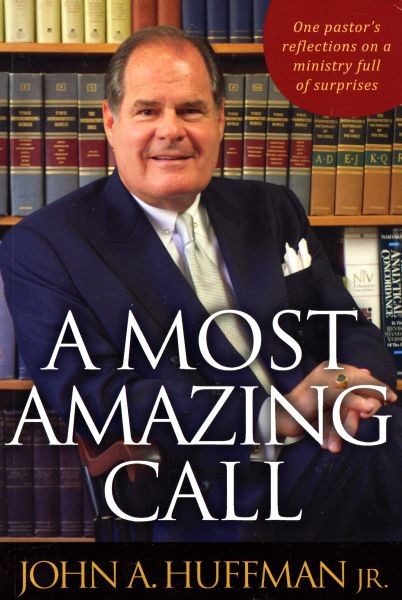
John A. Huffman, Minister-at-large

Dr. John A. Huffman Jr., pastor and author, recently published his memoir, A Most Amazing Call, chronicling the ups, downs and byways of his extraordinary life. Born in Boston, he earned his undergraduate degree at Wheaton College, his graduate degrees from Princeton Seminary. While studying at Princeton, he served as an assistant under Norman Vincent Peale, pastor of Marble Collegiate Church in New York City. “My life ever since,” Huffman writes, “has been so much richer for the opportunity of knowing him as both a friend and a mentor.”

After serving other pastorates, Huffman was called in 1978 to assume leadership at St. Andrews Presbyterian Church in Newport Beach, California. Exploring wide-ranging interests involving the Christian life, he has published nine books, including The Family You Want and Forgive Us Our Prayers. He has served on the boards of several influential evangelical organizations, including Christianity Today, Gordon-Conwell Theological Seminary, World Vision and the National Association of Evangelicals.

Away from his pulpit, Huffman has served several sports chaplaincies, including the Miami Dolphins (1969-73), the visiting NFL teams (1973-78) and the PGA Senior Golf Tour (1973-78).

Huffman attended both Wheaton Academy and Wheaton College. Reflecting on his schooling he writes:

There were also great professors who opened to me new horizons intellectually, politically and spiritually; too many to list in this space. They helped me integrate the world of ideas with my Christian faith….In particular, I will be forever grateful to the chairman of my history department, Earl Cairns, who shaped my philosophy of history…And I was exposed to many outstanding chapel speakers such as Vernon Grounds, Leighton Ford, Richard C. Halvorson, Robert Boyd Munger, Bill Bright, Harold Ockenga, V. Raymond Edman, Hudson T. Armerding and Billy Graham — all whose friendship and counsel I have valued through the years.

Retiring from St. Andrews in 2009, he considers his life of service:

As I have now concluded my first 70 years, I move into a new era. My title is “honorably retired.” My 47-year call to local church ministry is now complete. From now on I will simply endeavor to do whatever the Lord lays on my heart as literally “minister-at-large.” What I hope to do with the rest of my life is to continue to lead men, women and children to a personal saving faith in Jesus Christ…

Huffman and his wife, Anne, have three daughters.

Cheap Doubt

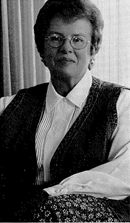
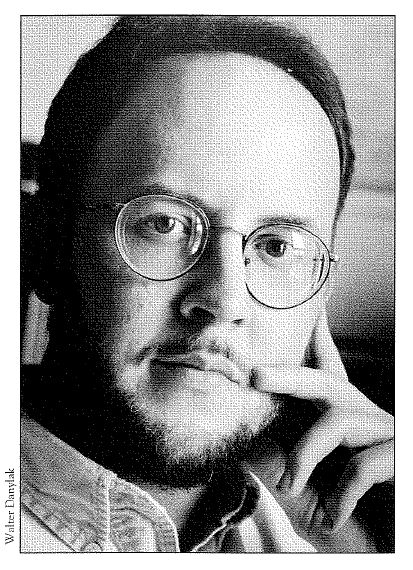
On February 8, 2013, Clayton Keenon spoke in the Wheaton College Chapel on the subject of doubt. Twenty years ago, the Wheaton Alumni magazine began a series of articles, titled “On My Mind”, in which Wheaton faculty told about their thinking, their research, or their favorite books and people. Clyde S. Kilby Chair Professor of English Alan Jacobs (who has taught at Wheaton since 1984) was featured in the Summer 1996 issue and also wrote on the same subject of doubt.

——————————

Several years ago I came across a comment by Frederick Buechner that has stuck in my mind: “Doubts are the ants in the pants of faith. They keep it awake and moving.”

When I first read those words, I thought–how reassuring! Times of spiritual struggle are a lot easier to get through when you believe that God is working, not just despite them, but through them. And of course, I still believe that God is not only present, but present with special power in every kind of suffering, including the suffering that comes from doubt. The Apostle Paul tells us to “work out [our] salvation in fear and trembling” (Phil. 2:12), which suggests that the attainment of a living faith will be painful.

But I have come to reconsider Buechner’s words. If you were to ask me today what I think about his comment, I would say it all depends on what you mean by “doubt.”

Donald Bloesch has written a book called Faith and Its Counterfeits in which he describes substitutes for genuine Christian faith, for instance, legalism or formalism. Doubt too has its counterfeits–that is, surrogates that lack the integrity and the potential productivity of the real thing. Few spiritual temptations are more dangerous, and more insidiously attractive, than “cheap doubt.”

What is cheap doubt, and how does it differ from productive doubt? In my experiences as a teacher, talking to Christian students in and out of the classroom, I’ve seen both kinds, and I think that I’ve learned to distinguish them.

One day my class on seventeenth-century English literature was considering Sir Thomas Browne, who in his book Religio Medici (“The Faith of a Physician”) considers how doubts may be overcome. Browne’s ideas are strange, but they created an interesting discussion. After a few people had commented, one student raised his hand and asked, “Why would we want to overcome our doubts? If you’re doubting, then you’re thinking; if you’re not doubting, then you’re probably dead, spiritually and intellectually. Surely that’s not what God wants us to be.” At once I remembered Buechner’s words, and I was quick to acknowledge the value of this comment. But I was also a bit bothered, though only later did I figure out why: it was the implication (probably unintentional) that it is appropriate to remain in a state of doubt.

That doubt can be productive doesn’t make it desirable in itself. Doubt can only be useful if we contend against it. Real doubt hurts. Yes, it can spur us to prayer and study of the Scriptures. But there is also a cheap doubt that tends to bring a certain pleasure to its possessor–the pleasure of self-satisfaction, of confident spiritual superiority.

It’s easy to see how tempting this can be. If we see another Christian praying with an intensity and concentration that we cannot match, isn’t there some comfort in believing that she can be so earnest because she has never seriously considered the logical conundrums posed by petitionary prayer to a sovereign God? We doubt, we tell ourselves, because we have thought through these problems, these theological puzzles, and she hasn’t. But if our thinking about these matters leads us to pass confident judgment on the spiritual and intellectual condition of our fellow Christians, we are in real danger.

And even if that earnest prayer warrior is intellectually lazy, it’s not clear that intellectual arrogance is a superior condition, In fact, the doubts in which we take pride may themselves result from laziness–an unwillingness to confront doubts with reflection, Bible study, and prayer. The person who accepts doubts without challenge may be just as lazy as the person who pushes them aside without consideration.

Real doubt will indeed, as Buechner says, keep our faith alive, by forcing us to confront our own frailty. When we cannot, by our own power, silence the inner questioner, then we may be reminded to seek God’s will and to trust in his strength and grace. But if we come to accept our state of doubt, we may be cutting ourselves off from God’s sufficiency.

A Christian liberal arts education does not shy away from tough questions and complex issues; it will therefore always tend to produce doubts. But that makes it all the more imperative that we teachers emphasize also the importance of overcoming doubt and growing in faith. We need to remember the tone of frustration in Jesus’ voice when he tells his disciples of the great things they could do if they had a mustard seed’s portion of faith. We need to remember his astonished joy when the Roman centurion tells him, “You need only say the word and my servant will be cured. Nowhere in Israel have I found such faith” (Mt. 8:8,10). Doubt is part of the road; but it’s not our destination.

—–

The following statement was included at the time of publication:

Dr. Alan Jacobs, Associate Professor of English, is a staunch, true Southerner, having received his Ph.D. from the University of Virginia and his B A. from the University of Alabama. He has authored numerous essays and articles for academic and literary journals and magazines, including The American Scholar and First Things. Widely read and listened to, Dr. Jacobs is also a frequent contributor to Mars Hill, an audio cassette literary journal. Currently, he is completing a book on tile poet W. H. Auden, His interests and abilities are diverse, ranging from those of a well-informed scholar, to those of an aspiring basketball star, to those of a restaurant connoisseur. He and his wife, Teri, have one son, Wesley, age 4.

Partnerships in Education

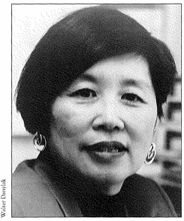
Twenty years ago, the Wheaton Alumni magazine began a series of articles, titled “On My Mind”, in which Wheaton faculty told about their thinking, their research, or their favorite books and people. Former Professor of Education Jeanette Lowe Hsieh (who taught at Wheaton from 1990-1996) was featured in the Spring 1995 issue.

One of my most vivid memories as I was growing up in San Diego, California, was Mrs. Buck, my fourth grade public school teacher. She was about 4’9″ with snowy white hair, and she carried a yardstick that appeared to me, as a ten-year-old, to be an extension of her arm. As a former Catholic nun she ran our class with an “iron fist.” Our daily classroom routine was to kneel and say three “Hail Marys” and four “Lord’s Prayers.” If I needed a few extra points on an assignment, all I needed to do was to carefully inscribe “JMJ,” meaning “Jesus, Mary, Joseph,” on the top of my paper and to write out a few “Lord’s Prayers” at the end of the page.

Obviously, what we did as fourth graders in that San Diego public school is not tolerated in the public arena today, but Mrs. Buck planted a seed in my mind and heart that heightened a sensitivity to spiritual things. As a result, when Mrs. Higgins, a local public school principal, asked if she could drive my siblings and me to the local Southern Baptist Church for Sunday school, I was amenable. One by one, my sister, brother, and I made a personal commitment to the Lord, and eventually our parents were compelled to join us.

Both of these strategically placed public school educators were instrumental in my spiritual pilgrimage, underscoring for me the critical need for Christians to remain as teachers, parents, and students in the public arena to serve as salt and light. I cringe when I hear calls for believers to withdraw from the public school classrooms. Yes, Christian schools or home schools are a viable and appropriate alternative for many concerned evangelicals. But other Christians are called to remain in the public arena to provide a moral compass for the millions of public school children who will live in one nation representing many peoples and faiths.

There is a need for us to remain in society to shape ideas, reconstruct culture, and to ensure that the Christian distinctive is a clear choice, The New Testament emphasizes the importance of the Christian’s transforming work in the public marketplace. Without that Christian presence in my fourth grade, how would those spiritual seeds have been planted in my heart?

But how can we stay in the public arena when someone else’s worldview collides with ours? Different assumptions for understanding the world can cause conflict even among people who agree they want the best for children. I’d like to suggest that significant disagreements among educators, parents, and members of the community are inevitable and even healthy in a pluralistic society.

Faced with these differences, how should we conduct ourselves as we struggle to impact American education? We can either fight or communicate. For several years now, we have tried the confrontational approach, and the result is a great deal of tension characterized by fear and suspicion. The public schools are the bitter battleground of political skirmishes over controversial issues. We watch as groups with different worldviews belligerently confront each other with menacing strategies and inflammatory language resulting in greater bipolarization and ineffective dialogue.

I’d like to urge another approach—partnership. We need to build respectful relationships with the educational community to find common ground for mutual understanding. In my relationships with public school personnel I find little evidence that they grasp what we are saying, or why we are concerned. We must establish thoughtful dialogue so that they comprehend that the ideology of pluralism poses some vexing problems for Christian teachers and parents who believe in the exclusive claims of Christ and absolutes for belief and practice.

Christians cannot endorse everything others say, do, or believe. Galatians 5:16-23 calls for a boldness in taking a stand while at the same time cultivating patience, gentleness, and kindness in relating to others. The application to disagreements in public education is clear. Our priority as we genuinely listen, learn, and clarify is to develop out of our differences a shared partnership to promote an educated citizenry for a thriving democracy.

———-
The following statement was included at the time of publication:
Jeanette Lowe Hsieh M.A.’66 — Associate Professor of Education, Chair of the Education Department, Coordinator of the Master of Arts in Teaching Program. Dr. Hsieh received a bachelor’s degree from Westmont College, a master’s from Wheaton College, and a doctorate from Northern Illinois University. Her husband, Ted, teaches psychology and is chair of the Social Science Division at Judson College. They have two sons, Matthew ’93, a student at Northwestern University Medical School, and Benjamin, a senior at Larkin High School who plans to attend Wheaton in the fall. Dr. Hsieh is president of the Illinois Association of Colleges for Teacher Education.

“His Poems are a Power” ~ Robert Siegel, 1939-2012

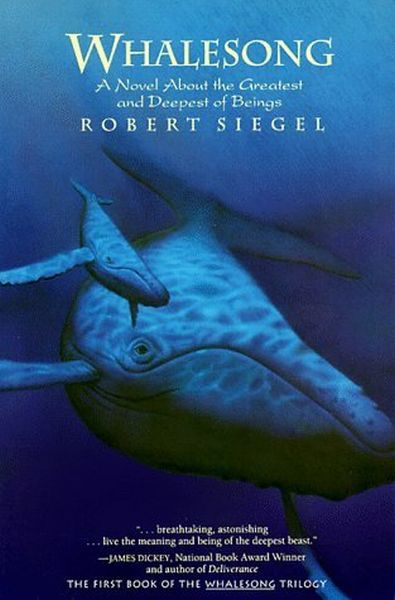
Robert Siegel, poet, professor and novelist, died on December 20, 2012. He was 73. Prolific and versatile, he received awards and prizes from Poetry magazine, Prairie Schooner, Bread Loaf, America and the National Endowments for the Arts. Born and raised in Chicago, Siegel attended Wheaton College, receiving his M.A. from Johns Hopkins, his Ph.D from Harvard and taught for seven years at Dartmouth. He lived with his wife, Ann, near the cost of Maine. He wrote young adult novels, such as Alpha Centauri (1980) and The Kingdom of Wundle (1982). He published several collections of poetry, such as In a Pig’s Eye (1985), The Waters Under the Earth (2005), and A Pentecost of Finches (2006). Siegel was also renowned for his environmental fantasy trilogy comprising Whalesong, White Whale and The Ice at the End of the World, about Hralenkena, a humpback whale confronting the dangers, mysteries and incomparable wonders of the ocean. “I want people to identify with the mystery and intelligence of the whale, the spirituality of the ocean,” he said, “as well as have a sense of what it’s like to be a marine animal facing oil spills.”

Siegel was a student and close friend of Dr. Clyde Kilby, Wheaton College professor of English who founded the Marion E. Wade Center, containing the manuscripts of C.S. Lewis, J.R.R. Tolkien and five other British writers. At Harvard, Siegel studied under poet Robert Lowell, winner of the Pulitzer Prize. Aside from the world of letters, Siegel was also a naturalist, laboring for land preservation. In 1989 he published an article in the Atlantic Monthly, drawing attention to the imminent razing of Henry Thoreau’s property for a housing development. His effort was successful.

Siegel’s poetry and fiction garners praise from diverse quarters:

Of Robert Siegel’s talents there can be no doubt. “Brilliant” is a term too casually applied today, and it does not begin to define the remarkable range of subjects delineated and the technical mastery demonstrated…His poems are a power. ~ Joseph Parisi, Poetry magazine

The poet’s extraordinary gift for metaphor allows him to reveal a range of emotions and attitudes that is rare among contemporary poets. ~ Booklist

Siegel’s imagination is excited by the nonhuman world, and he writes about plants and animals with surprising immediacy…A compassionate observer…he looks at them as mysterious and wonderful signs of a greater order. ~ Dana Gioia, in Poetry magazine

Whalesong is one of those rare and wondrous things, a book which is born a classic. ~ Madeleine L’Engle, author of A Wrinkle in Time

A masterful work combining mythology, philosophy and poetry in a story that is exciting and convincing. ~ Richard Eberhart on the Whalesong trilogy

It is all here — everything your imagination longs for when it travels back beyond our sad and gritty history to the high and noble ages of which we mortals get only fleeting and heartbreaking glimpses in the tales we now call myths. Siegel is a bard, and that is a genius almost as rare nowadays as the centaurs. ~ Thomas Howard on Alpha Centauri

Robert Siegel composed and read the inaugural poem, “In My Beginning is My End,” at the 2010 installation ceremony of Dr. Philip Ryken, eighth president of Wheaton College. His papers (SC-11), comprising correspondence and manuscripts, are housed in the Wheaton College Special Collections, are available to researchers.

God So Loved

This Christmas meditation, written by V. Raymond Edman, originally appeared as a tract called “Meet Mr. Scrooge,” published by Moody Press.

Ebeneezer Scrooge. Who has not met him? To be sure, he never really existed except in Dickens’ A Christmas Carol, one of the most delightful Christmas stories ever told. Scrooge is so vividly portrayed that his name has become a part of our language. Since we first learned about him, we have known every stingy old miser as a scrooge. But our acquaintance with him may be superficial. We meet so many characters in Dickens’ immortal story that we may fail to follow Mr. Scrooge to the end, and the conclusion is the real point and climax of the tale. We are intrigued by Marley’s ghost with his clanking chains. We are pleased with the cheerful nephew of Ebenezer who at first had no warming influence on his greedy old uncle. We are stirred by Bob Cratchit and his delightful family, especially Tiny Tim with his enthusiastic word, “God bless us every one!”

Then there are those ghosts, each with a message to Scrooge. The Ghost of Christmas Past brought back the recollection of happy schooldays and the reminder of merry Christmas Eves of long past when Scrooge was an apprentice in the office of old Fezziwig. There was even the reminder of an old love affair that never materialized. The bittersweet nostalgia of the yesterdays! The Ghost of Christmas Present took the old skinflint to the happy scenes in the humble Cratchit home the preparation for dinner, the arrival of Father Bob and his little crippled son from the church service, the gratitude of all for God’s goodness despite Bobs poor wages. A delightful scene in merry old England! But the Ghost of Christmas Future had only sadness for Scrooge. The Cratchit home was silent and tearful, and Tiny Tim, who might have lived had there been money for medical help, was no longer there. From there the Ghost took the penitent and fearful Scrooge to a deserted cemetery and pointed to a solitary grave marked with the name Ebenezer Scrooge.

No, never! How could he ever face the dismal and doleful prospect pictured in that headstone? As Scrooge poured out his protest and clung to the arm of the Ghost Future, he came to consciousness, clinging to the bedpost in his own room. It had all been a dream. But life is not a dream. It is very real. For us there is the memory of yesterday’s Christmases with the message: “God so loved the world, that he gave his only begotten Son, that whosoever believeth in him should not perish, but have everlasting life” (John 3:16). We have today, and the Bible reminds us, “Now is the accepted time; behold, now is the day of salvation” (II Cor. 6:2). “Believe on the Lord Jesus Christ, and thou shalt be saved” (Acts 16:31). For the future the Bible goes on to say, “It is appointed unto men once to die, but after this the judgment” (Heb. 9:27). The time to prepare for that certainty is right now.

Meet Mr. Scrooge.
Meet yourself.
Of course you are not the stingy, grasping old miser of A Christmas Carol, but like him you face the prospect that ahead lies the grave and the beyond! Like old Scrooge, you can be transformed, not by New Year’s resolutions but by becoming a child of God in receiving the Lord Jesus Christ. Then the present takes on joy and new meaning, and you can face the future unafraid! “As many as received him, to them gave he power to become the sons of God” (John 1:12).

Rev. John Timothy Stone and Wheaton College

Fourth Presbyterian Church, situated directly across from Hancock Tower, is a Gothic limestone anachronism amid the sleek high rise condos, trendy shops and high-tech offices of downtown Chicago. Displaying spire, cloisters, fountain, gabled roof and stained glass windows depicting biblical scenes, Fourth Presbyterian, designed by renowned architect Ralph Adams Cram, presents an austere dignity to Michigan Avenue. Since its founding in 1871, the old church has seen a succession of qualified ministers occupy its pulpit. Among these was the gifted Reverend John Timothy Stone, Fourth’s seventh pastor. Stone had been serving at Brown Memorial Church in Baltimore when he finally accepted Fourth Presbyterian’s persistent invitation, officially installed by the presbytery in 1909. Under his leadership the church’s lay ministries greatly increased as his eloquence attracted swelling crowds. In 1928 Stone was elected as acting president of Presbyterian Theological Seminary (now McCormick Theological Seminary), assuming full-time duties in 1930. Situated so prominently, Stone interacted with the chief ecclesiastical figures of the era, including Dr. J. Oliver Buswell, then-president of Wheaton College, who had in 1918 received his divinity degree from the seminary. These were transitional years not only for Stone and Buswell in their roles as college educators, but the battle between theological “modernists” and conservatives was just beginning to heat up, boiling toward a crisis which would shiver institutions and divide loyalties. According to historian Ovid R. Sellers, “The theological controversy which threatened to split the Presbyterian Church in the USA during the twenties had no repercussions on the McCormick campus.” This assertion is not quite accurate, as seen in the following correspondence.

Relations between Buswell and Stone began cordially, each occasionally inviting the other to Chicago or Wheaton for a friendly lunch. However, Buswell in 1930 explains his hesitance in advising ministerial candidates to attend Presbyterian Theological Seminary. The issue, he writes, is that he had recently heard a lecture at the seminary delivered by a Professor Hays, seemingly mounting a “virulent attack upon the doctrine of the infallibility of the Bible..,” in addition to advancing an “un-Presbyterian” appeal to the “inner light.” Buswell had also heard from several witnesses that a Professor Frank was teaching doctrines “strongly opposed to evangelical standards in theology.” Further, he feels that Stone has “misrepresented me as a loyal alumnus of McCormick Seminary.”

Stone replies graciously, including written responses from Hays and Frank. “Please dismiss from your mind any spirit other than cordial toward Wheaton College or toward yourself,” he writes, hoping to disarm Buswell and put the matter to rest.

Unconvinced, Buswell is far from finished. In his response, dated November 1, 1932, he bluntly challenges Stone’s alleged good cheer toward Wheaton College:

A considerable number of Wheaton students and graduates have told me directly and at different times of statements made by yourself and by other members of your faculty reflecting upon me and upon Wheaton College. I was told within the past month of a remark which you made to one of our graduates slurringly referring to me as a disloyal alumnus. Another member of your faculty some time ago referred to my direct and straightforward criticism as “throwing mud as his Alma Mater.”

He goes on to address Hays and Frank’s objections to his criticism of their theology, reiterating his suspicions that these teachers are, indeed, liberal in their appeals to authoritative sources beside the Bible, and disparages their suggestions that the Old Testament prophets, along with Jesus, simply re-packaged existing pagan customs to suit their immediate ministerial needs.

Buswell, summing up, informs Stone that he is too busy to fully respond to all his concerns, but will do so when he returns from an engagement in Buffalo. He writes somewhat threateningly, “I am wondering whether it is not my duty to prepare an article, making my position in regard to the seminary as clear as possible. I do not like to be called a disloyal alumnus or one who throws mud on his Alma Mater, without having it known that I have sufficient reason for my criticism.”

Stone’s reply, if such exists, is missing from the record; but history demonstrates that Wheaton College anchored herself largely to the right of the theological center, as McCormick bobbed ever leftward.

The Word For This Century

The Word For This Century, commissioned in 1959 by the Centennial Committee and edited by Dr. Merrill Tenney, Dean of the Graduate School, was published by Oxford University Press to celebrate the 100th anniversary of Wheaton College. In addition, it attempted to address the pressing question: “Has Evangelical Christianity a message for this era of tension and world conflict?” Containing essays based on the Wheaton College Statement of Faith by Carl F.H. Henry, Kenneth Kantzer, V. Raymond Edman, Billy Graham, John F. Walvoord and others, the book responds to the inquiry with confident affirmation. The preface, written by Tenney, follows:

Etched against the sky of a quiet Midwestern city, the tower of Wheaton College stands sentinel over the campus. For one hundred years Wheaton College has been a landmark of faith to its students who have chosen it as their Alma Mater, and to their parents and friends who have supported its ideals of Christian education. Under the leadership of four presidents, Jonathan Blanchard (1860-82), his son Charles Albert Blanchard (1882-1925), J. Oliver Buswell, Jr. (1926-40), and V. Raymond Edman (1940-65), Wheaton has maintained a consistent witness to Christian truth. Through numerous economic depressions, three major wars, and the shifting scenes of social and theological controversy, it has stood firmly for an undiluted Christian faith. Its faculty and graduates have been champions of political liberty, social reform, and evangelistic fervor. In 1937 the Graduate School of Theology was established as the result of a generous provision in the form of a residuary trust from the estate of John Dickey, Jr., of Philadelphia, in order that Wheaton’s ministry might be enlarged. Since the inception of the Graduate School more than three hundred and fifty alumni have been graduated and have entered the ranks of teaching, the ministry, and the mission field. This volume is issued on the centennial anniversary of Wheaton College as a testimony to its historic faith. The contributors of these essays, representing administration, faculty, and alumni, are actively engaged in preaching and teaching this message, and they speak for the larger number seeking to present the word of God to this century. As the list of authors on the title page of this book indicates it is the product of co-operative effort by men whose time is heavily taxed by the daily duties in which they are engaged. To them the Graduate School of Wheaton College is indebted for their contribution to this memorial volume. One of them, Dr. T. Leonard Lewis, the President of Gordon College, was suddenly taken to be with the Lord in the spring of this year, and the chapter that he wrote is one of the last products of his pen. To all of these men hearty thanks are due for their willing participation. Special thanks are offered to Dr. Carl F. H. Henry and to his publisher, Wm. B. Eerdmans Publishing Company, for permission to quote two paragraphs from his Christian Personal Ethics. The Centennial Committee of Wheaton College, Richard Gerig, Chairman, has aided materially in sponsoring this project. The Editor acknowledges gratefully the help of his wife, Helen J. Tenney, in preparing the manuscript for publication, and the stenographic work of Mrs. Edward A. Adams in the transcription of the copy.