Identity

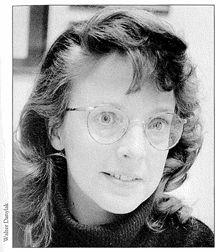
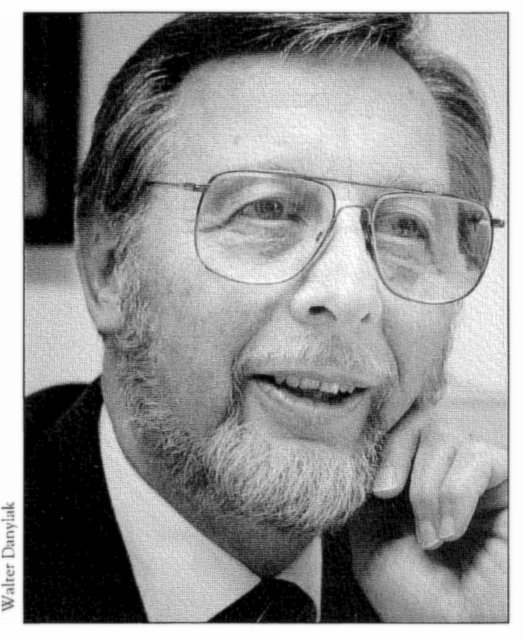
Twenty years ago, the Wheaton Alumni magazine began a series of articles, titled “On My Mind”, in which Wheaton faculty told about their thinking, their research, or their favorite books and people. Former Assistant Professor of New Testament Studies Nancy L. Calvert (who taught at Wheaton from 1990-1997) was featured in the Spring 1996 issue.

Come late June, I’ll be getting married. It’s a big step, and I’m taking it later in life than most. David, my fiance, and I are glad to have found each other. We sense God’s timing in bringing us together in the midst of our busy lives and careers.

Yet each of us finds that we harbor some fearfulness about joining our lives. We have each established personal and professional identities. Getting married will involve sacrifice–but how much of our respective identities are at stake?

My approaching marriage has prompted me to examine the source of my identity more closely. I imagine that I am not alone when I admit that the person I have become is partially a result of my seeking the approval of others.

By taking on characteristics, however, that are deemed important by another person, or by performing according to someone else’s perceived standard, it is as if you and I believe that we are valued only if we can somehow earn another’s respect and love.

If this approval-based mindset is central to our identity, it can render us oblivious to the wonder of how God created us and to his purpose for our lives. It allows others to gain control of our lives–a control that ultimately belongs to God. In his book, A Pretty Good Person, Lewis Smedes wisely states, “One way to get in control of one’s life is surrender to unconditional love…I have to get back to that surrender now and then or I lose control again to the demon of other people’s approval” (p. 110). If our identity depends on others’ approval and not on God’s unconditional love, chances are that we will never fully discover what makes us able to serve God in our unique way.

Another source of self-identity is our life experiences. Yet at times, our experiences can become like prisons. It may be too threatening to actually discern what in our past shackled us to a certain perception of our world, ourselves, or God. But unless we are willing to name, evaluate, and revise the ways we perceive the world, we cannot freely embrace the life God has so graciously granted us.

In recent years, many scholars have examined the apostle Paul’s call to preach to Gentiles (one example is Krister Stendahl’s Paul Among Jews and Gentiles). In his providence, God gave Paul the background to succeed in his ministry to Gentiles. Paul was familiar with Hellenistic ways and philosophies, and Jewish culture and theology. He was also fortunate enough to be a Roman citizen, But in that dramatic encounter with the living Christ on the road to Damascus, Paul was blinded and his whole world turned upside down. He discovered that the very man whose followers he had been persecuting was actually the Messiah.

Once the Lord broke through his prison of misconceptions, Paul found his identity in Christ and his life’s focus in fulfilling God’s new purposes for him. He neither sought to gain the approval of devout Jews who knew him in the years before his calling, nor of those who believed that Gentile believers must take on the Mosaic law.

God may not use visions and blindness to bring us to a better understanding of his purpose for our lives. But he often uses events or people to get our attention, to help us better understand who we are and how we can serve God in our own unique way.

As David and I enter marriage, we must remember that our identities are ultimately rooted in Christ–though the counsel of others may be important. Together we must work in such a way that God can best fulfill his own unique purposes for us in the arenas of our professional and married lives. Doing so won’t be easy; we may have to expose one another’s shackling misperceptions from time to tune. Our identities will probably be remolded to some degree. But it would seem that only in this way can we even begin to find the joy of living together according to God’s loving guidance.

———-
The following statement was included at the time of publication:

Dr. Calvert is assistant professor of New Testament studies. She received her Ph.D. from the University of Sheffield, England, her M.Div. from Gordon-Conwell Theological Seminary, and her B.A. from Wheaton. She is an ordained Presbyterian minister (PCUSA) and serves as parish associate at the First Presbyterian Church of Glen Ellyn. In her spare time she likes to listen to classical music, read, watch “Frasier” and films remakes of Jane Austen novels. But mostly she corresponds with her fiance via e-mail.

What Does Our Speech Reveal?

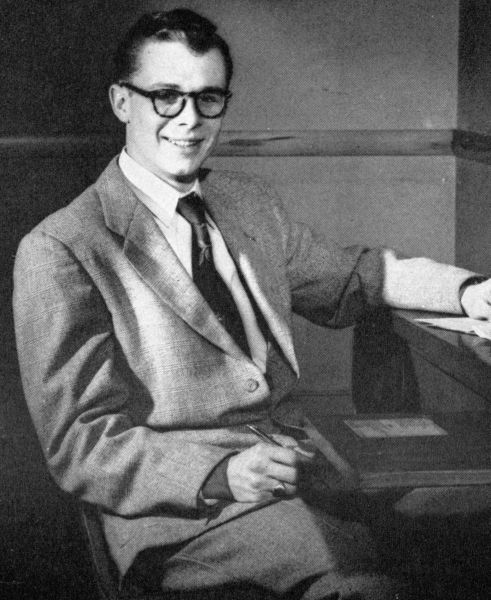
by Dr. Edwin A. Hollatz G.S. ’55
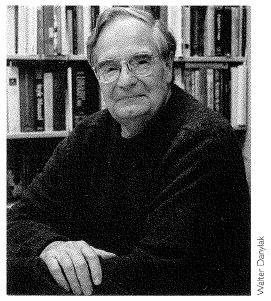
The Bible has much to say about human speech, about the way we use this wonderful gift that God has given us. This investment of creative expression through language is perhaps one dimension of the image of God imbued in the very nature of human beings, spoken of in Genesis 1-2.

It is this which lifts us from the level of the dumb brute and enables us to express not only what we think and feel, but who we really are. We can conceive of anything in words and images, with limitless possibilities of fact and fantasy. The panoply of literature throughout human history gives evidence of that which is most exalted as well as most debased.

During this past Christmas season we were reminded again of God’s supreme communication to us in His Son, Jesus Christ. The Apostle John, in Chapter 1 of his Gospel, speaks of Jesus Christ as the Word of God, which became flesh–a veritable transmutation of the eternal, divine, creative Word, now come in human form. That Word, full of grace and truth, has the power to redeem us, bringing light and life so that we might receive Him and become children of God.

As new creations in Christ, what about our words? How true and clear are their statements in revealing the character of the life of a follower of Jesus Christ? Are our words an adornment to the power of the gospel of Christ?

In Matthew’s Gospel, Peter twice denied being one of Jesus’ followers, even using and oath. But others standing by said, “Surely you are one of them; for your speech betrayeth you” (Matt. 26:73 KJV).

The Book of Judges relates another incident in which one is betrayed by one’s speech. The Gileadites could distinguish an Ephraimite if he mispronounced the word “Shibboleth.” If he said “Sibboleth,” he would be seized and killed (Judg. 12:5-6).

These two episodes from Scripture vividly portray how one’s speech accent may have unfortunate consequences. But at a more significant level, the “accent” provided by our manner of living can be crucial. Around 40 B.C. the Roman Publius Syrius said, “Speech is the mirror of the soul. As a man speaks so is he.”

Some 70 years later Christ said, “Out of the abundance of the heart the mouth speaks. The good person brings good things out of a good treasure, and the evil person brings evil things out of an evil treasure. I tell you, on the day of judgment you will have to give an account for every careless word you utter; for by your words you will be justified, and by your words you will be condemned” (Matt. 12:34-37, NRSV).

The Apostle Paul warns us, “Do not let any unwholesome talk come out of your mouths, but only what is helpful for building others up accordmg to their needs, that it may benefit those who listen” (Eph. 4:29, 31-32, NIV).

May the eloquent words of the old Anglican hymn be true of us as gifted human beings, created in the image of God:

God be in my heart,
and in my thinking;
God be in my head,
and in my understanding;

God be in my mouth,
and in my speaking.

———-

Twenty years ago, the Wheaton Alumni magazine began a series of articles, titled “On My Mind”, in which Wheaton faculty told about their thinking, their research, or their favorite books and people. Former Professor of Communications Emeritus, Edwin A. Hollatz ’55 (who taught at Wheaton from 1954-2000) was featured in the Winter 1998 issue.

Having worked at the College since 1955, Dr. Edwin A. Hollatz has taught speech, coached award-winning debate teams, served as faculty advisor to WETN radio, and helped establish the theater program. He has held offices in professional organizations, authored numerous journal articles, and been chosen for membership in several honorary societies. Dr. Hollatz is a frequent speaker at Wheaton Club meetings and received the Alumni Association’s 1993 Distinguished Service to Alma Mater Award. He and his wife, Joanne Simon Hollatz ’55, whom he met when Joanne joined Wheaton’s faculty, held their wedding reception in the Memorial Student Center. They are the parents of Cheryl Hollatz-Wisely ’85 and Celia Hollatz Bergman ’87.

Wheaton College and Global Warming

Oak Park, Illinois, located eight miles west of the Chicago Loop, is the home of notable contributors to national and world culture. For example, here lived novelist Ernest Hemingway, as did Edgar Rice Burroughs, creator of Tarzan and John Carter of Mars. Architect Frank Lloyd Wright designed several of his famous structures at his Oak Park studio; and James Dewar, inventor of the late, lamented Twinkie, resided amid the solace of its tree-lined avenues. Oak Park is also the childhood home of Dr. Wallace Broecker, who coined the now-ubiquitous phrase “global warming” in a 1975 essay titled “Climate Change: Are we on the brink of a pronounced global warming?”

As a child, Broecker attended Harrison Street church in Oak Park with his parents. The small assembly was led by T. Leonard Lewis, who would later serve as pastor of First Baptist Church of Hammond, Indiana, before serving as president of Gordon-Conwell Seminary in Masschussetts until his death in 1959.

Broecker, encouraged to attend Wheaton College because his neighborhood friend, “Ernie” Sandeen, enrolled, recalls campus mischief in Fixing Climate: What Past Climate Changes Reveal About the Current Threat – And How to Counter It (2008), written with Robert Kunzig:

It has a reputation as the Harvard of evangelical colleges, an ambitious but also a godly place, where students signed a pledge to adhere to the same set of rules that applied to Harrison Street…It was a serious place…and it seemed to force into full flower the most profoundly unserious aspect of Broecker’s character, one that can still be startling today to the uninitiated…At Wheaton the pranks got more elaborate. In his junior year he was business manager of the yearbook, which position of influence allowed him to sign excuses that got him and his friends out of daily chapel. It also got him a key to the attic of Blanchard Hall, where college memorabilia was stored. That October, Broecker discovered an unused door leading from the attic into the bell tower, which was off-limits to students; the custodian kept the main entrance carefully padlocked. At midnight on Halloween night Broecker, Sandeen and their roommates woke the campus with a loud tolling. When the custodian came racing into the bell tower, they exited through the attic and locked him in. He was forced to ring the bells again to summon the police. By the time the law arrived the Broecker gang had retreated to a ground-floor classroom. Broecker remembers vividly the flashlight beams coming through the windows and playing along the walls as he and his friends hugged the floor, out of sight.

Broecker offers an interesting perspective on the 1951 revival…and his subsequent drift from Evangelical Christianity:

In addition to going to chapel every day, Wheaton students were required to spend a week every year rededicating themselves to Christ under the guidance of a visiting preacher. That year the event took an extraordinary turn – it became a mass public confession. For three days and nights students lined up in the choir loft and behind the pulpit, waiting for their chance to proclaim their sins. The pressure to participate was intense. Broecker sat there in turmoil, brooding more seriously than he had ever brooded over anything. He certainly had sins – violations of the Wheaton pledge, for instance, that went beyond dancing. (He has never liked dancing.) But he knew some of of the people who were confessing, and he knew they weren’t being honest. They were holding back on the juicy stuff. The hypocrisy of the whole spectacle revolted him – people were pretending to believe in rules they couldn’t really live by, and then pretending to confess their violations of those rules. Hypocrisy and dishonesty, Broecker realized, were the sins he could least abide. That day in chapel, he slipped the fragile line that had tied him to the Rock.

Moving into the field of scientific research, Broecker found a substitute:

[Science] is the belief that if we observe the world carefully, test our ideas skeptically, and communicate honestly, we can figure things out. That summer of 1952, Broecker was converted to science. In time he would come to think of it as something sacred.

Wallace S. Broecker attended Wheaton College for three years before transferring to Columbia where he graduated. He is the Newberry Professor of Earth and Environmental Sciences at Columbia University. In 2006 he received the Crafoord Prize in Geosciences.

Thankful for the Thorns

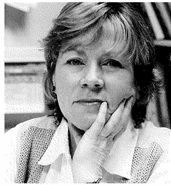
by Dr. Cynthia Jones Neal

How easy it is to forget to be thankful for suffering and weakness. We are so often more thankful for the good things, the comforts in life, things that go well. But the weaknesses and sorrows ought to be received with thankfulness, for the weaknesses point us to God, reminding us of how much we need God’s amazing and sufficient grace.

Paul wrote in 2 Cor. 12:5-10 that the thorn in his side reminded him of God’s grace. What was it that would remind him of his weakness and need for God?

Paul was caught up into Paradise and heard that which no mortal is permitted to repeat. He had reason to boast, but a thorn reminded him of his particular weakness. Perhaps that thorn was the painful awareness that he had killed Christians. Living with the horror that he had murdered, especially those who loved Christ, must have been a terrible sorrow, one Paul would live with the rest of his life.

In my own life, weakness and needs have been hard to recognize and acknowledge. Suffering just was not in the script, at least the script that I wrote. God has had a different script for me, however, one that includes suffering and sorrow and reminds me of the many ways I hold onto idolatries and false supports rather than seek His holy will.

Remember the journey of Much-Afraid (Hinds’ Feet on High Places by Hannah Hurnard) as she faced her fears and began to follow the great shepherd. The first step in her journey, however, required her to take the hands of her companions, Sorrow and Suffering. Only as she journeyed with these companions would she be transformed, able to receive a new name along with the feet that would enable her to prance on the mountain with the shepherd. Through many trials and travails, Much-Afraid received new feet and a new name, Grace and Glory. Sorrow became Joy, and Suffering became Peace. How many of us look for our new names as we enter our journeys? In Rev. 2:17b, God says, “To everyone who conquers I will give some of the hidden manna, and I will give a white stone, and on the white stone is written a new name that no one knows except the one who receives it.”

One final thought comes from Henri Nouwen’s book, The Inner Voice of Love:

“The situation which brought about your pain was simply the form in which you came in touch with the human condition of suffering. Your pain is the concrete way in which you participate in the pain of humanity.

Paradoxically, therefore, healing means moving from your pain to the pain. When you keep focusing on the specific circumstances of your pain, you easily become angry, resentful, and even vindictive. You are inclined to do something about the externals of your pain in order to relieve it…But real healing comes from realizing that your own particular pain is a share in the humanity’s pain. That realization allows you to forgive your enemies and enter into a truly compassionate life.”

As I journey through this life, I hope to receive sorrows and suffering with greater thanksgiving, participating in the pain of humanity while awaiting my new name as I continue to look to God for His sufficient grace.

———-

Twenty years ago, the Wheaton Alumni magazine began a series of articles, titled “On My Mind”, in which Wheaton faculty told about their thinking, their research, or their favorite books and people. Current Associate Professor of Psychology, Cynthia Neal Kimball (on faculty since 1990) was featured in the Winter 1999 issue.

The following statement was included at the time of publication:

Dr. Cynthia Jones Neal, chair of Wheaton’s psychology department, has been at the college since 1990. She received bachelor’s, master’s and doctoral degrees from the University of New Mexico. Her work has been published in several professional journals, including Personality and Social Psychology, and Merrill-Palmer Quarterly. She also co-authored chapters in Vygotsky and Education and A New Vision for Welfare Reform and Nurture That Is Christian: Developmental Perspectives on Christian Education. Dr. Neal received Wheaton’s Junior Teacher of the Year Award in 1990.

Malcolm Muggeridge and the Iron Lady

As English journalist Malcolm Muggeridge aged, he embraced increasingly conservative principles. Moving from atheism to theism to Catholicism, he adjusted his views, publishing books and articles reflecting his ideology. Enjoying an extraordinary network of friends and acquaintances, Muggeridge interacted with the prominent voices of his day, including authors, films stars and politicians like U.S. President Ronald Reagan, with whom he shared a contempt for abortion.

Malcolm Muggeridge connected with other conservative politicians, as well. In 1978, he evidently encouraged Margaret Thatcher, former Prime Minister of Britain (who died at 87 on April 8, 2013) to accept an invitation to speak at Pepperdine University. At this time, Thatcher was still a Member of Parliament. Unable to attend due to prior commitments, she sent gracious responses to both H.A. White, president of Pepperdine, and Muggeridge.

Dr. Mal Couch

Dr. Mal Couch died on February 12, 2013, age 74. Born and raised in Dallas, attending Scofield Memorial Church where he heard such preachers as Harry Ironside, Lewis Sperry Chafer, V. Raymond Edman and Carl Armerding, perhaps it was inevitable that he would find himself immersed in dispensational theology and its accompanying prophetic emphasis. After earning his B.A. from John Brown University, he returned to his hometown where he attended Dallas Theological Seminary, earning his Th.M in Systematic Theology. Aside from ministry, he supported himself in the television and film industry, editing news broadcasts and documentaries, keeping him close to current events. On November 22, 1963, Couch, a senior at DTS, was assigned by Channel 8 to film John F. Kennedy’s fateful Dallas visit, riding in the motorcade a few cars behind the President.

As shots rang out from Texas School Book Depository, he saw the rifle barrel drawn back into the sixth floor window. Couch was responsible for filming the brief footage of bystanders dropping to the grass at Dealey Plaza. His eyewitness testimony is documented in the Warren Commission. “One thing that impressed me in the days that followed the assassination of President Kennedy,” he told an interviewer, “was that so many people appeared confused and lost at that moment. They walked around the city in a daze. They had no connection with life, it seemed. For me, my personal faith in Jesus Christ and in a God who controls the affairs of men, did not change a bit. In fact, it gained deeper roots.”

Moving north to Chicagoland, he worked a part-time editor for Moody Monthly while also serving as pastor of Naperville Bible Church (now called Gracepoint Church). At his 1966 installation ceremony, the Invocation was presented by Dr. Merrill Tenney of Wheaton College; the Charge was delivered by Dr. John Walvoord, president of Dallas Theological Seminary. Busy with ministry, Couch also attended Wheaton College graduate school. “I can think of no better place for training Christians in the art of communicating the message of scripture,” he wrote on his application.

Couch taught at Philadelphia School of the Bible, Moody Bible Institute and Dallas Theological Seminary, specializing in the fields of systematic theology, history, Biblical Hebrew and New Testament Greek. Recently, he was president of Scofield Ministries in Clifton, TX and Pastor of Clifton Bible Church.

A man of many abilities, Mal Couch was a photographer, radio talk show host and a licensed pilot. Using his directing and editing skills, he produced The Occult with Hal Lindsay, The Temple with Zola Levitt and Someone Cares with Charles Colson. He was also a prolific writer, including Inerrancy, Titus and the Birth of the Nation of Israel. One of his final titles was Going Home: Our Blessed Hope of Heaven and Eternity, written with his wife, Lacy.

Two Hopes

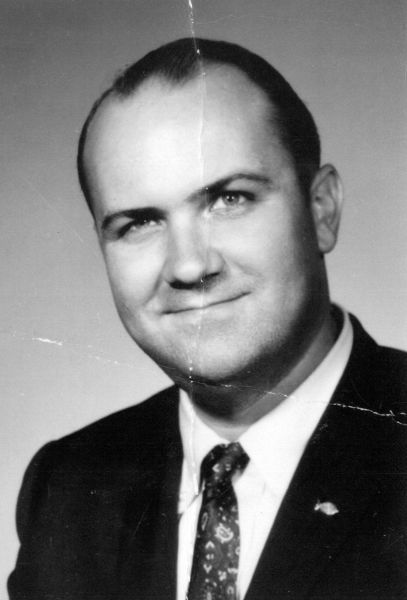
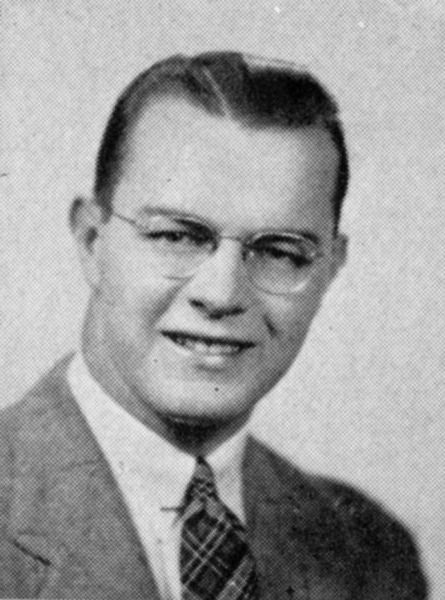
Twenty years ago, the Wheaton Alumni magazine began a series of articles, titled “On My Mind”, in which Wheaton faculty told about their thinking, their research, or their favorite books and people. Former Professor of Education Richard Turner (who taught at Wheaton from 1981-1994) was featured in the Winter 1994 issue.

It was as a high school student that I first heard of Wheaton College. In a magazine called Christian Life and Times I found articles written by people from all walks of life–pastors, housewives, missionaries, medical personnel–diverse both in occupation and in theological perspective within a broad Christian context. They loved the Lord and articulated this eloquently. Many of the biographical notes declared they were graduates of Wheaton College. I decided if Wheaton College graduated Christians of such quality, Wheaton was where I wanted to attend college.

After four years in the Air Force, and as a married student at Wheaton College and Graduate School in the fifties, I studied with professors who had both academic rigor and a Christian graciousness. Kantzer, Tenney, Mickelsen, Holmes, and Hawthorne taught their students to think critically and fairly at issues where there was disagreement. Cairns taught us to look at cultures through history. Taylor and Buswell taught us to look at cultures in various areas of this earth. Wheaton College provided us with a wonderfully broad, rather than provincial, outlook on the world.

Following more than twenty years as a teacher and principal in local schools, I returned to teach in the department of education. I have found that academic rigor and Christian graciousness are still alive and well at Wheaton College, along with the same reverence toward Scripture and willingness to look at issues openly, critically, and fairly.

As I retire from Wheaton at the end of this college year, I have two hopes. One is that more people of color will be both attracted to the College and made to feel welcome. Having spent most of my military time in Asia and the last twenty-five years attending and inner-city church, I have appreciated the diversity of God’s people. About the turn of the century, ninety percent of the world’s Christians were said to be white and western. In the nineties over half are said to be people of color.

Wheaton has a rich heritage in students who have lived in other countries, primarily as missionary kids. They add to the multicolored mosaic known as the body of Christ. But they are mainly white and western. Only about ten percent of the Wheaton student body come from a different racial or ethnic background. Without more of this type of diversity our students are deprived of the full richness that God’s people have to offer. The College has attempting [sic] to attract those of various backgrounds to come as students, staff, and faculty.

A second hope is that Wheaton will maintain a balance in attracting students from and preparing students for both private and public schools. Much has been written in recent years denigrating the public schools of this country. Conditions in the schools do mirror conditions in society. This is often true in private Christian schools as well as in public schools. The difference I have observed between Christian and secular school students is that Christian school students know more Bible content than Christian students in public schools. There seems to be little difference in behavior. Since eighty to ninety percent of American’s youth attend public schools we have an obligation to them. There are many Christian teachers in the public schools who by their lives are influencing America’s youth and our society in general. The public schools are just as much a mission field as an overseas destination. God will call some to public schools. We should be obedient to his call.

———-

The following statement was included at the time of publication:

Dr. Richard Turner ’52 received his B.A. in Bible from Wheaton, his M.A. in theology from the Wheaton Graduate School, and his C.A.S. and Ed.D. from Northern Illinois University. He has served as chair of Wheaton’s department of education since 1981. He was a principal in Wheaton public schools from 1969-81 and a teacher in Glen Ellyn and Wheaton schools from 1960-69. From 1948-52 he worked in air traffic control for the U.S. Air Force. He and his wife, Connie, live in Wheaton and have three children and three grandchildren.

Dr. Howard Hendricks

Howard G. Hendricks, longtime professor at Dallas Theological Seminary, died on February 20, 2013, at age 88. In addition to writing, classroom teaching and conference speaking, he mentored such Evangelical leaders as Tony Evans, Joseph Stowell, Chuck Swindoll, David Jeremiah and Erwin Lutzer.

Hendricks, interviewed by The Dallas Morning News in 2003, remarked, “You’re looking at a completely fulfilled human being. If I died today having produced some of the people God has given me the privilege of shaping, it will have been worth showing up on the planet.” He earned his bachelor’s degree from Wheaton College in 1946 and a master’s degree from Dallas Theological Seminary in 1950, joining its faculty a year later. Known as “Prof” to generations of students, he remained until 2011, when health issues forced him to retire.

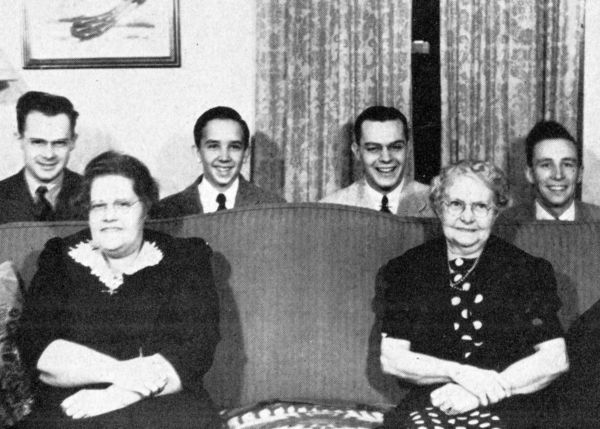
During his years at Wheaton, Hendricks roomed with three other male students in “Peterson’s Palace,” a privately owned home near campus. He was a member of the Beltionian Society.

Howard Hendricks, top row, second from right, 1945

If Mugg Were Pope…

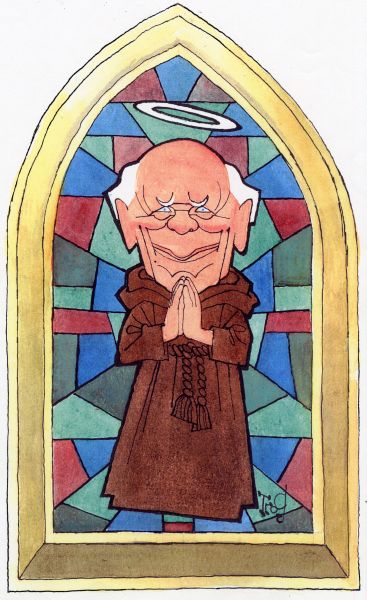
Evidently, no one asked Malcolm Muggeridge what he would do were he suddenly elevated to the papal throne; nonetheless, the indomitable journalist, not even Catholic at the time, offers his fantasies on the prospect. “If I Were Pope…” appeared in The National Review, June 9, 1978, the so-called “year of three popes,” during which Pope Paul VI died, Pope John Paul I was elected and reigned for one month before dying, and Pope John Paul II was elected to an influential 27-year papacy. As Pope Francis begins his pontificate after the resignation of Pope Benedict XVI, perhaps it is appropriate to revive Muggeridge’s conservative ruminations on a few ecclesiastical matters.

Summarizing his points:

1) Locating a private, quiet retreat, perhaps Castel Gondolfo, Pope Malcolm would “…meditate upon the Church’s extraordinary survival through the twenty centuries of Christendom despite every sort of abomination committed by, or under the auspices of, my predecessors…”

2) Considering the ramifications of Vatican II, he would “…meditate upon the Church’s present circumstances, so full of confusion, strife and lunacy following Pope John’s Vatican Council and the amazing decision resulting therefrom to have another Reformation, just when the former one – Luther’s – seemed finally to have run into the sand.”

3) Not embracing complete isolation, he would “…have Mother Teresa and some of her Sisters of Charity with me at my retreat, her cooperation having been a precondition of my accepting the pontifical appointment in the first place…Her extraordinary influence and clarification are conveyed, not so much by words or exhortation, as by the love she radiates, shining out from her visibly, like light.”

4) Leaving the serenity of his retreat to address a troubled society, he would “…reissue Humanae Vitae in a greatly simplified form, reinforcing its essential point than any form of artificial contraception is inimical to the Christian life.”

5) Next, “…I should suspend the prohibition of the Tridentine Mass and the traditional Latin liturgy, which would henceforth be permissible whenever and wherever there was an appreciable demand for it. The disco-style vernacular worship, with its sadly banal words, which has come to take the place of the traditional liturgy would be allowed to go on, but I should secretly hope that, as fashions changed, it might wither away.”

6) Muggeridge would tighten the noose in other ways, as well. “Imagining myself sitting in the Vatican, or strolling up and down the Vatican garden, I feel sure I should be assailed by the temptation to do a bit of excommunication and anathema on my own account as and when the opportunity presented itself. Freedom-fighting prelates, liberated nuns, Marxist-dialoguing Jesuits, and other such ribald clerical phenomena of our time, along with the accompanying literature, would be, for me, tempting targets.”

7) Thus empowered, he would also “….prepare the way for an underground Church to go on functioning when the open one has been either forcibly disbanded, or so corrupted and disoriented from within that it can no longer fulfill its traditional role…What I have in mind would be a Christian maquis or clandestine Catacombs Order, whose superior and members would be chosen with the utmost care for their abiding faith, mystical insight and love for the Church and its orthodoxy.”

“That would be a papacy indeed!” he concludes. “Perhaps – who can tell? – some unexpected papabile is even now being divinely groomed to take it on.”

Muggeridge joined the Catholic Church in 1982. He died in 1990. His papers (SC-04), comprising manuscripts, correspondence, videos and memorabilia, are archived at Wheaton College Special Collections in Wheaton, IL.

Blessed are the Merciful

by Dr. Zondra Lindblade ’55

The great blue heron is perfectly camouflaged against the lakeshore pines. The green caterpillar is protectively colored on the begonia leaf. Camouflaged treasures are everywhere, but experienced northwoods eyes see beyond the pines and begonias to recognize the disguised.

In many ways, a “sociological imagination” resembles northwoods eyes and wilderness expediency. The imagination first examines obvious features of how we live together in families, corporations, and in society, and then probes beneath the surface to “see” camouflaged functions and meanings. What is camouflaged often surprises and sometimes contradicts conventional wisdom.

The sociological imagination is a filter, a directional lens that focuses on the obvious and hidden human experiences. Once awakened to the reality of groups being more than the sum of individual parts, the filter questions and educates the illusive realities that question “what everyone knows.”

For some time the issues of social welfare reform have occupied our “imagination.” These stimuli have opened my eyes and heart to a particular phrase in Micah 6:8.The call to “do justice” in this verse is resounding for sociologists who study cause and effect of social stratification, stigmatized education, or inner-city miseries. These are vacuous academic activities if there is no heart cry for justice. God’s command in Micah 6 to do justice is daunting.

In the next phrase, God requires believers to actually love mercy. A desire for justice may overlook and camouflage God’s compelling love for mercy. Mercy is assistance given to those who do not deserve help–or who think they do not. Mercy is a reflection of God’s character (Ps. 69:16) and part of His plan for repentance (Rom. 2:4).

What does it mean–to love mercy? Discussions of welfare reform usually ignore the priority God places on mercy. Do we consider mercy nalve, ill-informed, and shortsighted because mercy is offered before merit? Mercy does not consider independent responsibility as a first–order priority. Do we focus on eradicating dependency and setting the welfare mother on is both fulfilling to her and good for society? Are we occupied with making sure that sinful choices bring hard consequences? Are we slow to persevere when lessons experienced are not learned, when positive change is one step forward followed by four steps back?

Mercy may well invoke a “reckless advocacy” for the marginalized and undeserving. Mercy might offer help with no questions asked or answers expected. The example of the Savior is strong and convincing. He is a reckless advocate who “while we were yet sinners died for us.”

In my 34 years of teaching, occasionally there have been undeserving Wheaton students who have requested academic mercy from me. I have found that the students who received that mercy remember this help with greater appreciation than most of the assignments diligently pursued. And mercy remembered is often mercy later given.

———-

Twenty years ago, the Wheaton Alumni magazine began a series of articles, titled “On My Mind”, in which Wheaton faculty told about their thinking, their research, or their favorite books and people. Former Professor of Sociology Emerita, Zondra Gale Lindblade Swanson ’55 (who taught at Wheaton from 1964-1998) was featured in the Autumn 1998 issue. Dr. Lindblade was former department chair and retired in May 1998 after serving the College for more than 34 years.