Lunch with Leedy

John W. Leedy, professor of botany, joined the faculty of Wheaton College in 1937. His father, John W., had joined in 1929. In 1932 father and son journeyed to the Black Hills of South Dakota, discovering a beautiful spot which they would later recommend to the head of the chemistry department as an excellent location for an off-site lab and camp. Since 1935 the Black Hills Science Station has offered facilities for courses in astronomy, biology, zoology and ecology.

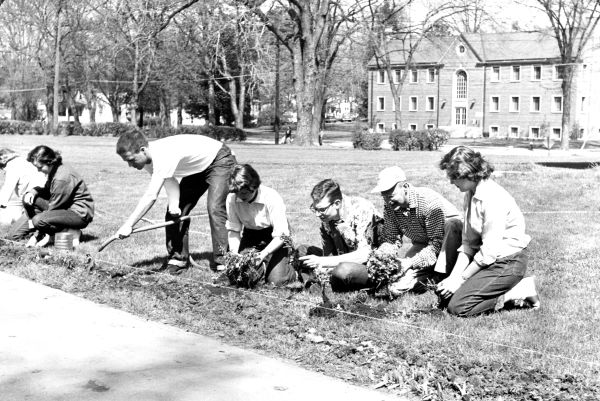
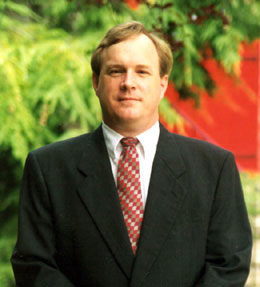
Dr. John W. Leedy was also known for his excellent, hands-on instructional skills, receiving the Teacher of the Year Aware for 1970. He supervised student crews, planting flowers beside walks and drives. Leedy also presented exotic foods to his classes and guided a well-attended tour through the campus, exposing his students to edible plants growing on or near the Wheaton College property. Under his expert tutelage the noon hour was known as “Lunch with Leedy.” He died in 2005.

Learning as Integration

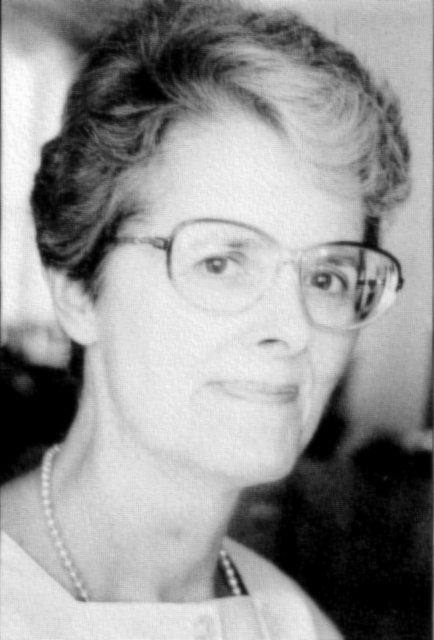
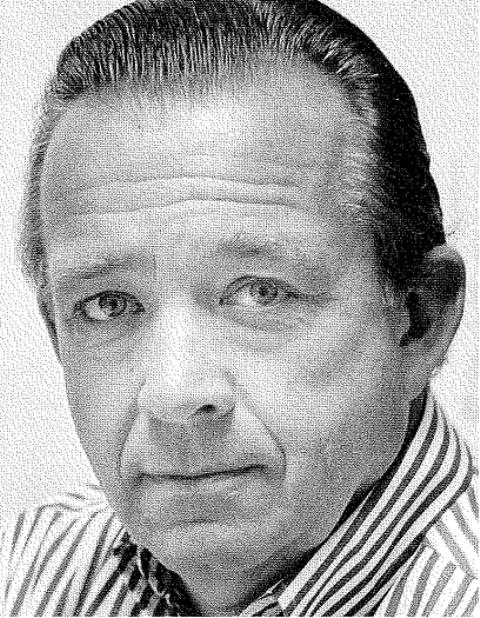
Twenty years ago, the Wheaton Alumni magazine began a series of articles, titled “On My Mind” in which Wheaton faculty told about their thinking, their research, or their favorite books and people. Associate Professor of Theology Emeritus, Donald Max Lake (who taught at Wheaton from 1970-2000) was featured in the Autumn 1994 issue.

After having taught at Wheaton for almost 25 years, I almost always have students in my classes who are children of some of my former students from the early 1970s. I’m never sure what reaction I’ll get from these young people. The fact that their parents did not warn them against taking my classes is encouraging.

As I personally look back over almost 30 years of being at Wheaton, both as a student and now as a faculty member, I sometimes ask myself, What did I remember from my classes? From our days as students, we often remember some irrelevant point like the prof wasn’t very good at spelling on the blackboard, or she never wore blue, or he overused the expression, “It is a well- established fact.”

Few of my professors, either from undergrad or grad school, truly stand out. And as I reflect upon the courses I took as a student, the content is a blur. So then, what is teaching? And what is learning?

One answer to these questions has to do with an over-used word: integration! For many years now, we’ve repeatedly emphasized the “integration of faith and learning.” There is, however, a much more powerful and pertinent use of this term: learning as integration. Although I’m only a novice at the discipline of psychology, I’m convinced that one of the major functions of the brain and the mind, or the self, is the ability to integrate all we see and hear. I rarely know what is going on the the minds of my students as I lecture or have them view a video. But for those who are awake, I know that a process is taking place in which ideas, facts, and perspectives are being integrated. (I often tell my students that one of the most profound things Siddhartha Gautama, known as Buddha, ever said was, “I am awake!”) Like the dairy process of homogenizing milk, learning is a also a process of homogenizing the style and personality of a professor as well as the content of the course and the subject matter with the student’s being.

That students may not recall a single lecture or a specific text or even a key idea from a course should not surprise us. Forgetting is one of the most troubling but most valuable dimensions of our selves. One can only carry so much baggage! On the other hand, a powerful process has occurred: the mind, the self, has integrated each new course into what is becoming a person or a new being. Parents notice these changes in dramatic and subtle ways. And as a parent, part of me wants my children to ever remain the same, and yet I know that change is the heartbeat of life. And so coupled with integration is the vital result of all learning: change.

So now as I approach each new year and each new class, I keep asking myself, How do I want to change these students? And I keep challenging them to ask themselves, What am I becoming? How have I changed as a result of this course? Facts and ideas are vital to this changing process; however, it is possible to look at learning as only the recall (a kind of Platonic view of education) of information and for the sake of the test, a regurgitation.

I’ve been thinking a lot lately about the educational process as being not only change but also character-formation. I am concerned that those of us who work in Christian higher education have allowed the world, the educational world, to set the agenda for us. Accreditation associations have a way of forcing all institutions into a rather conformist mold. But the call of Jesus to make disciples, and the Biblical teaching that “we shall all be conformed to the image of Christ” challenges me to think of my teaching more as forming character than in teaching a subject or better yet “teaching students.” Those who have studied Jesus’ message and methods are convinced that he was a master Teacher, but Jesus was very much a nonconformist and he often dared to challenge the status quo.

This December, as I complete 25 years teaching at Wheaton, I am grateful to God. I cannot think of any place on this planet where I would have rather spent the past 25 years. I never dreamed, as a green Missouri farm boy, when I first stepped foot on Wheaton’s campus in September 1955, that someday I’d be on the faculty. Professors including Gerry Hawthorne, Ed Hollatz, and Kenneth Kantzer made a lasting impression on me–they changed me!

How did your years at Wheaton change you?

———-
Dr. Lake graduated from Wheaton in 1959 as a Bible major, took his M.A. in 1960 in New Testament theology and earned his Ph.D. in historical theology at the University of Iowa (1967). Don and his wife, Kristen, have three sons and one daughter. At the time of publication, Dr. Lake contributed several articles to encyclopedias and books, and was a member of the Evangelical Theological Society, as well as the American Academy of Religion. In addition to his teaching, he served pastorates in Missouri, Iowa, and Illinois and also directed a unique Christian housing program knows as King’s Partners International.

Charles Finney and Wheaton College

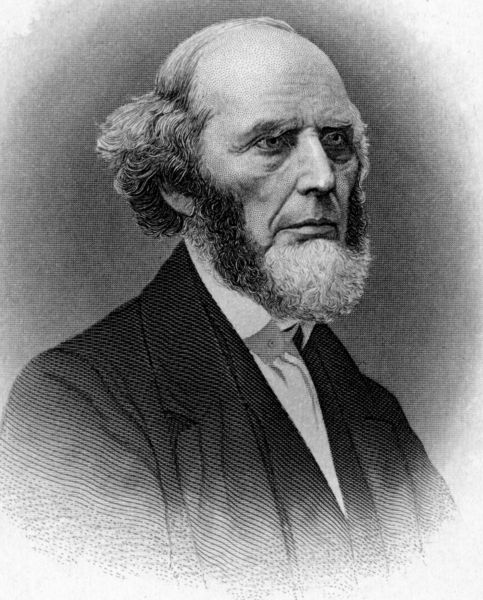
Billy Graham, ’43 graduate of Wheaton College, emerges from an honorable heritage of “crusade” evangelists like D.L. Moody, Wilbur Chapman and Billy Sunday, preachers renowned for conducting massive citywide campaigns. Laying the groundwork for all such ministries, however, was Charles Grandison Finney (1792-1875), the first great evangelist of the Second Great Awakening, who established such familiar patterns as offering the public invitation (now known as the “alter call”) to sinners to accept Christ’s free gift of grace, encouraging them to walk forward and deal with God at an “anxious bench;” and praying extemporaneously from the pulpit, rather than reading from a book. Finney’s innovations, now common practice, were groundbreaking for American Protestantism. As such his influence deeply colored the spirit of Wheaton College, though he never visited its campus.
Initially practicing law in New York, Finney dramatically converted to Christ through the counsels of Presbyterian theologian George Washington Gale. Studying for the ministry under Gale, Finney acquired his preaching license and served as pastor for several years in New York City before commencing his extraordinarily successful itinerant preaching. Eventually he served from 1851-65 as professor and president of Oberlin College in Ohio. Finney, an ex-Mason, was fiercely anti-Lodge and unshakably abolitionist. These qualities were most appealing to a young pastor named Jonathan Blanchard, visiting the Oberlin campus to deliver a speech, in addition to investigating the work of the Holy Spirit among the students and staff. Blanchard would serve as president of Knox College in Galesburg, Illinois, a work community named after the man who converted Finney, George W. Gale. In the late 1860s, after Blanchard had assumed the presidency of Wheaton College, Finney fully supported his efforts in founding The Christian Cynosure, the printing agency of the National Christian Association, dedicated to thwarting the Masonic Lodge.

Jonathan’s son, Charles Blanchard, second president of Wheaton College, remembers Finney from a visit to Oberlin:

President Finney of Oberlin was another of the great souls whom God permitted me to meet in my early public life. Lecturing in his city he invited me to dinner and gave me the privilege of an hour or so of delightful conversation. Among other things he said: “You frequently meet with opposition, do you not, in your work against the lodges?” I replied that this was true. He said: “That is always true when you are doing good. It used to be true of us here in Oberlin. When I came to this place there was not a church between Boston and Buffalo which wanted to see me. Associations, conferences and presbyteries refused to ordain our young men because they had studied here. Now,” he said, “We are really too popular. The world does not hate us anymore. Our great danger is our popularity.” He continued, “You need not be worried while you find that the world hates you, but if ever the world should come to love you and speak well of you and make your path easy, then,” he said, “you must beware for you are in mortal danger.”

Blanchard paints a vivid word picture of the magisterial preacher:

He was the most remarkable man to look at. Perhaps all great men are…His eyes were deep set, his brows beetling over them. His eyebrows were gray and large, intensifying the effect of the brows themselves. His eyes glowed under excitement and inspiration. He seemed like an old prophet. It was easy to imagine that he resembled Ezekiel. I think in the temper of his mind he did resemble him. Not so much a mourning prophet as Jeremiah, not so much a prophet of the court as Isaiah, rather like Ezekiel who saw visions of eternal things and who saw all temporal things in things in the light of the eternal….President Finney was another of those men who did not confer with flesh and blood. He took his orders from Heaven and I do not think it would have made the slightest difference to him if the rich and wise and powerful of the world could have been gathered in one company to denounce and threaten him. God was so real that the voices of men sounded dim and uncertain in his ears.

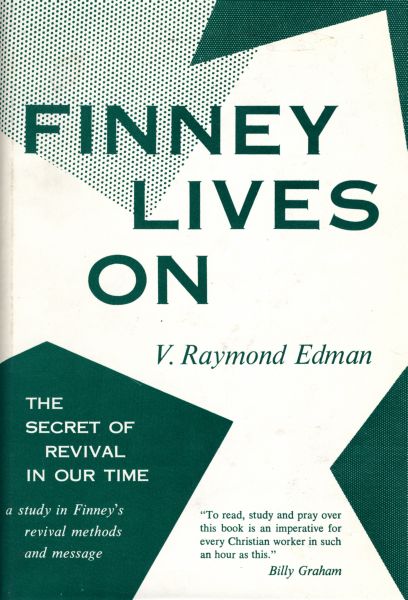
Finney’s abiding influence on Wheaton College is also evidenced in the ministry of its fourth president, V. Raymond Edman, who was deeply concerned about revival. In 1951 Edman published Finney Lives On: The Secret of Revival in Our Time, of which Billy Graham remarks, “To read, study and pray over this book is an imperative for every Christian worker in such an hour as this.” Edman summarizes his subject in the epilogue:
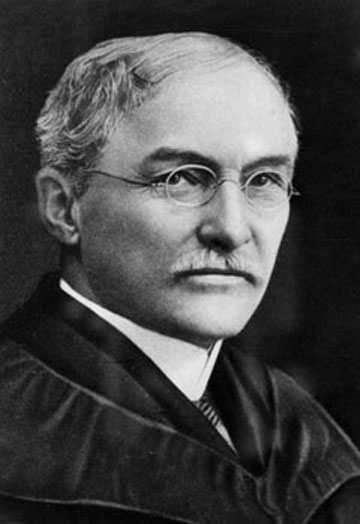
Thus was Charles Grandison Finney, the lad who grew up in the backwoods of America without any knowledge of the gospel, the young lawyer who met the Lord Jesus in true penitence and prayer, the man who was devoted to the Scriptures and the Savior, the revivalist whose tireless labors shook America and Britain in decades that were dark with human greed and godlessness, the pastor and college president whose ministry led multitudes to the Master and sent them to the ends of the earth in His glad service, the servent of Christ who still lives in Christian hearts the world over as he thunders to us in his Memoirs, Lectures on Revivals of Religion, and Lectures to Professing Christians. Finney lives on in hearts that need revival. Pray for revival, and learn from him the open secrets of revival.

That Book

Twenty years ago, the Wheaton Alumni magazine began a series of articles, titled “On My Mind”, in which Wheaton faculty told about their thinking, their research, or their favorite books and people. Professor of Bible Emeritus James Julius Scott, Jr. (who taught at the Wheaton Graduate School from 1977-2000) was featured in the Summer 1994 issue.

He was already in his forties when first we met. It was only years later that I, his first born, became increasingly aware of his person, manner, and habits which by then were well set. There was one custom, discipline call it what you will–which remains my earliest conscious memory of him, Every morning he was somewhere in the house reading from that black, leather-covered Book.

He was not a “reader” of a wide range of literature. His business and his farm, but especially his family and church, occupied virtually all of his time. His personal time was spent with that Book. He had not finished college, he had no special training in his particular field, and certainly never had a formal academic course in Bible or theology. But he knew that Book, from Genesis to Revelation.

Although somewhat quiet and unassuming, he was recognized as a leader in his profession, community, and Christian circles. I came to realize, probably often subconsciously, that he approached all of life under the influence of that Book. Underlying principles had seeped into his life and thought from that Book with which he had saturated himself. He ran his home, business, and all other affairs on those principles. It was the basis of his life and a major reason for his success.

The old man gave the “Charge to the Minister” when his eldest son was ordained to the ministry. As far as I know, it was his one formal statement about that Book.

I charge you to preach the Word, to preach the written Word…From my observations as a layman, it seems to me that an alarming number of false prophets have arisen today in our churches and institutions of learning…Beware of false prophets who are teaching and preaching only those things which suit themselves. Guard carefully your relationship to the Scriptures. They are your authority…Remember, Jesus never questioned any…portion of the Scripture, and you can trust his judgment.

I further charge you never to fail to declare the whole counsel of God which is contained in the Scriptures of both the Old and New Testaments, and to avoid the pitfall into which many have fallen, thinking that there are some portions of the Scriptures that are no longer relevant.

There it is, his attitude toward the Bible. It is the Christian’s authority because it was Jesus’ authority. It is the whole Bible to which the Christian is to be committed, and it has continuing relevance. There was something else, between the lines, both written and lived. He loved the Bible because through it he had come to a knowledge of and a life-long, life-controlling commitment to and love for the God of the Bible.

Not long after my ordination, I came to realize that in spite of extensive training, I simply did not know my Bible, at least not in the way Daddy did. Something was missing. Perhaps without being aware of his influence, I set myself upon an intensive program. In spite of the demands of a full-time pastorate, I read through the Bible, consecutively, seven times in the space of two years. Something changed; I began to get the “big picture”; long-familiar parts began to fit into the whole. Saturation and a new foundation for life began. Ideas, teachings, and attitudes became susceptible to reevaluation of a growing familiarity with “the whole counsel of God” (Acts 20:27). To this day the discipline of “reading in big chunks” continues to be an essential, necessary part of my daily training and devotion.

The Bible and the areas of technical study and interpretation of it are the focus of my day-to-day responsibilities at Wheaton. My training focuses on the academic study of the text, languages, literary features, historical world of the Bible, and the development of Christian thought and history which are related to it. I must deal also with controversies, both old and new, which relate to this material. I am thoroughly convinced of the importance and relevance of this study, not only for the specialist, but also for the knowledgeable Christian who must live in the modern world.

I must frankly acknowledge that the irresponsible use of my discipline has too often subverted the spiritual realities which I know lie behind the Bible and Christian experience. Academic biblical and theological studies can easily degenerate into catalysts for skepticism and cynicism. The ill-informed or malicious use the academic study of the Bible to create stumbling blocks, to dampen zeal, quench the Spirit, or destroy faith for the naive, immature believer.

This, I am convinced, is not inevitable. On the contrary, the comprehensive, systematic, evaluative study of the Bible and the Christian faith can and should result in increasing knowledge, maturing faith, strengthening commitment, and developing spiritual discernment. It is an important component of that teaching which trains in righteousness, reproves and disciplines in order that one may be “complete, equipped for every good work” (2 Timothy 3:17). It is the basis for that type of Bible-centered world-and-life view that Wheaton sees as essential for consistent Christian work in each academic discipline and for balanced Christian living.

I keep asking myself, what do I really want for my students? Three things. First, that they will come to know the Bible itself, its content and approach, and especially its “big picture.” I can only help them by pointing out the general overview, the events, people, and major teachings of the Bible. I can then encourage them to seek to fill in that outline with the type of disciplined, consistent reading and study exemplified in my father’s life. Through that, I am convinced, can come the type of life-controlling saturation which was his throughout his pilgrimage.

Secondly, I want my students to love the Bible. Again, I can’t make them do this; but I try to share my love of it with them. We must keep all things in proper perspective; Bible study is not an end in itself. And so, third, more than anything, I want and pray that my students will have a growing knowledge of, commit to, and to be lost in love for the Once of whom the Bible speaks.

———-

The following statement was included at the time of publication: Since 1977, Dr. J. Julius Scott, has taught at the Wheaton College Graduate School. He received a B.A. from Wheaton College in 1956, a B.D. (the equivalent of the M.Div.) from Columbia Theological Seminary in 1959, and a Ph.D. from the University of Manchester in 1969. He is an ordained minister in the Presbyterian Church in America. Prior to teaching at Wheaton, Dr. Scott was a professor of religious studies at Western Kentucky University from 1970 to 1977, and professor of Bible at Belhaven College in Jackson, Mississippi, from 1963 to 1970. Dr. Scott has authored numerous articles, and he is a member of the Society of Biblical Literature, the Evangelical Theological Society, the Institute for Biblical Research, and the Chicago Society for Biblical Research. In the summers of 1984 and 1989 he taught the Wheaton in Israel (Holy Lands) program, and last year (1993) he received the Senior Teacher of the Year award. He has been on sabbatical for the 1993-94 academic year in North Carolina, reading and writing about New Testament theology. Dr. Scott and his wife, Florence, live in Wheaton and have three grown children.

An everpresent journey of re-discovery

In a recent posting on TheAtlantic.com, Suzanne Fischer, notes that many “discoveries” that emerge from archives and libraries are not true discoveries but the result of good cataloging and description. She was referencing Charles Leale’s medical report written the morning after the assassination of Abraham Lincoln. Fischer rhetorically asked her reader if the document had been uncovered in an old attic or beneath a set of stairs. No, she replied. The document was “right where it was supposed to be,” (emphasis by Fischer). The work of archivists and librarians is to describe things so that they may be found and this is exactly what is being done with a significant backlog with Wheaton’s Missions and Evangelism Collection.

Over the years the former Billy Graham Center Library accumulated volumes of interest that lay beyond the staffing resources to fully catalog. Simple bits of descriptive information was added to the library catalog awaiting the day when the records could be expanded and rounded out to include all the pertinent information necessary to help individuals find and use specific volumes. During the summer of 2012 efforts have been underway to sort through the thousands upon thousands of volumes to locate the items of most interest to missions and evangelism for fuller cataloging. Materials not added may be diverted to other suitable collections, such as the Hymnal Collection, the library’s general collection, or elsewhere.

Upon reviewing volumes that had been separated and taking a second pass to be sure that no missions or evangelism titles were missed, two copies of College Students at Northfield were found sitting side-by-side.

College Students at NorthfieldNorthfield was the birthplace of D. L. Moody and was the location of one of his three schools that he helped found: Northfield Seminary for Young Ladies (1879), Mount Hermon School for Boys (1881), and Moody Bible Institute (1886). In 1880 Moody began his Northfield Conferences that drew the likes of George Pentecost, A. J. Gordon, Jonathan Blanchard, and Hudson Taylor, among others. Several years later Moody realized the value of drawing college students into service for missions. With the help of Mr. L. D. Wishard, then college secretary of the International Committee of the Young Men’s Christian Associations of the United States and Canada, the Student Volunteer movement got its start.

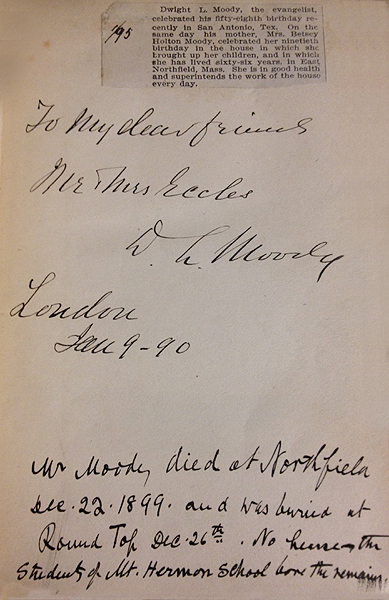
Now, back to the two volumes. The first and the second were the same. They had been set aside and were not to be included, yet upon this secondary review, the content had direct relevance to missions and evangelism. While flipping open the second volume the fly-leaf jumped forth. On this page was the signature of Dwight Lyman Moody with an inscription to “my dear friends, Mr. & Mrs. Eccles.” At the bottom of the page was a note written severals years later that noted Moody’s death and his being carried to his grave by the students of the Mount Hermon school.

Dr. F. R. EcclesEccles supported the work of Moody’s ministry. Born in 1843 near Sarnia, Dr. Friend Richard Eccles attended the University of Toronto’s School of Medicine and received an M.B. in 1867 and an M.D. in 1868. Opening a practice in Arkona, Dr. Eccles practiced for nine years before completing studies at St. Thomas Hospital in 1876. He was appointed Professor of Physiology where he instructed students for six years before becoming a Professor of Gynecology. Eccles also served as Dean. As well as being an educator, Eccles was a scholar as he researched, delivered papers, and published his findings. Furthering the work of medical education, he delivered the opening lecture of the Medical Department of the Western University in London, Ontario in 1894. After his retirement he was acknowledged for his work with an honorary LL.D. degree in 1916. Dr. Eccles died in 1924. The entry for Eccles in the Cyclopedia of Canadian Biography notes that he was heavily involved in religious work and served as the president of the YMCA in London, Ontario for three years (1880-1883).

To be sure, this volume will no longer be overlooked, nor will the Christian testimony of Dr. and Mrs. Eccles.

Ray Bradbury: Prophet of Joy

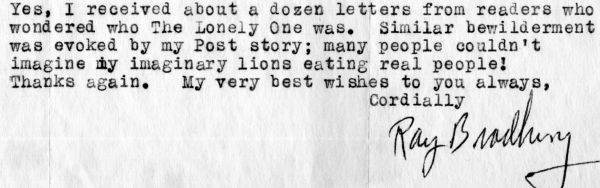
Ray Bradbury, who died on June 5, 2012, stirred deep wells of wonder among his readers for over seventy years, writing poetry, novels and short stories. Titles such as Dandelion Wine and Fahrenheit 451 continue to inspire and provoke. His influence is enormous, extending from literature to film and television, as he occasionally functioned as creative consultant to such entertainment pioneers as Walt Disney and Rod Serling, creator of The Twilight Zone. From time to time Bradbury’s cosmic reach extended to the world of Evangelicalism, Wheaton College in particular.

Muriel Fuller, author, prominent editor and 1925 Wheaton grad, corresponded with Bradbury in 1950. In his reply, archived at Wheaton College Special Collections (SC-87), Bradbury thanks Fuller for her positive feedback regarding his short stories and encouragement that he should consider collecting them, which he had already recently done with The Martian Chronicles and The Illustrated Man.

A notable Christian commentator on Bradbury’s themes is Calvin Miller (SC-24), former pastor, current Professor of Preaching and Pastoral Ministry at Beeson Divinity School, poet and author of several fantasy novels, whose papers are archived at Wheaton College. Miller argues that Bradbury, claiming no specific beliefs, nonetheless stimulates intuitive feelings that allow for the development of a rich, expansive faith. The following excerpts are derived from Miller’s essay, “Ray Bradbury: Hope in a Doubtful Age,” included in Reality and the Vision: 18 Contemporary Writers Tell Who They Read and Why (1990):

Sometime in seminary Bradbury first fell into my world (or perhaps I fell into his). The scholarly tedium of learning how to be “truly spiritual” can coat all things bright and beautiful with dullness, and somewhere between hermeneutics and apologetics I needed something to wake my imagination to wonder…And Bradbury, while not often explicit about the content of his faith, professes a glorious, self-declaring confidence in God. I have scarcely heard Pentecostals be more rapturous than was Bradbury’s exuberant declaration on that tenth anniversary of the Apollo landing…My own concept of God can never remain static after coming into contact with the fictional output of a man driven by such near-spiritual forces, a writer with such a dynamic view of the God who leads man toward scientific maturity. Bradbury, at his best, is not only a prophet for a depressed people; he is a kind of deliverer, awakening our sensibilities…But hope is the real stuff of Bradbury. A Christian positivism pervades his works and that quality, more than anything, marks his work as distinctively Christian in tone. In the glorious finale to Something Wicked This Way Comes, Jim Nightshade is brought back to life by a father and son dancing and singing “Camptown Races.” Joy is the only cure for every monstrous evil work…We never “get to” the future — it beckons us, never to receive us. But it is always there and it is a place of hope! Such is the insight we need in order to get up in the morning. This insight, which I sucked from the very marrow of Bradbury’s bones, is also the ultimate promise of Christ. Christ is alive — His Living Being is the transforming Easter news! But Jerusalem — made new — is descending: this living vision is the hope that guarantees our future.

In 2007, staff from Wheaton College conducted a phone interview with Bradbury from his home in Los Angeles, inquiring about a possible connection between him and C. S. Lewis, whose papers are archived at the Wade Center. Both men wrote about the planet Mars, publishing in American pulp magazines of the 1940s and ’50s. In one book and two unpublished letters, Lewis commends Bradbury as “the real thing” as opposed to less gifted pulp hacks, speaking highly of his “poetic” style. However, Bradbury, stating that he “took Lewis’s Screwtape Letters everywhere I go,” had not read any of the Oxford professor’s other books, nor had he met or corresponded with him.

The papers of Calvin Miller and Muriel Fuller, located in the Special Collections on the third floor of the Billy Graham Center, are available to researchers.

The president meets the presidents

Charles Blanchard, second president of Wheaton College, recalls in his autobiography (1915) crossing paths with two Presidents of the United States and other notables.

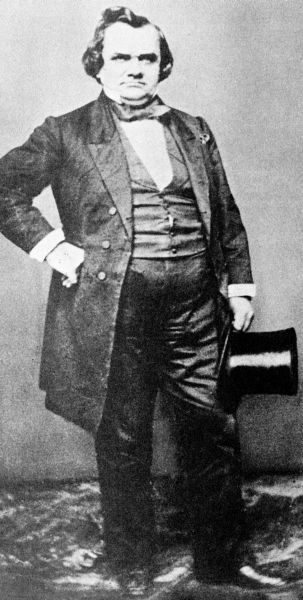
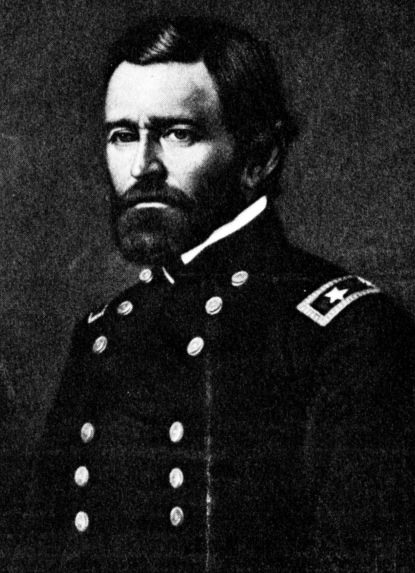
I have never known any of them in an intimate way. They were either before my time or had homes in distant parts of our country, but I have had the privilege of seeing a number of them and I count this also among the privileges of my life. The great Lincoln I saw when I was a boy of ten years. I heard him at that time in the Lincoln-Douglas debate. It has never passed from my mind. I do not suppose it ever will. The tall, angular loose-jointed, benevolent man, rather inexpensively clothed, the short, well-dressed, polished-looking opponent, the seething crowds, the bands of music and the storm of flags! As I remember there were twenty music organizations in the procession that day at Galesburg. The number may have been greater or less, I do not pretend to know. Twenty is the number which remains within my mind. The evident appeal to conscience and humanity in the speeches of the great President and the deft, cunning, clever twisting and turning of his opponent, these came to me even as a child and remained. After he had passed away I met in the White House at a reception General President Grant, who also was a great man of totally different type but one of the real men of our nation and time. I have always thought better of him since I read the story of his own life. He was injured by his friends. He was too loyal to his friends, that is, his loyalty made him true to them when he ought to have placed the country before them. In purpose no doubt he did; he was of Scotch parentage and it is hard for a Scotchman to give up his friend.

The Teaching Life

Twenty years ago, the Wheaton Alumni magazine began a series of articles, titled “On My Mind”, in which Wheaton faculty told about their thinking, their research, or their favorite books and people. Professor of Old Testament Paul House (who worked at Wheaton from 2001-2004) was featured in the Summer 2002 issue.

When I was a senior in college, I once sat in my favorite professor’s office and thought that it must be a wonderful thing to be a teacher. Like most kids from rural Missouri, I never met a college professor while growing up. Thus, it never occurred to me to think about Christian higher education as a vocation.

By the time I had finished my B.A. at Southwest Baptist College, however, my teachers had instilled in me a sense of the importance of the ministry of instructing others for, as we say at Wheaton, Christ and His Kingdom. Since I entered the teaching life I have not wanted to do anything else, at least not in place of it. Teaching students, writing books, and learning from colleagues continue to confirm what I thought as an undergraduate–the teaching life is a wonderful calling. I think this is especially true because I get to teach the Bible, God’s inerrant written Word.

Teaching the Bible to today’s students is an interesting, sometimes frustrating, task. They often know little beyond the basic Bible stories they learned as children, since biblical content is often left out of youth-group meetings. So students know that they should wait to have sex and should tell others about Jesus, but often little else. The result can be a dangerous division between worship on Sunday or in chapel and decisions made during the rest of the week. Thus, my task is to help them learn the Bible’s contents so they can have some chance of applying the whole of Scripture to their increasingly complex lives. As they learn, many of them grow rapidly. Their Christian worldview blossoms as they apply the Bible to life.

Writing books is one way to teach the Bible to people I will never meet in person. I am not alone in this conviction. Think of how many readers Scott Hafemann, John Walton, Andrew Hill, and my other colleagues have helped understand the Bible. For that matter, consider how many people beyond the Wheaton College community have learned about history from Mark Noll, Kathryn Long, and Edith Blumhofer. Or how many readers know more about literature because of Leland Ryken’s books. Writing is teaching; it is not just a way of getting promoted or becoming famous, or infamous for that matter.

Learning from colleagues is a great benefit of the teaching life. Through the years I have not only learned more about the Bible from other teachers, I have also absorbed knowledge about literature, history, current events, music, and athletics. Sadly, I fear that no matter how hard anyone tries, my brain rejects scientific knowledge. Despite my deficiencies, being taught by other teachers is a marvelous experience that helps me integrate the Bible more fully into the lives of my students.

I recommend the teaching life to young people all the time. I also recommend that donors and prayer warriors do all they can to support it. The teaching life is one committed to helping people learn what matters and how to act accordingly. More importantly, at Wheaton it is a life committed to the Lord, the sufficiency of His Word, and the growth of His people.

———-

Paul R. House is a graduate of Southwest Baptist College (B.A.), the University of Missouri (M.A.), and the Southern Baptist Theological Seminary (M.Div. and Ph.D.). He has been a professor of divinity at Beeson Divinity School since 2004 and served for six years as associate dean. Previously, he taught at Taylor University, The Southern Baptist Theological Seminary, Trinity Episcopal School for Ministry, and Wheaton College. Dr. House is the author or editor of 15 books, including The Unity of the Twelve, Old Testament Survey, Old Testament Theology, and Lamentations. He has been pastor of churches in Missouri, Indiana and Kentucky. He and his wife, Heather, have one adult daughter.

Bezae by Air Mail

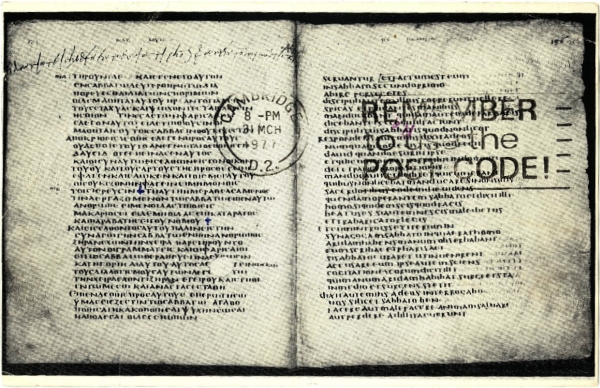
On the last day of March 1977 Jerry Hawthorne wrote from Cambridge, England to his colleague Gil Bilezikian. Hawthorne was abroad studying and wanted to alert him to a book by Howard Kee he had just finished reading. He wanted to be sure that Bilezikian was aware if he needed to include it in the book he was writing, later published as The liberated Gospel : a comparison of the Gospel of Mark and Greek tragedy. Hawthorne noted that Kee surveyed the literary antecedents of Mark, notably “Mark as ‘Greek Tregedy,’ Mark as ‘Comedy,’ etc.”

What is most notable about this brief postcard is Hawthorne’s description of Cambridge, which he said “is a wonderful place to retreat for quiet study–reading + research.” He spoke of going “into the bowels of the University library” and being taken beyond vaulted doors to be shown Codex D, the Bezae codex. He wrote to Bilezikian that seeing this 5th century vellum codex was “Priceless.” That postcard, shown here, is of the “famous reading from Luke 6:5 about the man working on the Sabbath.” He finished with an affectionate closing, “Love to you + all at Wheaton.”

Little did Hawthorne know in 1977 that a home near Tyndale College, Cambridge would bear his name. In 1994 the warden of Tyndale House notified the college of the availability of a home within walking distance to Tyndale. It became clear to the college leaders that Tyndale desired Wheaton to acquire the home. Donors were approached and Wheaton purchased the home. President Duane Liftin recounted at the time that “a lot of people said, ‘I think this is a great idea.” The donor wished to express his affection for Hawthorne and name the four-bedroom house after Dr. Gerald Hawthorne, professor of Greek at Wheaton for over 40 years. Through this gift Wheaton’s faculty members on sabbatical can travel to Cambridge and have full access to the facilities of Tyndale House and the libraries of Cambridge University. Having used Tyndale’s library as an Oxford student, Litfin recalled that “there’s nothing like it. It’s the crossroads of the whole world when it comes to studies.”

Living in “The Attic” at 712 Howard

712 Howard St, Wheaton, IL“The Attic” was one of the many off-campus housing options in which students resided during their years at Wheaton College. From the beginning of Wheaton and into the 1940s, the majority of students at Wheaton College and the Academy rented rooms in private homes.

712 Howard was such a home. Known as “The Attic,” this home was owned by the Hansen family from 1940 to 1943. Built in 1931 the home served as the residence for Billy Graham during his junior and senior years (1941-1943). During this time he lived with Lloyd and Albert Fesmire, Don Brown, and the Hansen’s son, Ken. Hansen later went on to be the chairman and chief executive officer of the ServiceMaster company, a company that grew to over $500 million in revenues under his leadership. He also served as a trustee of Wheaton College.

Though living quarters were likely more cramped, living within the nature setting of a home likely had its benefits. However, whether students stayed in College-owned or private homes, they were under the same regulations. Consultation with the Deans was a prerequisite for engaging any rooms. It was a system of the College being “in place of the parents,” while in school at Wheaton.