All posts by admin

Dispensation of the Mystery

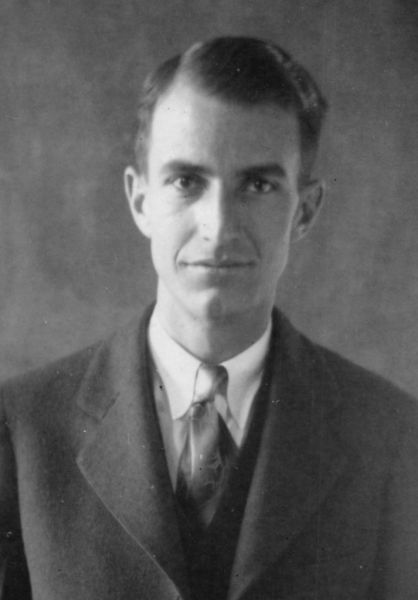
Charles F. BakerIf Charles F. Baker represented an extreme form of dispensational theology, his credentials were impeccable. Born of English immigrant parents in Dallas, Texas, in 1905, he attended Scofield Memorial Church, founded by C.I. Scofield, editor of the Scofield Reference Bible. Baker’s pastor was Lewis Sperry Chafer, who also founded the Evangelical Theological College, which later became Dallas Theological Seminary. Here Baker attended, a highly motivated student, again sitting under Chafer’s ministry. Graduating, Baker entered Wheaton College, accompanied by a letter from DTS registrar Rollin Chafer to Wheaton College registrar Enoch Dyrness. It stated: “Charlie is one of the best students we have ever had in the college and it gives me great pleasure to commend him to your faculty. Not only has his class work been of the highest grade, but he is one of the most spiritual men we have in the institution.” After successful studies at Wheaton Baker moved in 1932 to Milwaukee, Wisconsin, where he ministered for 23 years as pastor of Fundamental Bible Church. He also assisted J.C. O’Hair, pastor of North Shore Church on Wilson Street, Chicago, as chief engineer for broadcasting at station WPCC (We Preach Christ Crucified). In 1939 Baker founded Milwaukee Bible College; and in 1961 moved the school to Grand Rapids, Michigan, where it was called Grace Bible College. Retiring in 1967 he was named President Emeritus and Distinguished Professor of Theology. In 1971 Baker published his 688-page masterwork, A Dispensational Theology. In its preface he wrote: “Very few attempts have been made to produce a work on Theology which is dispensationally oriented. A survey of some two dozen standard works on the subject revealed the fact that more than half of them make no reference whatsoever to the subject of the dispensations. Most of those that do make mention of the Scriptural expression devote only the briefest reference to the subject, and their treatment of it is mainly from the viewpoint of Covenant Theology, which fails completely to recognize the distinctive character of the present dispensation, called by Paul the dispensation of the mystery, a plan and program of God which was kept secret from all former ages and generations (Colossians 1:26). Only one major work on Theology was found which recognized the dispensational principle in the interpretation of Scripture.” After his wife, Teresa, died in 1982, Baker moved to Escondido, California, and was married to a long-time friend, Ruth Lohman Smith, in 1985. Baker’s other books include Understanding the Book of Acts, Dispensational Relationships, and Understanding the Gospels. In addition, he was instrumental in the formation of Grace Gospel Fellowship, Grace Mission and Grace Publications as well as editing two periodicals, the Biblegram and Truth Magazine. He died in 1994.

Normative, mainstream dispensationalism, as espoused by Dallas Theological Seminary, Moody Bible Institute or Philadelphia Biblical University, might agree with aspects of Baker’s research, but it would vehemently object to many of his assertions. For instance, Baker believed that since Paul does not seemingly mention baptism by immersion after Acts 13, it is not valid for the current dispensation, though the Lord’s Supper should continue to be observed. Others, such as E.W. Bullinger and Oscar Baker, held that both baptism and the Lord’s Supper fall outside of the current, post-Acts dispensation, and are not valid church ordinances. Dr. H.A. Ironside, pastor of Moody Church, trustee of Wheaton College and part-time DTS faculty, utters hard words against ultradispensational doctrine in his 1938 apologetic, Wrongly Dividing the Word of Truth: Ultradispensationalism Examined in the Light of Holy Scripture: “I send forth this edition praying that the Lord will use it to deliver many more from the unscriptural and positively harmful teachings of the ultra-dispensationalists who, under the guise of setting forth high truth, are deliberately attempting to rob Christians of the greater part of their Bible.” Despite the controversy attached to his theological stance, Baker was known as a gracious, kindhearted man.
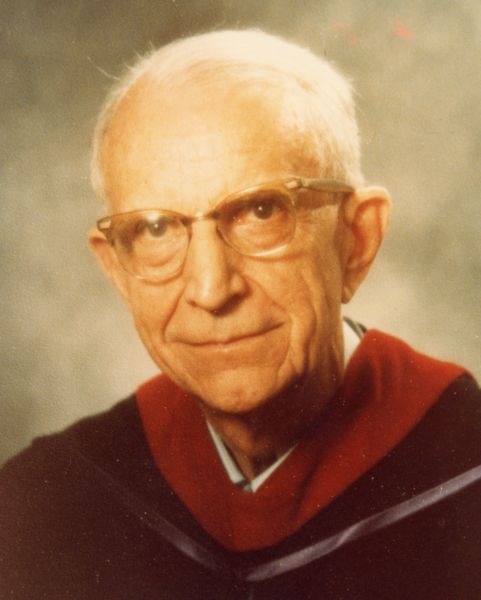
Other prominent ultradispensationalists were Harry Bultema, pastor of Berean Bible Church, and Cornelius Stam, president of the Berean Bible Society and brother of missionary martyr John Stam.

Scandal of the Evangelical Mind

Over fifteen years ago, noted historian, former Wheaton College professor, and current Francis McAnaney Professor of History at the University of Notre Dame, Mark A. Noll published his book “The Scandal of the Evangelical Mind.” In the intervening years, numerous responses, symposiums, conferences, and even his own reflections have resulted from this work. Some of his earlier thoughts about this topic were recorded when Dr. Noll was installed as the Carolyn and Fred McManis Chair of Christian Thought at Wheaton College. His inaugural lecture also entitled “The Scandal of the Evangelical Mind” was given in Barrows Auditorium on February 9, 1993..

Audio icon (mp3 – 00:51:25)

.

A New Generation Coming On

Dr. Tom Sine is a journalist, theologian and Christian futurist who challenged Wheaton College in Edman Chapel on April 12, 1996 with a message entitled “A New Generation Coming On.” While on campus he also promoted his book Cease Fire: Searching for Sanity in America’s Culture Wars as highlighted in the Center for Applied Christian Ethics (CACE) newsletter, Discernment.

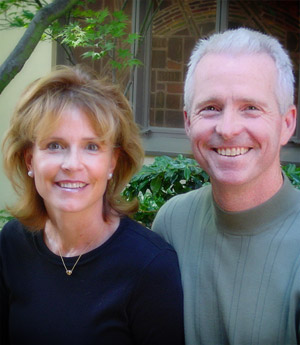
Sine and his wife, Christine, founded Mustard Seed Associates (MSA) as “a community of Jesus’ followers all over the world striving to create the future one mustard seed at a time. MSA provides resources and a network for committed followers of Jesus to anticipate the future, decode the culture, convey the Kingdom of God, and create new ways of being a difference and make a difference.” They are also adjunct professors at Fuller Theological Seminary. Some of Sine’s other books include Mustard Seed vs. McWorld (1999), Living on Purpose (2004) and The New Conspirators (2008). Correspondence from Sine and a June-July 1984 article about end times eschatology entitled “Bringing Down the Final Curtain” from Sojourners Magazine is also located in the Sojourners Records of the Wheaton College Archives & Special Collections.

Audio icon (mp3 – 00:28:41)

.

The most wonderful experience of my life….

J. Northcote Deck, born in England in 1875, pursued his education in Australia at the University of Sydney, where he felt a call to ministry. Thereafter he allowed nothing to compete with his single-minded dedication to Christ. Receiving the degree of Master of Surgery, Dr. Deck established a practice in Sydney; but soon he moved to the Solomon Islands as a full-time missionary and engineer, participating in a fruitful work that began in 1882 among South Sea islanders. In 1910 Dr. Deck was the first white man to cross Guadalcanal, then largely unexplored. He led the first exploration of the coral island of Rennell. He then J. Northcote Deckembarked upon the first crossing of mountainous Malaita, a cannibal island; and on his second visit he discovered a lake and primitive civilization unknown to the outside world. As a result of these exploratory adventures, he was honored by the Royal Geographical Society and made a fellow of the Royal Geographical Society. Encountering disease, weather, poison arrows and innumerable disappointments, Dr. Deck prevailed in his efforts among the natives until retirement in 1927. On the mission field his life of sacrificial service yielded many conversions. But this was true in his latter years, as well, as he traveled around the world, preaching in churches, summer schools, colleges and conferences, including the Keswick Convention in England, which attracted internationally renowned pulpit orators. In addition to speaking, Dr. Deck wrote devotional books, conveying through the written word a consecrated spirituality. This gift was passed to his daughter, Luci Shaw, who has written perceptively in both poetry and prose about faith and art and other issues of the Christian life. In private Dr. Deck was a man of deep prayer, systematic and definite as he daily remembered missionaries positioned around the globe. As he lay on his deathbed, he joyfully, confidently exclaimed to Wilber Sutherland, director for InterVarsity Christian Fellowship, Canada, “Wilber, this is the most wonderful experience of my life!”

The papers of Luci Shaw (SC-46) and the Keswick Convention (SC-30) are maintained in Wheaton College Special Collections.

There, and back again….

C. Raymond LudwigsonWheaton College has graduated several students who’ve eventually assumed the presidencies of schools and agencies. Less common is the fact that one Wheaton College teacher, Dr. C. Raymond Ludwigson, serving on staff as Associate Professor of Bible and Philosophy, departed its faculty to accept a college presidency; then, after a six year stint, returned to Wheaton College, resuming his teaching position. An alumnus of Moody Bible Institute and Wheaton College, Ludwigson earned his graduate degree from Chicago Lutheran Seminary and his doctorate from the University of Iowa. Dr. Ludwigson taught at Wheaton College until his appointment in 1949 to the presidency of Trinity College and Seminary in Chicago (now Trinity International University in Deerfield, IL). However, he returned to Wheaton College in September 1955. Throughout his teaching career and after he served as interim pastor at various churches, including Westminster Presbyterian Church in Elgin, IL. Ludwigson was known for a warm, devotional teaching style. He retired from Wheaton College in 1969 and in 1973 published A Survey of Bible Prophecy for Zondervan.

John Ortberg

In recent weeks Dr. John Ortberg addressed the Wheaton College graduates of both the undergraduate College and the Graduate School in the May 2010 Commencement ceremonies. In the following excerpts, he exhorts the Class of 2010 to embrace Wheaton’s mission, “For Christ and His Kingdom.”

It is His kingdom that we seek to be for, not ours. And this means a call to humility, because His kingdom is about something so much bigger, and so much more glorious, than our little evangelical subculture and institutions and movements and churches. But it’s also a call for great boldness, because to be ‘For Christ and His Kingdom’ means that we do not have to be nervous about this world. In a world where so much is down…where the economy is down…where employment is down…where consumer confidence is down…where marital stability is down…where, I know, the odds of finding a great job fresh out of college are down; people wonder is anything up? And some things are. The opportunity to serve a hurting world is up…the power of hope is up…the market for faith is up…and this is so because certain truths remain unchanged:

God remains sovereign…the beauty of forgiveness is still greater than the stain of sin…the Bible still pierces the human soul…prayer remains the most remarkable communication known to the human race…love still beats bigotry…joy still trumps despair…the greatest scandal of this sorry, dark world remains the scandal of the cross…God’s mercies are still new every morning…the tomb is still empty…the Spirit is still descending…the kingdom Jesus announced, which we seek to be for, is still expanding.

To be ‘For Christ and His Kingdom’ is to be for the world that God so loved that he gave His only begotten son.

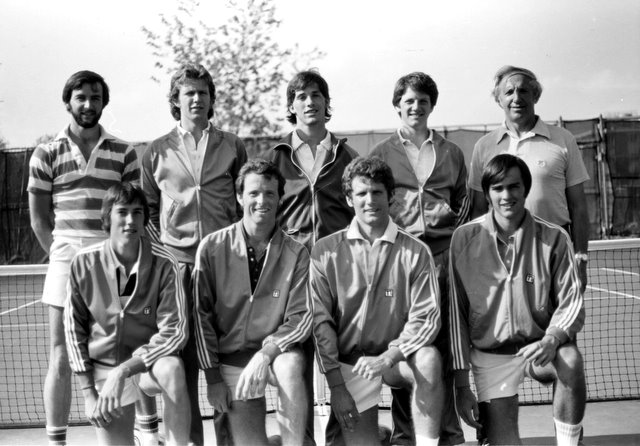
John Carl Ortberg, Jr. was born in 1957 and was raised in Rockford, Illinois. While attending Wheaton College in the late 1970s, Ortberg was a member of the Scholastic Honor Society and graduated summa cum laude in 1979 with a B.A. in psychology. He played men’s tennis all four years, earned the College Conference of Illinois and Wisconsin (CCIW) Most-Valuable Player award, achieved NCAA All-American Honors and reached the quarterfinals in men’s doubles at the NCAA Division III Tennis Championships. During 1978 and 1979 he was the #1 CCIW singles and doubles champion and ranked first in singles and doubles of the Wheaton squad while captain his senior year.

He pursued post-graduate studies at the University of Aberdeen in Scotland and later earned both an Master of Divinity (M.Div.) and a Doctorate (Ph.D.) in Clinical Psychology from Fuller Theological Seminary, where he is currently on the Board of Trustees.

He served as senior pastor at Simi Valley Community Church for five years until 1990, and then until 1994 at Horizons Community Church in Diamond Bar, CA. The Ortbergs moved from California to Illinois for John and his wife, Nancy to serve as teaching pastors at Willow Creek Community Church in South Barrington, Illinois for the next decade.

While living in the Chicagoland area, in March 1997 John and Nancy gave the McManis Lectureship ChapelRecovering an Evangelical Spirituality” on the campus of Wheaton College.

Since 2003 he has served as Senior Pastor of the 4,000 member Menlo Park Presbyterian Church in California. Ortberg is also an author of such Zondervan titles as the 2002 Christianity Today Book Award winner If You Want to Walk on Water, You’ve Got to Get Out of the Boat (2001) and the 2008 ECPA Christian Book Award winner When the Game is Over, It All Goes Back in the Box.

In January 2007 Pastor Ortberg returned to Wheaton and addressed the campus for Spring Special Services in a series of messages entitled “Adventures in Faith.” His pastorate at Menlo Park was also highlighted along with other alumni in the Wheaton Magazine (Winter 2007) issue.

The Ortbergs have three children (Laura, Mallory and John) and live in Menlo Park, CA.

Angel Fall

It was the stillness. That’s what they remembered most about the beginning. A stillness that hung like ancient mold in the trees. But who could forget anything about Wind Sunday? The sharp acrylic memories painted themselves on their hearts and refused to dry. And ever after, touching the canvas brought tears…

An airliner crashes into the ocean and only three young people survive. For the Lancaster siblings, the strangest storm in history becomes a portal to an ancient world ruled by seven evil creatures of immense power. As the children descend into the terror and temptation of Boreth, every choice takes them closer to endless night. With dark, glistening strands from Lewis, Lovecraft, and Tolkien, the cloth of Angel Fall has been woven. But the journey it weaves is not just for Alex, Amanda, and Tori…it is for all those who cannot find their way home.


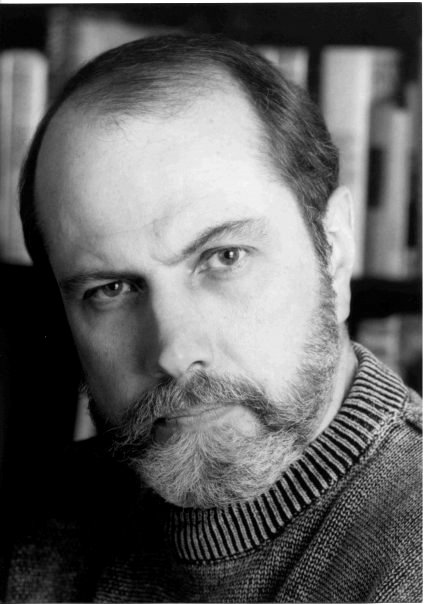
Hollywood screenwriter, executive producer, and Special Collections author, Coleman Luck recently finished the above novel after twenty-five years of labor. Preliminary drafts of his work entitled Wind Sunday are available in the Coleman Luck Papers. “Early in his Hollywood career, Coleman began writing a novel to entertain himself and his family. Over the years whenever he had a few months free he would take it out and work on it. Sadly there were many busy years in which he wasn’t able to work on it at all. Consequently his children grew up with a half-finished story stuck in their memories. The new century arrived and some close friends came to visit. Coleman read the unfinished manuscript to them and their children. The children encouraged him to finish writing it promising that if he didn’t they would grow up, come back and kill him. With his own children and a new set of children goading him on, the novel was finished and became Angel Fall.” *

* Excerpted from Coleman Luck’s biography.

Saint Nicholas

Buswell Library is certainly familiar to staff and students of Wheaton College, but it is relatively unknown that the structure to which it is attached was originally called the Nicholas Building, until expanded in the late 1970s. A portrait and a plaque, until removal in 2006, commemorated the contributions of a man named Robert E. Nicholas.

He was born oldest of eight children on a farm in 1882 in Caledonia, Ontario, Canada. “The village declared no holiday,” he writes, “the whistles did not blow, nor did the church bells ring when it became known that I had made my appearance in a world which already had problems enough.”

Raised among believing Methodist parents, Nicholas early learned the value of hard work as he milked cows, drove horses and plowed soil. After graduating from business college, he visited with an uncle who had attended the 1893 Chicago World Fair. Uncle William confidently stated, “There are a hundred ways of making a living in Chicago.” So Nicholas decided to discover one for himself. Meeting cousins living in the Windy City, Nicholas toured the Art Institute, the Stockyards and the Public Library, accompanied by a warning to avoid the red light district. Eventually he and his friend, George Rogers, using borrowed capital, started a hardware business in Oak Park, Illinois, a small town promising big returns. During this period Nicholas roomed in the home of A.T. Hemingway, General Secretary of the Chicago YMCA and grandfather of Ernest, the novelist. (The attending physician at the birth of Nicholas’ first child was Dr. Clarence Hemingway, Ernest’s father). Nicholas’ store specialized in builders’ hardware for commercial development, and soon he and Rogers enjoyed a sterling reputation among Chicago’s architects and contractors. Nicholas was also instrumental in attracting Loop department stores to establish satellites in Oak Park.

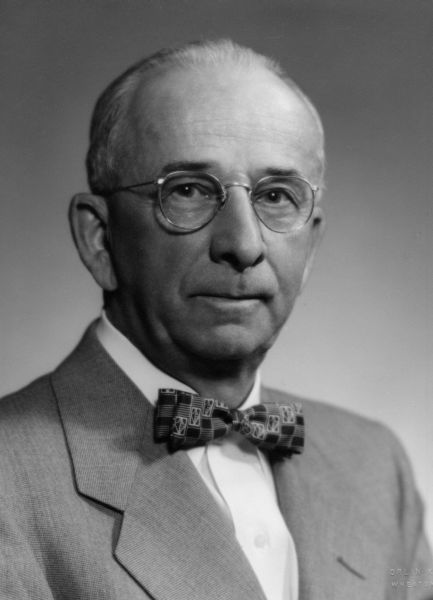
Robert E. NicholasIn addition to local commerce, he influenced community life as a member of the Christian Businessmen’s Committee for Chicago, successfully barring Sunday movies from Oak Park. In 1928 he was invited by Dr. James M. Gray, President of Moody Bible Institute, to join the Board of Trustees of MBI. He was elected, and soon became a member of the Executive and Investment committees. One year later he sold his business to pursue other enterprises, while also joining the Wheaton College Board of Reference. In 1932 he was elected to the Board of Trustees, replacing Fleming H. Revell, D.L. Moody’s brother-in-law, serving as vice-chairmen of the board under Herman A. Fischer. Combining wealth with consecration, Nicholas generously donated funds, usually anonymously, to churches, philanthropic activities and mission agencies. He remarks in his 1962 memoir, Life Has Been Good:

Indeed, I consider among the most rewarding experiences of my life, my association with the presidents, trustees and staff of Wheaton College and Moody Bible Institute. The fine men who comprise the trustee boards and give so freely of their time and means are an inspiration and a blessing. Their leadership, devotion and counsel given in a Christian spirit with independence of viewpoint, but without contention, could well be an example for other Christian organizations. The president of Moody Bible Institute, Dr. William Culbertson, and the president of Wheaton College, Dr. V.R. Edman, are two of the finest men it has been my privilege to know, and my own life has been enriched by working with them. No one could serve actively on the Trustee Boards of Moody Bible Institute and Wheaton College without realizing that the students for whom these institutions are maintained are among the finest in the land.

Nicholas entered unexpected and invigorating spiritual heights when on a Sunday evening his train stalled in Minneapolis. Seeking a church, he wandered downtown until he passed First Baptist, pastored by Dr. W.B. Riley. Stepping in, Nicholas heard the powerful preacher expound on the Second Coming, about which Nicholas knew little. But it was just what he needed. “I realized how hungry I was to hear about the return of the Lord Jesus, now that I had dedicated my life fully to him.”

Dr. Edman devotes to Nicholas a chapter called “The Satisfying Life” in They Found the Secret: Twenty Transformed Lives that Reveal a Touch of Eternity, an examination into the spiritual crisis experienced by prominent Christian men and women. He quotes Nicholas:

By this experience, and by others which have followed, my life has been changed from that of a nominal Christian to one with purpose and convictions. There has been an abiding sense of the Holy Spirit’s presence in my life. He has given me an appetite for the things of God and an appreciation of the Scriptures. In answer to prayer he has given me ability in business, strength under strain, confidence and courage can understand why so many Christians do not have the joy they might have, or do not have overflowing praise in their heart…There must be a full surrender of life to the Savior to have the fullness of the Holy Spirit…

Recognizing his dedicated service, Wheaton College conferred on Robert E. Nicholas an honorary doctorate in 1963, and in 1967 re-named its library, of which he had originally paid all construction costs, after him. He and his wife, Mabel, raised three sons and one daughter. Still appreciative of his good life, he died at 94 in 1977.

Change of Heart

Doris Menzies“Although I am an older person,” begins Doris Dresselhaus Menzies in her memoir, Young At Heart (2007), “I have a much younger heart.” She explains her cryptic remark as the story unfolds.

Born in Decorah, Iowa, in 1932, Doris lived peacefully with her family and worked hard on the farm. At age nine she fully committed to Christ at the local Assemblies of God church. She was baptized in a lake, and shortly thereafter during an evening service received her baptism in the Holy Spirit. In 1951 she enrolled at Wheaton College where she studied elementary education. Because there were no Pentecostal churches in Wheaton at that time, an Assemblies of God campus fellowship provided a venue where Doris could meet students of similar conviction, including her future husband, William Menzies. “Neither of us could imagine the adventures in faith that would be ours when we met at Wheaton College,” he reflects. Later Bill would pen Anointed to Serve (1984), the definitive history of the Assemblies of God.

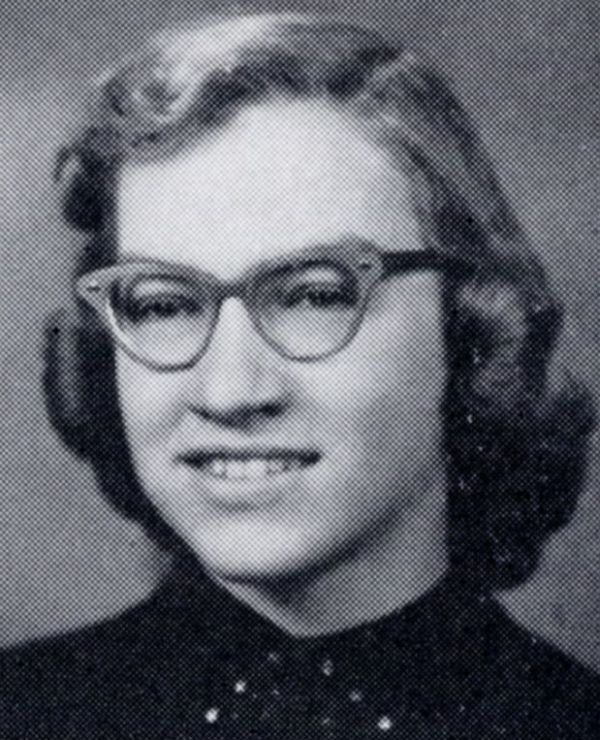
After their marriage in 1955, Bill and Doris served in various midwestern churches until he was called to teach at Central Bible College in Springfield, Missouri. From there he moved to other teaching positions at home and abroad, until he and Doris were called to be regular missionaries for the Assemblies of God. In 1989 they relocated to the Philippines, where Bill served as president of Asia Pacific Theological Seminary. As he taught and lectured at the school, Doris quietly mingled with the people of Baguio City, personally leading many hungry hearts to Christ. Their lives proceeded busily until one day Doris suffered sharp chest pains, indicating severe cardiac arrest. Transferred to Salt Lake City for specialized care, it was concluded that she required a heart transplant. With that stunning report came the additional bad news that she would need to await a donor. And so for fourteen months she and Bill patiently waited in Salt Lake, until at last it was announced that a heart had been located, belonging to a young man from Oregon who requested that his organs be donated should anything happen to him. Doris MenziesTo the delight of all, the operation was a smashing success. As she writes, “There was thanksgiving and joy in my new heart.”

But Doris was not entirely free of physical affliction. In 2003 she was diagnosed with lymphoma cancer. After an onerous series of chemo and radiation treatments, she lost her strength, appetite and all her hair, but the disease was finally controlled. Her hair has since regrown, and she has regained the weight.

Summing up her eventful life, Doris Menzies expresses her joy: “I have appointments to see my oncology doctor, and also blood tests to send to my heart transplant doctor…I also see my internist, my neurologist, and my foot doctor on a regular basis. But my Great Physician continues to be God Almighty, my Creator and Redeemer. To Him I give all glory for each day!”

May the Mind of Christ My Savior

Dr. Hudson T. Armerding’s A Word to the Wise (Tyndale 1980) was published to bring wisdom and encouragement to fellow Christians everywhere. In the following excerpt he shares some of the wisdom gathered over fifteen years as college president:

Singing hymns together has long been traditional for both congregation and graduates at the annual Baccalaureate Service of Wheaton College. However, in 1968 the printed program carried the words of the beautiful hymn written by Kate B. Wilkinson entitled “May the Mind of Christ My Savior.” Then serving in his third year as president of the college, Dr. Hudson T. Armerding selected this hymn because of the meaningful content of its words for all committed believers –but particularly for young people, who have so much potential. Every year since then, with concurrence by the officers of each graduating class, this hymn has appeared in the printed program for the [Commencement Services]…These are the words that have stirred the hearts of many on those occasions…

May the mind of Christ, my Savior,
Live in me from day to day,
By His love and pow’r controlling
All I do and say.

May the Word of God dwell richly
In my heart from hour to hour,
So that all may see I triumph
Only through His pow’r.

May the peace of God, my Father,
Rule my life in everything,
That I may he calm to comfort
Sick and sorrowing.

May the love of Jesus fill me,
As the waters fill the sea;
Him exalting, self abasing,
This is victory.

May I run the race before me,
Strong and brave to face the foe,
Looking only unto Jesus
As I onward go.

May His beauty rest upon me
As I seek the lost to win,
And may they forget the channel,
Seeing only Him. Amen.