All posts by admin

Dr. Louis H. Evans, Sr.

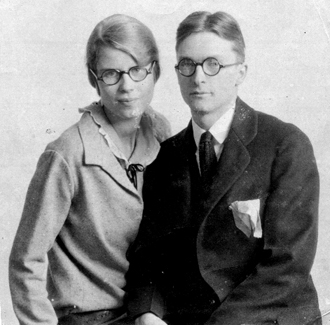
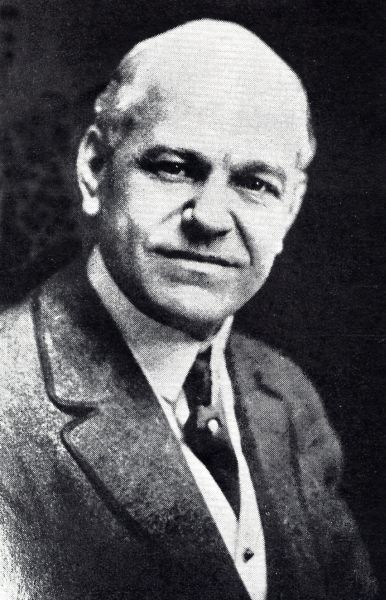
William Evans, a native of England, heard D. L. Moody preach in New York City in 1890, and there received the gift of salvation in Christ. Advised by Moody to attend his new school in Chicago, Evans traveled to the Windy City, enrolled at Moody Bible Institute and graduated in 1892. He was, in fact, its first graduate. After a few years in various pastorates, he was appointed as Director of Bible at his alma mater. Aside from his classroom accomplishments, Dr. Evans contributed three lasting agents in the propagation of the gospel message. His first contributions were books titled How to Prepare Sermons (1917) and Great Doctrines of the Bible (1912), still in print through Moody Publishers.
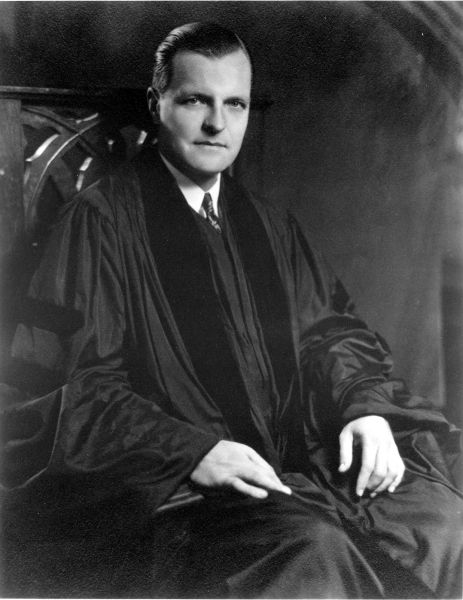
Louis EvansHis other contribution was not a book but a son, named Louis Hadley Evans, who would one day be cited as one of the notable preachers of the twentieth century. Born in Goshen, Indiana, in 1897, Louis was raised in Wheaton, Illinois, in a house that stood on the corner of Franklin and Irving, where the Nicholas wing of Buswell Memorial Library now stands on the campus of Wheaton College. Louis attended Wheaton Academy, across the street from his home, for one year (1914-15), then later entered Occidental College in Los Angeles. A remarkable athlete, muscled and broad-shouldered at 6 ft. 4, he participated in football and basketball, winning multiple honors. After serving in the Navy during WW I, he acquired a theological education at McCormick Presbyterian Theological Seminary in Chicago. Ordained in the United Presbyterian Church, Evans led congregations in North Dakota, California and Pennsylvania. While serving as pastor at Third Presbyterian Church of Pittsburgh he received a call to Hollywood, California. Initially he found the request unappealing. “I said no at first when their call came,” he commented to Time magazine. “But later I realized it would be a burr in my saddle and that Hollywood would be one of the finest recruiting grounds in America. Also, I wanted to get my teeth into something.” When Evans assumed leadership at Hollywood Presbyterian in 1941, he found the church $250,000 in debt with a membership of 2,378. Within the first year the debt was wiped out, and for each successive year his parishioners topped their offerings, giving more than any other Presbyterian congregation in the U.S. As membership increased, swelling to the largest assembly in the denomination, so did Sunday School enrollment. Henrietta Mears, Director of Christian Education, was responsible for discipling these converts and implemented an engaging program that inspired hundreds of young people to enter full-time Christian activity; among these were Bill Bright, founder of Campus Crusade for Christ.

After serving for 12 years at Hollywood Presbyterian, Pastor Evans resigned in 1953, leaving a healthy congregation of 6,400 members. “It made a rancher out of me instead of a shepherd,” he joked. For the next nine years he traveled as Minister-at-Large for the National Board of the United Presbyterian Church, USA, speaking to universities, conventions and churches, often appearing on radio or television. As he journeyed from one engagement to another, his wife, Marie, usually drove as he sat in the back seat, tapping out sermon notes on a specially built typewriter stand. In addition to itinerating, he served as President Eisenhower’s summer pastor in Washington, DC, and was one of the co-founders and early president of the Fellowship of Christian Athletes. Life magazine named Evans as one of “America’s Twelve Outstanding Religious Leaders,” along with Billy Graham, Norman Vincent Peale, Fulton Sheen and George A. Buttrick. Writing eight books, he continued public ministry until four months before his death in 1981. His memorial service was officiated by Dr. Lloyd John Ogilvie, who also served as a pastor at Hollywood Presbyterian (1972-95) and eventually as Chaplain to the U.S. Senate. “Rolled into one man,” eulogized Ogilvie, “was the brilliance of an Apostle Paul, the impetuousness of a Peter, the love and tenderness of a Barnabas.”

The papers of Louis H. Evans, Sr. (SC-31), are archived at Wheaton College (IL) Special Collections. The collection is comprised of photographs, recordings and typewritten documents.
Remember the Birds

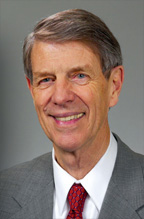
Dr. Jerry R. Kirk is former pastor of the College Hill Presbyterian Church in Cincinnati, Ohio. During his twenty-one year pastorate, in 1983 he founded the National Coalition Against Pornography, an alliance of citizen-action groups, foundations, and religious denominations leading the effort against child pornography, adult obscenity, sexual exploitation and violence. During that time he also co-founded the Religious Alliance Against Pornography (RAAP) with John Cardinal O’Connor of New York and Joseph Cardinal Bernardin of Chicago in 1986. In 1988 Jerry resigned his pastoral charge to commit his full-time energies to these efforts, now called the National Coalition for the Protection of Children & Families.

Dr. Kirk has worked with religious leaders representing more than 100 million Americans, from nearly every major denomination and faith group in the country, including the Jewish community, The Salvation Army, the National Council of Churches, the National Association of Evangelicals, the Roman Catholic Church, Greek Orthodox Church and Church of Jesus Christ of Latter-day Saints. He has met with Presidents Ronald Reagan and George H.W. Bush and three different Attorneys General (including Edwin Meese). Dr. Kirk is a frequent speaker on the problem of pornography, sexual exploitation and violence, appearing on Dr. James Dobson’s “Focus on the Family” radio program eleven times, as well as, “The Oprah Winfrey Show,” “NBC Nightly News” with Tom Brokaw, Moody Broadcasting’s “Prime Time America” and most recently on FamilyLife with Dennis Rainey.

A native of Seattle, Washington, Dr. Kirk attended the University of Washington and has earned two graduate degrees. He has written two books, The Homosexual Crisis in the Mainline Church, The Mind Polluters, and numerous articles. He and his wife, Patty currently reside in Cincinnati and have five children and twenty-two grandchildren.

[excerpted from National Coalition for the Protection of Children & Families and Leadership Magazine]

———————————————–

On February 16-17, 1994, Jerry Kirk spoke at Wheaton College for the Annual Staley Lecture series on the topic “The Christian Response to Pornography.” In his final chapel address on the theme ‘Knowing, Believing, Praying, and Living the Word of God,’ Kirk expounded on the love of God from Ephesians 3 and presented a powerful illustration.

I’ve tried to think how can I receive God’s love more constantly? One of my [church] members told me one day that every time she saw a cardinal she would stop and say “I love you,” putting the words in the lips of Jesus. So I started searching for cardinals…but you know I didn’t see enough cardinals, so I put up a bird feeder outside my office window and I’d see ten or fifteen cardinals every day. Then I decided I ought to do that anytime I see any bird. Everyday, every time I see a bird I thank Jesus Christ for His love. Seventy-five to one-hundred fifty times every day I receive the love of Christ. If you’ll do that for one week, you’ll never stop.

[Artwork by Matthew Cook]

Audio icon (mp3 – 00:29:05, illustration starts at 17:05)


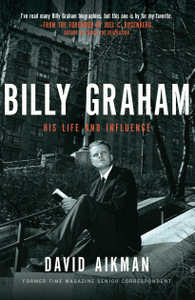
David Aikman’s book on Graham in paperback

Billy Graham: His Life and Influence (Thomas Nelson, June 2010) examines Graham’s impact on the worldwide development of Christianity, international affairs and the fall of Communism. Author and former TIME Magazine senior correspondent David Aikman integrates his Christian faith and understanding of world affairs into this careful analysis of Graham’s ministry. Aikman examines critical episodes of Graham’s life that explain his impact on American public life and the private lives of world leaders.

David Barrington Thomson Aikman was born on June 6, 1944, the same night as the Normandy invasion, in Cobham, Surrey, England. Dr. Aikman received his early education at Stowe School in Bucks, England. He was graduated with honors in Russian and French from Worcester College, Oxford, received his M.A. in Far Eastern Languages and Literature (Mongolian and Turkish) from the Far Eastern and Russian Institute of the University of Washington, Seattle and also received his Ph.D. in Russian and Chinese history from the University of Washington.

He began his twenty-three year career with TIME magazine in 1971, reporting from five continents and more than 55 countries. As foreign and Senior Correspondent he interviewed major world figures like Mother Teresa, Alexander Solzhenitsyn, Boris Yeltsin and Billy Graham. He was bureau chief in Berlin, Jerusalem and Beijing aided by his skill in speaking Russian, Chinese, French, and German. He is an expert on China, Eastern Asia, and the former Soviet Union. From 1998 to 2002 Aikman was a Senior Fellow at the Washington-based Ethics and Public Policy Center. Additionally, he served as editor-at-large of Newsroom, an Internet-based news organization reporting on the religious aspect of news events around the world.

David Aikman has been an eyewitness to the rise and fall of nations and regimes. Based in Hong Kong in the early 1970s, he saw first-hand the fall of Indo-china to Communist rule. He was the last correspondent to leave Phnom Penh before the Khmer Rouge invaded in 1975. While Eastern European Bureau Chief, Aikman also covered the emergence of dissident groups in Poland. Aikman was familiar with many of the people who became advisers to Polish President Lech Walesa. Dr. Aikman has also been Bureau Chief in Jerusalem, during the invasion of Lebanon by Israel; Beijing, during the reforms of Deng Xiaoping and the last days of the pro-democracy movement in Tiananmen Square; and in Moscow, during the Chernobyl disaster and the beginning of Yeltsin’s loyal opposition movement in 1989.

David Aikman is also an accomplished public speaker, appearing regularly on major C-SPAN, CNN, NBC and others. His speaking has focused on the Middle East, China and on religious persecution around the world. The David Aikman Papers are housed in the Wheaton College Archives & Special Collections.

[excerpted from David Aikman.com and David Aikman Papers]

S.S. Victory Wheaton

S.S. Wheaton Victory

painting by DeWitt Whistler Jayne ’36

Constructed by the California Shipbuilding Corporation yard on Terminal Island, California, the S.S Victory Wheaton set sail on March 22, 1945. Chosen by the U.S. Maritime Commission, it was one of a series of Victory ships named after America’s oldest educational institutions with student enrollment over 500. As with all ships of it class (officially VC2), the S.S. Victory Wheaton was 455 feet long and 62 feet wide. Her cross-compound steam turbine with double reduction gears developed 6,000 (AP2 type) or 8,500 (AP3s type) horsepower, allowing it great advantage in speed over its predecessor, the Liberty ship. Mrs. Kenneth Godwin, wife of the Executive Office of the Bureau of Yards and Docks of San Francisco, christened the vessel. Wheaton was represented at the ceremony by the Reverend John Shearer, ’39, pastor of North Hollywood Presbyterian Church and Chaplain L.J. Soerhide, U.S.N.R., ’39. A new Victory Ship memorial has been developed in Florida. Wheaton will have a plaque recognizing it along with the other schools for which Victory ships were named.

Hickory Presbyterians

Kenneth and Margaret LandonNot only was Kenneth Landon ’24 involved in the incipient efforts by the U.S. government to organize its foreign intelligence during and after the Second World War (as reported here), he was also a remarkably well-educated man, with impressive institutional credentials to match his wide-ranging intellectual, and especially linguistic, gifts.

More than a decade before he received his doctorate from The University of Chicago in 1938, he attended Princeton Seminary after being graduated from Wheaton College with a philosophy degree. Princeton had by that time become embroiled in the fundamentalist-modernist controversy that marked the era.

The dramatis personae of these tragic events at Princeton pit, on one side, the president, J. Ross Stevenson, whose tenure as president began in 1914, and Charles Erdman, long-time student advisor and professor of homiletics, against Robert Dick Wilson, a talented Semitic philologist, and J. Gresham Machen, to whom students referred, with gibing affection, as “Das”. Despite the opposition and with the approval of the faculty, Erdman’s ouster took place in 1926.

The seminary class of 1927–Landon’s class–was, in his generous judgment, the most brilliant and talent-laden that the seminary had had for fifty years. More certainly they among the last classes ever to walk the halls of Old Princeton. In 1929, Machen was to lead a number of Princeton faculty in the founding of an alternative Presbyterian seminary, Westminster Theological in Philadelphia, Pennsylvania.

In the 90-plus-hour “Landon Chronicles” oral histories, Kenneth and his wife, Margaret ’25 (of Anna and the King of Siam fame), tell about the controversy as they knew it from within and give their judgments on the falling out. According to them, Stevenson had a habit of splitting every institution he touched, not unlike the habit, Margaret mentions in passing, of a more local Presbyterian controversialist, Wheaton College’s third president, J. Oliver Buswell. He had his share in splitting institutions too, thus proving the byword, attributed to the ousted Charlie Erdman, that Presbyterians are like hickory: split easily.

Audio icon (mp3 – 00:05:48)

.

Love the Lord Your God

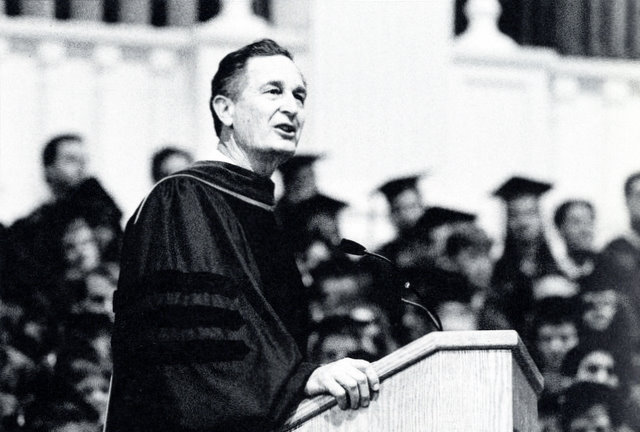
Dr. J. Richard Chase, sixth president of Wheaton College, recently passed away at age 79. He was a college president for nearly a quarter century at Biola University & Wheaton College combined. Two years after his retirement, the President Emeritus returned to Wheaton and gave the 136th Undergraduate Commencement address on May 7, 1995. His message (excerpted below) was entitled “Love the Lord Your God.” He is introduced by his successor, Duane Litfin.

—————————————-

Graduates, the upheavals of change-experienced by people throughout time–are sure to swirl about you for as long as you live on the earth. The challenge to think and act Christianly today is tough, It is tough here in Wheaton, and, I suspect, far tougher in Burundi, Bosnia, and the barrios of the world. Society has never been an ideal cocoon for moral living: righteous living has never been the art of riding on society’s coattails. It has ever required a commitment to a guiding principle or foundation and the resolve to act responsibly. You may pick a time in ages past when you could travel with a “supportive” crowd in a “supportive” society, but true, righteous living is a matter of the heart, not a herd instinct.

A Pharisee, a teacher of the Law, asked Jesus, “Teacher, which is the greatest commandment in the Law?” (Matthew 22:36). The Pharisee’s predicament was not much different from that of modern man. He was caught in the turmoil of both his foundation for life and his career. In a matter of months, Jesus had turned this Pharisee’s world upside down. His conversation with Jesus and our Lord’s response, “You are not far from the kingdom of God” (Mark 12:34), suggest that he was agonizing in mind and soul. There he was, caught between his past occupation and pattern of life and a new, revolutionary way of trust, faith, and commitment. And this is to say nothing of the oppressive Roman rule under which he lived, and, as a religious leader, of the accommodations he had to make with the ruling officials to hold his position. He approached Jesus with a question to test him. Although this Pharisee wanted to put Jesus on the spot, he was curious. I suspect he wondered, Could this man Jesus, who answered the Herodians and Sadducees so powerfully, help me? He asked, “Of all the commandments, which is the most important?” (v. 28).

And Jesus responded, “Love the Lord your God with all your heart and with all your soul and with all your mind and with all your strength. The second is this: Love your neighbor as yourself” (vv. 30-31).

Living effectively and righteously is never easy. But our Lord’s brief response gives us a place to stand. Here is a foundation that helped Daniel in Babylon, Deborah the prophetess as she led Israel against the Canaanites, Wilberforce as he stood against the slave traders, and countless numbers of God’s people in every age. This commandment tells us to love the Lord and our neighbors with such passion that it can invigorate our minds, direct our actions, and enrich our souls. It provides an overpowering focus for lives cluttered with competing goals and distracting desires. Further, it is as valid and all encompassing today as it was twenty centuries ago.

My gift to you on this commencement day is but a reminder that Wheaton has brought you in contact with faculty who have informed, badgered, prodded, encouraged, guided, and yes, even graded you, in an attempt to equip you for a life of thinking. Think as you paint, play, perform, and counsel; think as you assist, reach, pray, relate, react, grieve; and think as you play and as you rejoice. Think within the context of an all-consuming love for our God and our world of neighbors.

Audio icon (mp3 – 00:23:19)

.

An Honorary Wheatonite

William BiederwolfAn article from the September 28, 1932, Record testifies to the effective ministry of William Edward Biederwolf (1867-1939), Presbyterian evangelist and author, to Wheaton College students and faculty…and reciprocally, their affection for him:

With all aisles packed with new and renewed Christians, the Fall Evangelistic services were brought to a powerful close. Dr. W. E. Biederwolf’s calvinistic clarity produced a profound effect upon the packed chapel. Some were in tears, some were radiant and some were struggling visibly, manifesting the power of God at work. While Mr. Hammontree and the congregation were singing “Softly and Tenderly Jesus is Calling,” a number took up the banner for Christ and walked down the aisle. Each one who moved to a decision made Dr. Biederwolf’s face to shine, especially those who gave their youth to the Savior as a love token, “a fresh bouquet” instead of a “wilted one.” In results the evangelistic meetings, which have just past, have never been equaled in College history. President Buswell proposed the names of Dr. Biederwolf, Mr. Hammontree and Mr. Paul Beck with full membership in the “Wheaton Family,” and without one dissenting vote they were accepted.

In October of that year Biederwolf donated a collection of his books, mostly sermons transcribed from his itinerant ministry, to the college library. These titles dealt with Christian Science, Mormonism, Spiritualism, prophetic and other doctrinal issues.

Rural Bible Crusade

J. Lloyd HunterSometime during his last year as a student at Moody Bible Institute, J. Lloyd Hunter preached at Pacific Garden Mission in Chicago. Leading a ragged drunkard to Christ, Hunter reflected on the man’s lost decades, years that might have been dedicated to serving Christ rather than alcohol. At that moment Hunter decided to offer his own life in an effort to reach children. Traveling with his wife to various churches around the country, he gained valuable experience working with the American Sunday School Union. While living in Wheaton in 1937, Hunter, ablaze with a vision for evangelization, organized the Rural Bible Crusade, a ministry encouraging public school children to systematically memorize scripture. Its first advisory council consisted of J. Oliver Buswell, V. Raymond Edman, J.D. Hall, John R. Rice, Wendell Loveless, Bob Jones, Sr., William McCarrell, Oscar Lowry, Paul Rood, Harry Rimmer, George Strohm, Louis Talbot and Walter Wilson. Shortly before Christmas vacation of that year, Hunter stood before the students of Wheaton College to introduce his program. There Hunter’s idea was packaged as a contest, with letters sent to four thousand local school teachers. The envelopes contained a tract, Four Things That God Wants You to Know, with a request that pupils memorize Bible verses. Four hundred teachers responded positively, some requesting to join the contest, and to them were sent Gospels of John and a tract. Prizes were given for the verses learned. Ten verses entitled the pupil to a button. Thirty-two earned him a New Testament. Five hundred verses won him a fine leather Bible. Many families who never attended church received a Bible and heard the Gospel for the first time. Under the direction of Hunter, Phil Saint, Wheaton College student and brother of missionary martyr Nate Saint, taught “chalk talks” to classes, training young people in the essentials of presenting the Gospel to children. As the ministry blossomed Hunter’s health declined, and he entered the hospital in 1943, where he led three nurses to Christ shortly before his death. He was 55. Later that year, a committee met at Wheaton College and formed a constitution which delineated new internal organization. After the document’s ratification, the work of Rural Bible Crusade continued as it enrolled thousands of children in the Bible Memory Program. In 1966 the ministry moved from Wheaton to Salinas, Kansas; and in 1990 it changed its name to “Bible Impact Ministries.” In 1993 the ministry relocated to St. Louis, MO, expanding with permanent camps and facilities. Hunter’s passion for evangelizing and discipling young souls survives unabated.

[Some information for this entry is derived from Bible Impact Ministries.]

Rob Bell redux

In November 2003 Rob Bell, Jr. spoke at Wheaton College for the annual Staley Lecture Series. His three messages were entitled “Communicating Christ in Contemporary Culture.” Rob Bell is a teaching and founding pastor of Mars Hill in Grandville, Michigan. He is the author of Velvet Elvis and Sex God, and is a coauthor of Jesus Wants to Save Christians. He is also featured in a series of spiritual short films called NOOMA. Rob graduated from Wheaton College in Wheaton, Illinois and Fuller Theological Seminary in Pasadena, California. He and his wife Kristen have three children and live in Grand Rapids.

Audio icon#1(mp3 – 00:30:16) Audio icon#2(mp3 – 00:23:24) Audio icon#3(mp3 – 00:28:30)

Unceasing Worship

Harold Best, 1972Harold MacArthur Best is Emeritus Dean/Professor of Music of the Wheaton College Conservatory of Music. He received the B.S.M. from Nyack College, the M.A. from Claremont Graduate School, and the D.S.M. from Union Theological Seminary. Dr. Best served as Dean of the Wheaton College Conservatory of Music from 1970 until his retirement in 1997. He is past president of the National Association of Schools of Music, past chairman of the Commission on Accreditation, and former member of the ASCAP Standard Awards Panel. He is the author of numerous articles on the relationship of Christianity to the fine arts, worship, issues in arts education, culture, and curriculum. His books Music Through the Eyes of Faith was published by Harper San Francisco in 1993 and Unceasing Worship: Biblical Perspectives on Worship and the Arts was published by InterVarsity Press in 2003. He also contributed a chapter entitled “Traditional Hymn-Based Worship” in Exploring the Worship Spectrum: Six Views by Zondervan in 2004. He has composed in a wide range of media and styles, and his publications include choral and organ compositions. He is also active at the national level as a lecturer, consultant and workshop leader in the areas of curriculum, accreditation, worship and church music.*

His book Unceasing Worship was featured in the Spring 2004 edition of the Wheaton Alumni magazine and on October 4, 2006, Best returned to Wheaton College and spoke in Edman Chapel.

Audio icon (mp3 – 23 min.)

.