All posts by admin

On My Mind – Dennis Okholm

Twenty years ago, the Wheaton Alumni magazine began a series of articles in which Wheaton faculty told about their thinking, their research, or their favorite books and people. Professor of Theology Dennis Okholm (who taught at Wheaton from 1989-2003) was featured in the April/May 1992 issue.

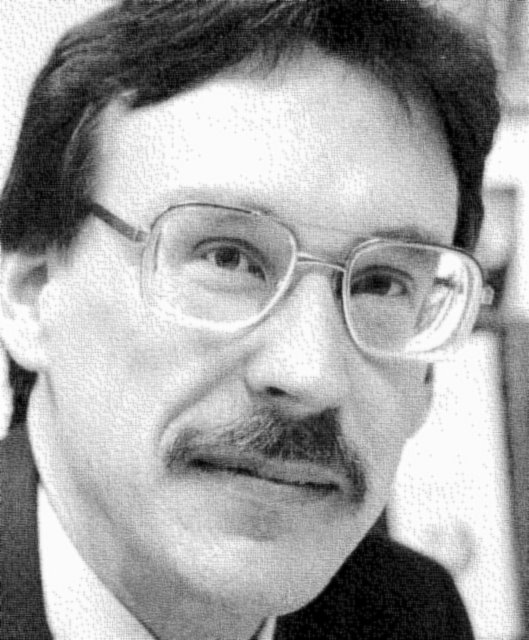
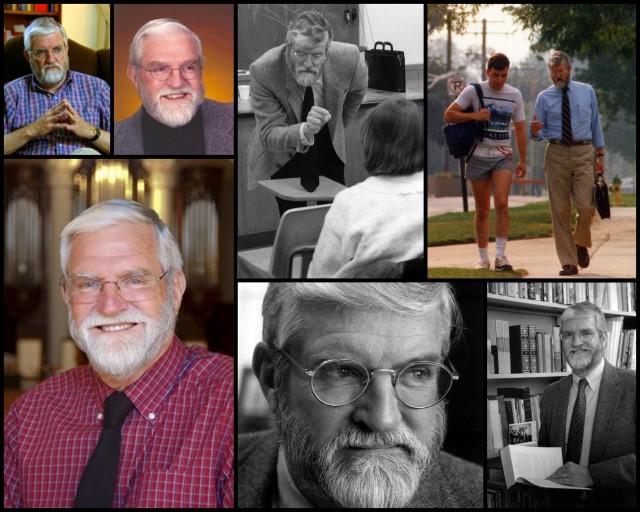
Dennis OkholmThe first annual Wheaton College Theology Conference has been “on my mind” for the past year. (Just to make sure it can rightly claim to be “annual,” the second one will be on February 25-26, 1993, dealing with “Theology and Science”) The conference is now a fait accompli, but the issue it dealt with remains with us: the challenge of pluralism. My colleague, Tim Phillips, and I selected this topic for the conference because it is the crucial issue before the Christian community today. It is especially crucial for evangelicals who make exclusive claims such as “Jesus Christ is the Lord of the universe–in a world that prides itself on letting each person have his or her own opinion when it comes to matters of religion, artistic expression, or moral behavior.

John Hick’s An Interpretation of Religion is a key intellectual defense of this pluralism. His thesis is that “we always perceive the transcendent through the lens of a particular religious culture with its distinctive set of concepts, myths, historical exemplars and devotional or meditational techniques.” If Hick merely described the diversity of religious beliefs, his statement would be undeniable. But he insists that this plurality is not just a description of the world; it is a religious truth. All religions end up referring to the same ineffable transcendent Reality.

This will set well with many people– from academics to talk show hosts. The point of many discussions in the university and on the [Phil] Donahue show is not to arrive at the truth of the matter, if the “matter” has to do with religious beliefs and moral values; the point is simply to keep the discussion going and respect the divergent points of view, because, as one talk show guest said about pornography, “The great thing about our society is that you can have your opinion and I can have mine.”

How did we get to this point? Lesslie Newbigin helps us to understand in his book Foolishness to the Greeks. We have divided the world into two realms. One realm is the public world of scientific fact that explains everything in terms of cause and effect relationships; we have agreed that in this world some statements (such as “atoms exist”) are true and people would he fools to deny them. The other realm is the private world of religious beliefs and moral values, which are based on assumptions about the purpose of human existence. But as a society we do not agree what human life ought to be. So, statements like “Homosexual behavior is morally wrong” and “It is only through Jesus of Nazareth that a person can be saved” are relegated to the realm of private opinion. This is a democratization of religious beliefs and moral values. It makes for good ratings on the Donahue show. It should not be acceptable to the Christian who confesses her credo on Sunday.

The frightening thing for me is that so many evangelicals have bought into this agenda. We have trouble insisting that “Jesus of Nazareth is the only way to God” without adding, “At least, that’s my opinion,” But for a Christian, such a religious claim is stating a truth about reality itself. Jesus did not die for some general religious or moral conception that we can all discover by ourselves. When the death and resurrection occurred, the universe was changed.

The problem even gets worse when evangelicals buy into the bifurcation and put politics in the public realm and religion in the private realm. For example, one clergyman in the Chicago area recently said of Oliver North’s visit to his church: “I hope people can separate his politics from his personal faith.” As Newbigin points out, if we start doing that we are going to have to dismiss much of the Old Testament, for everything political that concerned Israel had to do with her claim that Yahweh is Lord over all life public and private.

What I have said is perhaps the easy part. The harder part comes in the second half of our conference: How does the church respond? Do we reconstruct an Anabaptist vision, not expecting the world to understand what we’re about unless they join in? This is what Stanley Hauerwas and William Willimon propose in their provocative book Resident Aliens. Do we strategically try to challenge the world with a chastened Reformed agenda, such as Newbigin seems to propose in his book? Whatever we choose, it seems that the former methods (like rational proofs) will no longer convince people in our society of the truth of the gospel.

The discussion of pluralism is today’s hot topic. And it’s crucial. If evangelicals in the pew and in the academy do not grapple with this issue, we’ll either end up being mere reactionaries when segments of our society take issue with our exclusive religious claims and dogmatic moral values, or we’ll find ourselves among those who are merely entertained by the television talk shows.

The task will largely fall on my students’ shoulders. I pray for them a lot.

———-
Dennis Okholm (B.A. Wheaton; M.A., M.Div. Trinity Evangelical Divinity School; Th.M., Ph.D. Princeton Theological Seminary) currently teaches in the department of theology and philosophy at Haggard School of Theology, Azusa Pacific University. Previously he was professor of theology at Wheaton College in Wheaton, Illinois. He is also an ordained minister in the Presbyterian Church (USA), and an oblate of a Benedictine monastery (Blue Cloud Abbey, SD). He has coauthored and coedited several books, including two collections of papers presented at the annual Wheaton Theology Conference and Welcome to the Family: An Introduction to Evangelical Christianity (all in partnership with Timothy R. Phillips).

Betsy Palmer

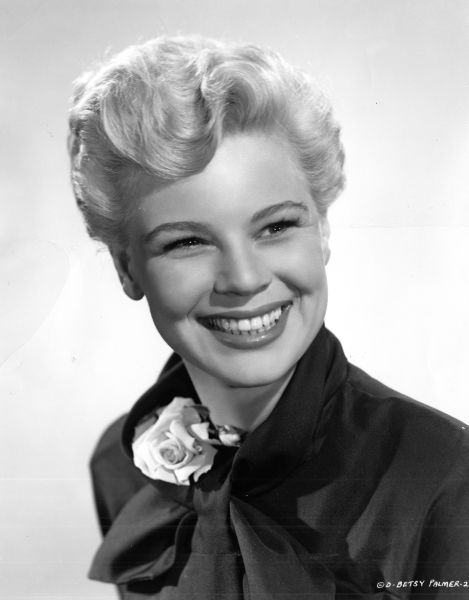
Betsy Palmer simply needed funds for a new car when she accepted the role of Jason Voorhees’s demented mother in the wildly successful slasher flick, Friday the 13th (1980). Reading the script, she realized it wasn’t exactly Shakespeare. “I never expected that anyone would see that darn thing,” she recalls. Nonetheless, her performance brought her a measure of fame that she had not before enjoyed. (In fact, she was nominated for a Golden Rasberry Award for Worst Supporting Actress). Asked about her “accidental” association with the horror genre, she remarks, “I love it. It’s exposed me to a whole new generation that didn’t know I existed.”

Though movie buffs remember her for this role, Palmer had performed for decades in a variety of productions, on film, television and stage. She acted alongside Jack Lemmon, James Cagney and Henry Fonda in Mister Roberts (1955); she appeared with Joan Crawford in Queen Bee (1955) and Tyrone Power and Maureen O’Sullivan in The Long Gray Line (1955). She was a panelist on the game show, I’ve Got a Secret, and appeared twice on the cover of TV Guide. She also acted on As the World Turns, The Love Boat and Knots Landing. In 1964 she recorded “Betsy’s Fashion Notebook,” an album featuring her cosmetic tips; and in 1969 she won the “Straw Hat Award” for her starring performance in the theatrical production of The Prime of Miss Jean Brodie. However, her life swerved from its familiar patterns when, returning home after a stint as Nora in Ibsen’s A Doll’s House, she decided to end her 19-year marriage to New York gynecologist Dr. Vincent J. Merendino. “We married each other for the wrong reasons,” she said. “I married a doctor and he married an actress.” She turned her life over to God and experienced a new peace. “It was as though God welcomed me home. I began to see it was alright for God to take over.” She and Merendino had one daughter, Melissa.

Aside from show business, Palmer served on the Greater New York Advisory Board of the Salvation Army. A formal commendation from the Army acknowledges “…her active commitment of time, talent and resources to aid those in need in the New York area…” and “…her warmth of personality and grace, which has made her a standout in all phases of the entertainment industry…”

“Breezy” Betsy Palmer, ever gracious, offers this advice: “Instead of worrying about what other people think, don’t try to act, just be who you are from moment to moment. Give 100% of yourself, and if that’s not enough for someone that’s judging you, at least you have the integrity of knowing that you’ve done the best you can.” In 1985 she visited her high school in East Chicago, Indiana, her hometown. The mayor proclaimed it “Betsy Palmer Day” and offered her the key to the city.

Palmer’s papers (SC-28), comprising correspondence, scrapbooks, newsclippings and photos, are housed at Wheaton College Special Collections.


Seeing through the eye

Anyone who has read Malcolm Muggeridge extensively will be familiar with the recurring themes which he tended to call on, either in articles, speeches or books. The clear favorite was the rather overused quote from Blake, making the distinction between seeing with and seeing through the eye. Another was describing himself as a vendor of words, just as St. Augustine had done. But of course, another recurring theme was gargoyles and steeples.

Let’s think of the steeple and the gargoyle. The steeple is this beautiful thing reaching up into the sky admitting as it were, its own inadequacy–attempting something utterly impossible–to climb to heaven through a steeple. The gargoyle is this little man grinning and laughing at the absurd behaviour of men on earth, and those two things both built into this building to the glory of God… [The gargoyle] is laughing at the inadequacy of man, the pretensions of man, the absolute preposterous gap–disparity–between his aspirations and his performance, which is the eternal comedy of human life. It will be so until the end of time you see…Mystical ecstasy and laughter are the two great delights of living, and saints and clowns their purveyors, the only two categories of human being who can be relied on to tell the truth; hence, steeples and gargoyles side by side on the great cathedrals. ………. (Interview with William F. Buckley “Firing Line” television show, 1978)

One of the results of the Muggeridge Rediscovered conference in 2003 was the inception of the Malcolm Muggeridge Society. Formed on the 100th anniversary of Malcolm Muggeridge’s birth, the Society seeks to provide a focus for all worldwide who have a continuing interest in his life as journalist, author, broadcaster, soldier-spy and Christian apologist. The many mentions of Gargoyles, either by Muggeridge himself or in the writing of others about him, explain the aptness of the title for the mouthpiece of the Society, The Gargoyle.

Gargoyles have been around for thousands of years, some of the earliest known forms of gargoyle have been found in ancient Roman and Greek ruins. Originally fabricated in terra-cotta, later figures were carved of wood, yet a complete shift to stone took place by the 13th century. The term gargoyle is a contraction from the Latin gurgulio and the Old French gargouille, sharing an obvious root with the English word gargle, and means “throat”. Gargoyles were originally intended as waterspouts and drains to keep rain water from running down the walls of buildings and damaging the foundations. Projecting out from the roof or parapet, they served to throw the water from the gutter clear.

Malcolm MuggeridgeThe adoption of Muggeridge as a modern gargoyle was not in stone, the work of a skilled stonemason, but in caricature, the work of the famous cartoonist, Wally Fawkes, better known as Trog. It is extraordinary that the depiction of Malcolm Muggeridge as a gargoyle in ink reached a vastly larger audience than would ever be achieved by one of stone. The depiction was very apt and appropriate given Muggeridge’s fascination with gargoyles and his desire to identify himself with them so frequently in his writing and broadcasts.

It remains to be seen whether a more permanent Muggeridge gargoyle is ever commissioned, carved in stone and affixed to a building for future generations to gaze at in awe and wonder. A Muggeridgean gargoyle could perhaps make an interesting addition to Broadcasting House, London, home of the BBC. He could look down with amusement and “told you so” resignation at the fine mess broadcasters get themselves into.

Perhaps his presence there is needed as a constant reminder of his prophesies and dire predictions. In “Christ and the Media”, now republished, he lamented the falling standards of taste and the departure of the BBC from maintaining and expounding Christian moral values.

Excerpted from David Williams’ “Les Gargouilles de Dijon” and “Gargoyles — a chip off the old block” editor of The Gargoyle publication of the Malcolm Muggeridge Society.

The Malcolm Muggeridge Papers are available to researchers at the Wheaton College Archives & Special Collections.

Movie Madness

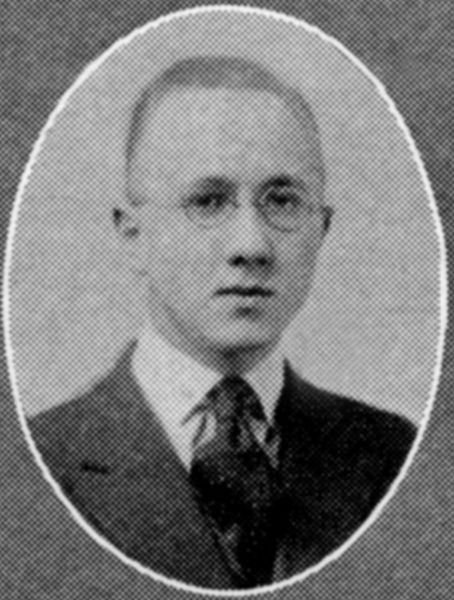
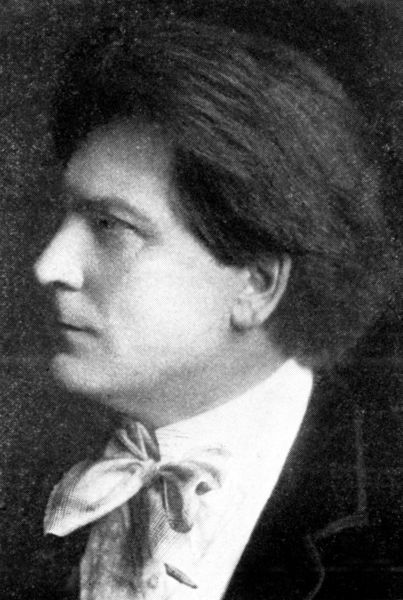
William “Willy” Kuntze, former Dean of the Conservatory of Music at Wheaton College, was a man of tremendous musical gifts, enjoying an international reputation for his compositions and solo performances. Graduating in 1891 from Kullak Conservatory in Berlin, studying under Kullak and L.E. Bach, he served as Conductor of the Chicago Teachers’ Union from 1898 to 1906, during which time he also served as Instructor in the Piano Department of Balatka Musical College. From 1906 to 1909 he was in Concert and Lyceum Work. During the early 1920s, Kuntze acted as Director of the School of Music at the University of New York, as well as Instructor of Pipe Organ and Piano at Wheaton College.

Kuntze in 1904 married a former student, Mary O’Neil Morrison, granddaughter of Jesse Wheaton, one of the city’s founders. Mary taught piano, serving with her husband at Wheaton College, and attended the Methodist Church. She died in 1964, collapsing beside the piano while living with Mr. and Mrs. Edgar Bundy at 310 W. Evergreen, the home built by Jesse in 1838.

To supplement a rather meagre income, Kuntze lent his extraordinary talent to various local gigs, not all evangelical. For instance, he served as organist and choirmaster for Temple Beth-El in Chicago. On a more secular note, he played for the cinema in downtown Wheaton, employed part-time as the accompanying organist, providing stirring background music as dramatic black and white images flashed over the screen. Unfortunately for him, film attendance for staff, faculty and students was forbidden by the college, which viewed this activity as injurious to the soul and unworthy of consecrated Christians. Learning of Kuntze’s moonlighting, Dr. Charles Blanchard, after some administrative deliberation, sent this June 1st, 1925, note to the renowned musician:

My Dear Dr. Kuntze:

Professor Green has notified me of your decision respecting the movies. I was hoping that you might decide to stay with the college rather than with them. But he tells me that your decision is to remain with them. Of course, you are the party that has to make the decision. I found no difference of opinion in our Executive Committee. All of them felt that it would not do for the college to be tied up with things like the movies. If you can see your way clear to do that, that is a matter for you to decide.

With best regards, I am sincerely yours, Charles A. Blanchard (dictated by President Blanchard, signed in his absence)

Since Dr. Kuntze is not listed among the faculty after 1925, it is assumed that he presented his decision to President Blanchard. He died in the mid 1930s. The William Kuntze collection (SC-70), comprising his collection of music, opera histories and composer biographies is housed at Wheaton College Special Collections.

On My Mind – Lyle Dorsett

Twenty years ago, the Wheaton Alumni magazine began a series of articles in which Wheaton faculty told about their thinking, their research, or their favorite books and people. Former Professor of Christian Educational Ministries and Evangelism Lyle Dorsett (who taught at Wheaton from 1983-2005) was featured in the Winter 1993 issue.

When I was a teenager, the father of my best friend used to sing a song that included these lines:

……………Well I might have gone fishin’,
……………but I got to thinkin’ it over,
……………and the road to the river,
……………is a mighty long way.
……………It must be the season,
……………no rhyme or no reason,
……………just takin’ it easy,
……………it’s my lazy day.

Today my mind is filled with gratitude. Why? It could be the season. As I write, leaves of rich yellow, red, and golden hues are falling all over campus. The football Crusaders played again yesterday and won rather handily. Turkey, pumpkin, and cornstalk decorations adorn the offices and dormitories. ‘Tis the season to be thankful.

But my gratitude has a reason that goes much deeper and way beyond the season. It is tied up in being a part of the Wheaton College community.

Mary and I and our son, Michael, came to Wheaton from Colorado in the summer of 1983. Looking back over ten years here stirs my heart with gratitude. I am thankful for numerous things some far too personal to set forth here. On the other hand, there are several causes for gratitude that are on my mind, and I feel constrained to share them with the extended Wheaton College family.

First of all, I am grateful for colleagues on the faculty and staff–true brothers and sisters in Christ who encourage me, pray for and with me, bear my burdens, and hold me accountable. I am also thankful for those seldom-noticed heroes and heroines who keep the buildings so clean and the grounds well groomed.

Besides colleagues on the faculty and staff, students fill my heart with joy. I realize it is fashionable nowadays to bemoan the fall of America in particular the morals of our young people. Quite frankly, Mary and I–thanks to our Wheaton College experience–feel hopeful rather than concerned. In my office I have a large map of the world on the wall. This map is covered with red pins that pierce scores of cities and countries on every continent but Antarctica. Each pin represents a place where at least one, but often many, former students work in vocational missions and ministry.

I am grateful to God for raising up SO many students out of Wheaton College to work in the great harvest He has prepared. I am also grateful to these former students for responding to God’s call on their lives.

In addition to these who work directly with the harvest, there is another group of alumni that warm my spirit. These are the women and men who have not been called to serve in vocational ministry or missions, yet are giving sacrificially to support their friends who have been called to go. Mary and I feel a deep sense of gratitude to those people, who for one reason or another, have stayed at home but feel a marked sense of responsibility to assist their former classmates who are doing yeoman service on the front lines.

Recently, Mary and I have become deeply involved in a new mission agency, Christ for Children International, designed to minister to children in Latin America. CFCI has yet to celebrate its second birthday, but already there are eleven missionaries serving in two cities in Mexico. Of those eleven, ten are Wheaton College graduates. Because of our daily involvement with this agency, we have seen first-hand how Wheaton students and alumni are giving sacrificially to make this work possible. They also comprise a prayer network that has undergirded the work and enabled it to go forward.

Finally, I am grateful for the chapel services we hold three days each week. It is in chapel where we meet together and learn who needs prayer and a burden shared. Together we join to sing praises to our Lord Jesus Christ, for it was in his name that Wheaton College was built, and it is in his name that we go forth to advance his kingdom.

Yes, I am grateful. And much more than the season makes me this way.

———-
Lyle W. Dorsett received his Ph.D. from the University of Missouri and for several years taught in state and private universities. He came to Wheaton College in 1983 to become Director of the Marion E. Wade Center. He was involved with the Billy Graham Center’s Institute of Evangelism and in 1991 was appointed as Professor of Educational Ministries and Evangelism in the Christian Education & Educational Ministries department. He has also authored numerous books and articles including biographies of Billy Sunday, E.M. Bounds; Joy Davidman (wife of C.S. Lewis), D.L. Moody, and A.W. Tozer. Since 2005 he has been the Billy Graham Professor of Evangelism at Beeson Divinity School and Pastor at Christ the King Anglican Church in Birmingham, Alabama.

On My Mind – Ruth Bamford

Twenty years ago, the Wheaton Alumni magazine began a series of articles in which Wheaton faculty told about their thinking, their research, or their favorite books and people. Former Dean of Students Ruth Bamford (who worked at Wheaton from 1970-1994) was featured in the December 1991/January 1992 issue.
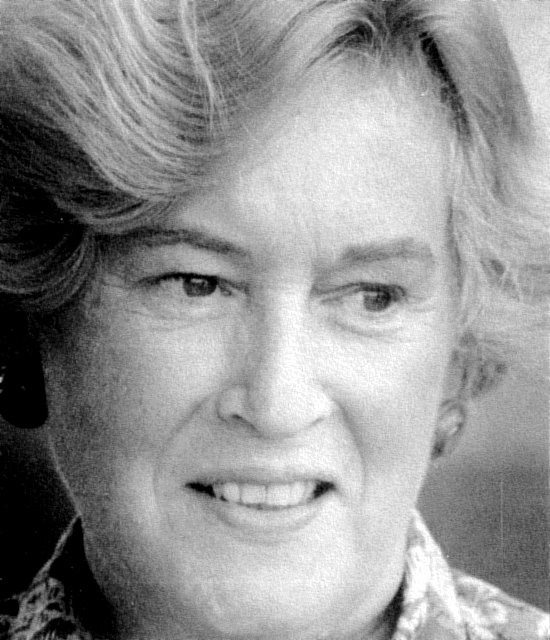
Ruth BamfordOften I find myself thinking about how hard students at Wheaton work. It is no wonder they look forward to days off and holidays just like the rest of us. While their lives are often very exciting, they are also tough and tiring as well.

It’s like this: Most students have a part-time job. They spend anywhere from 4 to 30 hours a week at work. A full course load means 12 to 15 hours of lecture and lab in addition to the multiple hours spent preparing for daily written assignments, tests, and papers. Remember “all-nighters?” They are still a popular way for students to squeeze everything they can into the day and night. On top of all this, many students are involved in a weekly outreach or ministry, which takes all or part of an evening.

All this activity not being enough, most students place a high value on relationships and spend a lot of time talking, playing, praying, falling in love, and out, and making up!

Summer does not even bring relief from busy schedules. There are summer jobs to be had, summer youth programs to lead, and plans for life after college to be made.

Will there ever he a time in their lives when there is more opportunity for enriching experiences?

I am often asked how students have changed over the years.

Taking an outward glance, students today are much more affected by our culture than they have been in years past. Popular music and clothes fashions change every six months or so and are much more casual, Students’ dress fluctuates anywhere from conservative to funky or downright weird. Except for freshmen, most students have access to a car. Everyone has a favorite TV show.

Taking a deeper look, the “sins of the fathers” are affecting these young people. Some are torn emotionally as a result of divorce, abuse, and addiction within their families. They are also dealing with tough issues in the classroom and in their relationships including: environmental ethics, equality for women and minorities, hunger for two-thirds of our world, economic recession for most of the world, and popular views of sexuality that are ungodly. (For those of you interested in understanding how our popular culture has affected our youth, I recommend that you read Dancing in the Dark. (Schultze, Anker, Bratt, et.al. Grand Rapids: Eerdmans, 1991).

From an educational standpoint, students coming in today certainly know a great deal more of what is going on in the world than we did, and a significant number of them have been overseas. Computer literacy is as important today as knowledge of a foreign language. Students at Wheaton today are both bright and culturally aware.

They are also, however, much more individualistic. Except for required chapel services where we enjoy regular worship together, all-school events draw much smaller numbers than in years past. On the other hand, these students have a heart for God, and often put us to shame with their zeal for evangelism and their excitement for reaching out to those less fortunate than they are. An exception to the general rule: recently the Gospel Choir, 80 strong, led an evening of exciting worship with almost 2000 in attendance.

What do I think of today’s students? Frankly, I’m impressed. They are extremely creative and energetic. Granted, there are varying degrees of personal maturity, but overall their commitment to the Lordship of Christ is very strong.

They can be very critical of the way decisions are made. Many students would like to see the “no dancing” rule changed, but despite this, they show restraint, honesty, and thoughtfulness in how they approach this issue. They have good ideas, and expect to be treated with fairness and integrity.

Being an administrator has its ups and downs–mostly ups, however. We love these students. They are God’s gift to us, and to each other. We learn from them the idealism and hope that still believes that individuals and groups with commitment can make a difference in this world. They keep us on our toes as they question us and look to us for models of the ethics and commitment to the Lordship of Christ that we espouse.

———-

Following graduation from Wheaton, Ruth taught public school music in Detroit, Michigan. After earning her master’s degree in administrative services front Michigan State University, she accepted a position as counselor in charge of student activities at West Suburban Hospital School of Nursing. After ten years at West Sub, Ruth was invited by Dr. Henry Nelson, former vice president of student development, to become Associate Dean of Students at Wheaton College. For the last 19 years, Ruth has coached, supervised, trained, assisted, counseled, and befriended thousands of Wheaton College students.

Transcribing Nature

Sarah Nutting's art class, 1890

Dr. Charles Blanchard’s eloquent, undated address to a graduating art class demonstrates Wheaton College’s commitment to artistic endeavor solidly grounded in the principles of the Christian faith.

“Young ladies of the class graduating in art: I have been requested by your principal and yourselves to preside on this occasion, and to hand to you these testimonials of your patience, industry and ability in your chosen profession. It is with pleasure that I comply with your request. The artist is the transcriber of nature. In sculpture, graphic representation and colors, she reproduces the forms of beauty which in the heaven above and on the earth below God has provided for the enjoyment of his rational creatures. The artist, if her aim be lofty, her ambition pure from the taint of selfishness, is one of the world’s most highly honored workers. The names of Praxetiles, Zeuxis, Raphael, Angelo, Da Vinci, Rubens and Andora will, through all the ages to come, as through the ages past and in the living present, stand aside the names of those men who in military life or in council halls or in the sacred desks have been honored servants of God and honest workers among men. For you also there is a place not, perhaps, so prominent, but certainly as worthy in this great field of human life. That you will faithfully perform your appointed duty we have we have reason to hope from the manner in which you have for these years past walked before us, and handing to you as I do the diplomas of the institution, testifying your completion of the course which you have pursued, I do so with gladness and hope and wishes for your highest prosperity and widest usefulness.”

Emily Gardiner Neal

Agnostic journalist Emily Gardiner Neal did not intend to attend the Episcopal church that evening. Though Christianity offered a fine ethical code, she really had other things to do. But a friend needed a ride, so she stayed for the service. That night she observed congregants who seemed to be expecting something from God, whether an answer to prayer or a physical healing. In fact, the reality of the healings prompted her to investigate further. Studying case after case of Christians who received a recuperative touch from God, Neal was finally persuaded of its reality – though she had not yet converted to the faith. However, she observed a distinct inner luminosity flooding the faces of these humble believers. “It was my noting of this phenomena, again and again,” she writes, “which was to lead me to believe.” In other words, charismatic healings were a direct manifestation of the Holy Spirit. To her logical mind this was simply the evidence of a living God. Her move to faith was a gradual acceptance rather than a sudden, impulsive decision. With all her intellectual convictions satisfied, “I was ready at last to confess a living God and his only begotten son, Jesus Christ, who was sent to redeem the world.”

Now her career entered a new phase. She functioned not only as a reporter, but she occasionally taught in churches, addressing matters involving the healing ministry. Eventually Neal documented her experiences and reflections, penning such titles as A Reporter Finds God and God Can Heal You Now. Frequently invited to speak, she soon found herself on the other side of the rail, ministering God’s healing power through the laying on of hands. Her third title, The Lord is Our Healer, addresses questions sent by her readers. Her fourth book, In the Midst of Life, discusses the death of her husband and the meaning of death for Christian people. Her fifth, Where There’s Smoke, chronicles her experiences as a missioner during the troubled ’60s. Continuing her wide traveling, writing and speaking, Neal encouraged Christians of all denominations to regularly attend sacramental and healing opportunities through liturgical services. Not wanting to place undo emphasis on the miraculous, Neal urges, “…that the primary purpose and ultimate goal of these missions is not simply to achieve physical well-being, but to bring individuals to a closer relationship with God.”

In 1987 the Episcopal Healing Ministry was established, with Neal serving as its first president, declaring “…that the healing ministry of our Lord Jesus Christ may be taught, proclaimed and practiced under authority of the church universal throughout the world.” Emily Gardiner Neal died in 1989. Her papers (SC-197), are housed at Wheaton College Special Collections.

On My Mind – Lynn Cooper

Twenty years ago, the Wheaton Alumni magazine began a series of articles in which Wheaton faculty told about their thinking, their research, or their favorite books and people. Professor of Communication Lynn Cooper (who has taught at Wheaton since 1978) was featured in the Autumn 1993 issue.

One of the challenges facing educators today is the management of multicultural institutions. This summer I attended the Christian College Consortium conference on campus, along with staff from Bethel, Greenville, Taylor, and Trinity, to discuss strategies for implementing diversity in the curriculum. One often-overlooked strategy we discussed for fostering community in the midst of change was mentoring.

There’s nothing new or magical about the practice of mentoring. In Homer’s classic story, Mentor served as role model, counselor, and teacher to the young Telemachus, who became Mentor’s apprentice, disciple, and student. In modern terms, mentoring is a natural pairing between individuals. Mentors are older and experienced sponsors who take younger members of the organization under their wing and encourage as well as support their progress. The advantages of the mentoring experience is particularly important for both females and culturally diverse students who often face personal and social barriers to achievement.

While most of the research has focused on people in work organizations, the effects of mentoring and role models in learning environments are equally important. “Natural” mentoring which can develop between faculty and students provides opportunity for greater interaction and encourages intelligent, resourceful, and motivated students. However, the findings related to faculty who serve as mentors are varied and sometimes contradictory in terms of their importance to students. For a number of reasons, faculty will not always make the best mentors.

The trend in many colleges and universities is to use “planned” mentoring programs which incorporate faculty as well as alumni, staff, and administrators. Planned mentoring programs help students succeed while in school, focus academic and career goals, and get started once out of college.

Planned mentoring programs are especially valuable for culturally diverse students, Having opportunities to have someone edit papers, interpret institutional norms and jargon, or provide a respected opinion in situations requiring mediation increase the student’s chance for success. Implied in mentoring is a concerted effort to make our campus a place where students learn to emulate Christ. There is a commitment, not to a program, a principle, or a quota. Instead, mentoring implies a commitment to people and a desire to see them succeed.

At Columbia University, alumni are asked to serve as mentors at the beginning of the school year. The Alumni Office matches students and mentors according to their expressed preferences. Although the program lasts a year, the mentors and students decide how often they want to get together. The mentoring program at Lake Forest College matches alumni with students according to shared career interests. There is regular contact from the institution for feedback from participating students. Other than a kick-off and final celebration meeting, the mentor-student contacts are determined by the individual’s needs. At Bell Haven College, students are nominated by professors based on their Christian commitment, their G.P.A., and their need for guidance. The mentors must be successful Christian professionals from the community and local churches who volunteer to take on a protege in their field. This program lasts one semester and requires a minimum of four meetings.

My job as teacher is greatly enhanced by alumni who have been willing to serve as role models and mentors. This last year, my students were able to listen to Dan Balow ’78, Corinne Cruver ’92, Bill Seitz ’77, Ted Harro ’89, Kris Rubow ’89, Deborah Williams Duncan ’87, and Jane Nelson Hensel ’84, along with other visitors from the community. Sandi Londal ’92 and Virginia Blackwell M.A. ’92 arranged to have 29 students visit their corporate employer. Julie Schwemin Garnache ’90 took time to have dinner with a student considering a communications major. Tara Barnett Van Dyke ’91 interviewed graduates for job opportunities in urban ministry. Leslie Nunn ’87 provided another internship for a student, and Julie Lee Logan ’93 helped research the mentor programs reported in this article. There are so many others who have routinely answered questions and given information through the Career Development Center’s Alumni Network, fortuitous encounters, or personal pleas from college departments. Wheaton College is blessed with talented and generous alumni.

As Wheaton College strives to become a more diverse community we need to encourage these new representatives of Christ’s kingdom. Mentoring is effective in helping underrepresented individuals succeed in unfamiliar environments. An emphasis on interpersonal interaction, cooperative problem-solving, multicultural understanding, and institutional commitment creates a learning climate in which diversity is not only valued, but expected.

———-
Dr. Lynn Cooper has taught courses in public speaking, group dynamics, organizational communication, interpersonal communication, leadership, as well as, gender/diversity and communication during her tenure at Wheaton. Her professional interests include: applied communication research, managerial listening, decision-making and problem-solving, team building, and conflict management. Her research involves quantitative, qualitative, and applied communication research in the areas of organizational listening competency and small group dynamics.

Miss Julia

The following obituary for Miss Julia Blanchard and the accompanying eulogy from her funeral service, delivered by V.R. Edman, appear in the July/August, 1959, Wheaton Alumni magazine.

Julia E. BlanchardServing actively in the Wheaton College Library, Miss Julia Blanchard started in 1908 as assistant librarian, and then in 1915 was named Librarian. At the time of her retirement in 1948 she was made a professor emeritus and granted the honorary degree “Doctor of Letters” and appointed the College Archivist. Most Wheaton alumni, with the possible exception of those in recent classes, knew “Miss Julia,” as she was affectionately called by her host of friends. Julia Eleanor Blanchard was born in Wheaton, August 7, 1878. She was the daughter of Dr. Charles Albert Blanchard and Margaret Ellen Milligan Blanchard, and one of the five children of that happy family. She was the granddaughter of Dr. Jonathan Blanchard, the first president of Wheaton and her father served for more than forty years as the second president of the College. Until a few months prior to her death, “Miss Julia” made the old Blanchard House at 623 Howard Street her residence. She died May 6, 1959, at the Geneva Community Hospital where she had been confined during the last months of her illness. The funeral service for Miss Julia was held in the College Church of Christ, of which she had been an active member for many years. Though not planned that way, the funeral service was most appropriate for a librarian who for so many years handled and loved books. From the hymnbook organist Reginald Gerig played and Elbert Dresser sang the favorite hymns of Miss Julia. Her pastor, Dr. L.P. McClenny, read from God’s book portions of Scripture that were the foundation of her faith as well as a source of comfort to all attending. Her former pastor, now College chaplain, Dr. Evan Welsh, spoke beautifully of “The Book of Remembrance” (Malachi 3:16), of them who “feared the Lord and spake often to one another.” President Dr. V. Raymond Edman then brought his message of comfort and hope on “The End of the Chapter.” In another tribute, Prexy had this to say, “To us who knew her these many years, Miss Julia herself was like a splendid book: clear type, bond paper and the best contents.”

“The End of the Chapter” delivered by Dr. V. Raymond Edman

The conclusion of a chapter is not necessarily the ending of the book, unless it is the very best chapter. We have come to the first chapter in the history of the College with the homegoing of Julia Eleanor Blanchard. What a glorious chapter it has been, and how significant that it coincides with the dawning of our Centennial Year. The chapter began a hundred years ago in almost idyllic simplicity. Upon invitation from friends and from trustees of Illinois Institute, Jonathan Blanchard came to the little village of Wheaton on this wind-swept, relatively treeless prairie in 1859 to confer upon the founding of the College, which project was accomplished during the following year. This century-long chapter has been marked by struggles, by strength of character on the part of administration and faculty; and has been crowned with success. It has had its times of deep testing and tears but the outcome thereof has been triumph. There has been prayer with patience, faith with fortitude, consecration with courage, dedication in education with devotion to the Lord Jesus Christ. Like the tall elms and the broad maples that adorn its campus, the College has put its roots deep into the heart of God and spread its branches far afield in the earth. The chapter of this century that now closes is spanned by the Blanchards: Jonathan who founded the College and led it for twenty-two years; Charles Albert who carried it forward in days of difficulty or delight for another forty-four years; and concludes with the passing of Miss Julia who had been our librarian for nearly half a century. Miss Julia was always a great delight and encouragement to me. Again and again she told me of her grandfather and father, and when I would report to her an answer to prayer for the College or the provision of new buildings she would say, “Father would be thankful to know the continued blessings of the Lord among us here.” If she were here I would want to say to her again: “Miss Julia, the Book which your grandfather and your father believed to be the Word of the living God, we still believe! The Savior, the Lord Jesus Christ, whom they loved and served, we do still love and serve! The great essentials of the Christian faith as defined in our doctrinal platform we do believe wholeheartedly, and without any qualification or mental reservation! The vision of education that is thoroughly Christian which your grandfather and father had, we have, and will continue to make a reality to our children!”

The chapter of Wheaton’s first century closes, and a new one begins. It is our responsibility to read well what has been written in that chapter so that the one we write today and tomorrow, as our Lord tarries, will conform to what which we have learned from our Fathers. The Blanchards have written clearly and cogently, and at the passing of Miss Julia we reaffirm our faithfulness to the trust committed to us. So help us God!