All posts by Keith Call

Alan Loy McGinnis, Friend Indeed

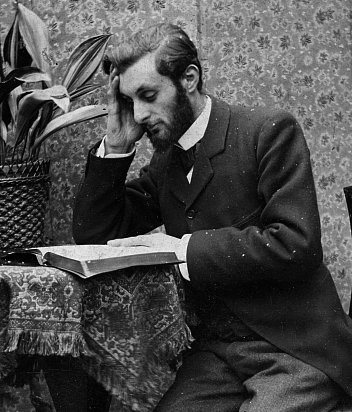
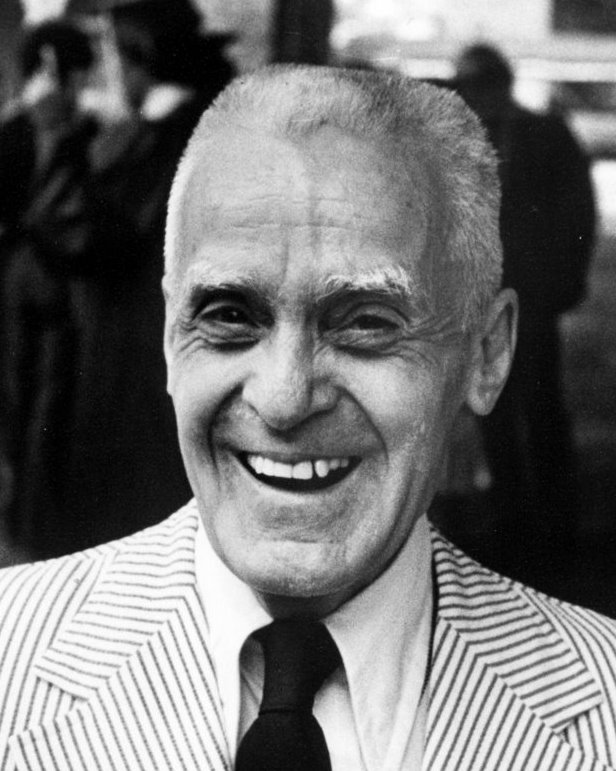
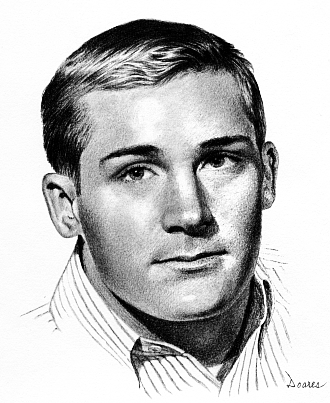
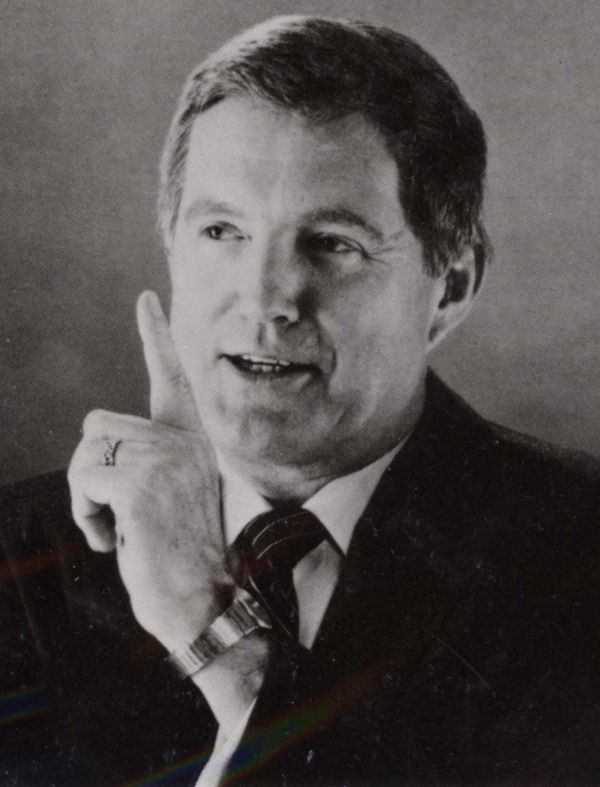
Alan McGinnisIt is prescient that Alan Loy McGinnis, the man who wrote the book on friendship, grew up in a happy, friendly family among the Society of Friends (also known as Quakers), in Friendswood, Texas. Accepting Christ at age eleven during a 1944 camp meeting, McGinnis initially hoped to pursue a business career like his father. But as he matured in the faith he felt the call of God, and consequently enrolled in Bible school. He first attended Bob Jones University, then transferred to Pacific Bible College (now called Asuza Pacific), then moved to Wheaton College, completing his undergraduate courses in 1955. Pacific’s president, Dr. Cornelius Haggard, comments in a 1952 letter to Wheaton’s registrar, Dr. Enock Dyrness, that this bright chap “…is an unusually fine Christian gentleman, thoroughly dependable and trustworthy. Intellectually, he is far above the average…his social abilities indicate outstanding leadership.”

McGinnis continued his studies at Princeton University, Fuller Theological Seminary and Columbia University, acquiring degrees in theology and psychology. Ordained as a pastor in the United Presbyterian denomination, he was also a licensed marriage, child and family counselor. Tragedy erupted for him in 1974 when, after serving congregations in New Jersey, Illinois and California, his twenty-year marriage ended. Shattered, he lent serious consideration to his own emotions. “After that experience,” he recalls, “I wanted to learn more about love…I found that the basic principles of friendship were at work in all intimate relationships: children, mate, parents.” His research led to The Friendship Factor (1979), which received the 1980 Campus Life Award as Best Book of the Year in the General Interest Category. Shortly after, McGinnis, certain that everyone has the ability to cultivate meaningful relationships, embarked on the lecture circuit, appearing regularly on radio and television, while also conducting workshops for large churches and motivational seminars for Merrill Lynch, General Motors, IBM, Metropolitan Life and the Marine Corps. Exploring similar themes, he followed-up with The Romance Factor (1982), Bringing Out the Best in People (1985), Confidence (1987), The Power of Optimism (1990) and The Balanced Life (1997), all written within a Christian context, but not explicitly religious in approach. His articles were published in The Saturday Evening Post, Cosmopolitan, Good Housekeeping, Guideposts and Christian Herald.Alan McGinnis
The first edition of The Friendship Factor (revised 2004) sold more than 350,000 copies, and has been translated into Finnish, German, Spanish, Dutch, Chinese and Afrikaans.

In addition to speaking and writing, Dr. Alan Loy McGinnis co-founded and directed Valley Christian Counseling Center in Glendale, California. The clinic attempts to combine the procedures of medicine with the principles of the Christian faith, desiring to heal the whole person, employing techniques pioneered by Dr. Paul Tournier. At the time of his death in 2005 at 72, McGinnis had been married to his second wife, Diane, for 31 years.

The Grass is always greener – Sesquicentennial Snapshot

In his memoirs The Wheaton I Remember, Edward “Coach” Coray (Professor Emeritus and former Executive Director of the Alumni Association) recalls his days as an undergraduate student at Wheaton in the 1920s. He reminisces about his early athletic endeavors and attempts to locate the advertised athletic fields.

Intercollegiate athletics at Wheaton were always fun and in the late teens and early twenties were carried on without the equipment, facilities, or coaching staffs of later years. I lined up for football equipment in my freshman year. By the time my turn came there were only two shoes left, both for the left foot. But they were real football shoes, so I took them gladly and made the best of it. The way I have often told the story, whenever I got in a game I told the quarterback to run all the plays to the left as I couldn’t turn my feet to the right. This isn’t altogether true, however, as I didn’t get into a game my freshman year. Besides shoes I received stockings, pants, and a jersey. Helmets and shoulder pads, if desired, had to be purchased by the individual. Coming from the coal fields of Pennsylvania, I thought I was tough enough to get along without a helmet. After I got a few indentations in the top of my head from cleats, I rounded up enough money for a cheap helmet.

The first day I hit campus I had inquired where the athletic field was. The college catalog had described it as having a football gridiron and a baseball diamond surrounded by a quarter mile track with a 220 yard straightaway. I was directed out Irving Avenue. After walking a few blocks I passed a hayfield with a cow grazing on it. I never did find the athletic field as described in the catalog. I found out later that Lawson Athletic Field and the hayfield were one and the same. The day before football practice started a farmer was hired to mow the grass. The stubble we practiced and played football on was sharper and tougher than the stones and hunks of coal on our high school field back in Pennsylvania.

Max Isaac Reich

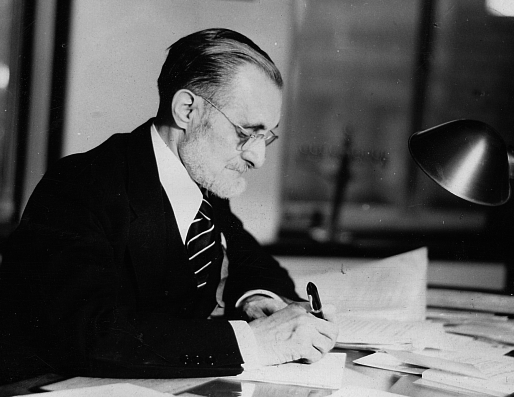
Max ReichAfter the death of his mother, Max Isaac Reich (b. 1867) came with his father to England from Berlin, Germany, to live with his stepmother, an orthodox Jew. Attending synagogue, he early discovered the glory of the LORD and the faithful traditions of his Jewish fathers. But one day he was faced with an intriguing challenge when, employed as a printing apprentice at a London firm, he asked foreman John Crane about the meaning of life. Crane simply responded: “Jesus.” Not long after that Reich heard one of the daughters of William Booth, founder of the Salvation Army, proclaim the love of Jesus, further piquing his ruminations. If that were not enough, D.L. Moody, famed American evangelist, preached forcefully during a London crusade, shaking the entire city. Though Reich was forbidden to attend, he relished the warm, pious atmosphere generated by the revival. At last he realized that Christ is “…the completion and fulfillment of all that was best and holiest and highest in the faith of my beloved people.”

He continues, “…Upon that confession it seemed as if a weight had been lifted off my heart and mind, and I felt as though the Father Himself had come forth and kissed me.” His conversion occurred on a Sabbath evening, Midsummer’s day, 1884. Ostracized by his Jewish friends, he was blessed to have been quickly taken under the tutelage of John Galway McVicker of the Plymouth Brethren, who encouraged his young disciple to study the life of Christ as it is presented in the Gospels. Reich did so with characteristic diligence. Other notable Brethren who provided lasting influence were George Muller, founder of the English orphanage, and Thomas Newberry, editor of the Englishman’s Greek and Hebrew Bible.

Max ReichIn 1886 Reich traveled to New York City to preach, then traversed the U.S. and Canada. Two years later he married Mary, “…a true wife and a good mother.” Moving west they ministered to Native Americans on the frontiers of Arkansas, Oklahoma and Texas. With a family of five sons and four daughters, he moved to Scotland in 1892, then ministered in Europe, gaining proficiency in five languages. Long affiliated with the Plymouth Brethren, Reich in 1904 drifted toward Quaker convictions, eventually associating with the Society of Friends for the remainder of his life, though his sympathies encompassed truths treasured by all Christians. Soon he and Mary became overseers of Beth-shan in North London, a rest home for retired Christian workers. They returned in 1915 to the U.S. where he founded the Hebrew Christian Alliance of America, serving as its president from 1921 to 1927. Similarly in 1937, he founded the Hebrew Christian Alliance in London. In 1930 he joined the extension staff at Moody Bible Institute in Chicago, speaking at Bible conferences, preaching and interpreting prophecy, before joining the faculty as full-time lecturer of Jewish Missions. Instructors and students adored his humble, courtly demeanor and well-stocked mind. In addition to classroom teaching, he wrote articles and devotional verse for The Alliance Weekly (which he also edited) and various journals. These pieces were eventually gathered into books including The Deeper Life and Sweet Singer of Israel. As editor he occasionally published pieces by pastor A.W. Tozer and V. Raymond Edman, president of Wheaton College. Wheaton College conferred to Reich an honorary degree in 1936. After a distinguished fifteen-year career at MBI, he died in 1945 following an operation. He is buried beside a Friends Meeting House near his home in Pennsylvania.

Max Isaac Reich’s papers (SC-91), comprising his Bible, diaries, photographs, sermon notes, verse and journals are archived at Wheaton College Special Collections.

Highway to Heaven – Sesquicentennial snapshot

One of my most memorable experiences of the power of our Lord’s prayer [in John 17] happened on a county road in Colorado. Olena Mae and I seldom pick up hitchhikers. We’ve heard too many sad reports of strangers doing harm. But like many rules, we sometimes make exceptions. The night before we had finished an intensive Bible conference at Winding River Ranch near Grand Lake. It had been a good week, a full one, and we were both anxious to be on our way for a few days of vacation. We left a little later than planned, but at last we were rolling down the highway–just at the right moment to spot a man thumbing a ride. He was in his middle years, clean shaven, wearing tattered jeans and carrying only a brown paper sack. Both of us felt we should stop, so I pulled the car over and invited him to ride with us. Olena Mae slid over to make room.

“What is your name, sir?” I asked, “and where are you from?” Without hesitating, the stranger answered, “I’m Orville Pratt, from Carmel, Indiana, near Indianapolis.” “Do you have a family?” “Oh yes, a wife and two married children. My son lives in Indianapolis, and my daughter in Wheaton, Illinois.” “Wheaton! Did you say Wheaton?” “Yes,” the man continued. “Her name is Mary Wilson, just north of Wheaton in Carol Stream.” We were amazed to find our hometown mentioned by this traveler in Colorado. “But where are you headed?” I asked him. “Can’t tell you, ’cause I don’t know myself,” Orville answered. “Maybe Steamboat Springs, maybe Australia.” Our curiosity obviously aroused, we pressed for more of his story. “Does your family know about this?” I asked. “No. I walked off my job last week and didn’t tell anyone where I was going. I’m part owner of a manufacturing business. We make outdoor tool sheds. It’s a good business. . . ,” he said, and his voice trailed off. Olena Mae and I sat quietly for a moment. Gently I proceeded. “Do you have a church home in Carmel?” “I did. A good church, too. I’ve been a deacon and an elder there–but I’m not fit to go to church anymore.” With care I ventured, “Why do you say that?”

“My daughter Mary lost her boy, a four-year-old lad. I loved him. He had a heart problem, and the specialist made a mistake. I cannot forgive that doctor, so I’m in no condition to go to church any more. It’s too much, I can’t face it.” Our hitchhiker friend was crying now. I assured him of our deep concern and more important, of God’s great love for him. We urged him to return to his wife and home, but Orville chose to get out of the car when we turned south for the Redstone Inn. We left him there–a lonely, heartbroken man–thumbing for another ride west. Our drive to the Inn was filled with prayer. Within minutes of our arrival, Olena Mae was on the phone. “You don’t know me,” she told the voice on the other end, “but my husband and I are traveling in Colorado. Earlier this afternoon we picked up your father… “Yes, yes, I know,” Mary Wilson interrupted. “He called an hour ago. He’s coming home!” Not long after we returned to Wheaton, Orville called to thank us for our simple advice and reminders of God’s care. He wanted us to visit him, and since I was to speak in Indianapolis at an alumni chapter in the next few weeks, we arranged to spend an evening in the Pratt home. They welcomed us warmly. The next morning, a Sunday, the four of us attended their church, a warm, evangelical fellowship. After church and a delightful dinner together, Orville and I went to the cemetery where his little grandson was buried. I prayed there for Orville and his loved one, and assured him of the promised resurrection and reunion. God was there with arms around us. Later, back at his home, we all thanked God that our paths had crossed on that Colorado highway. A chance meeting? “Holy Father,” Jesus prayed, “keep through thine own name those whom thou hast given me, that they may be one, as we are.” Excerpt from Evan Welsh, first chaplain of Wheaton College, A Touch of Heaven Here (Tyndale: Wheaton), 1985.

Model 1873 Springfield “Trapdoor” Rifle

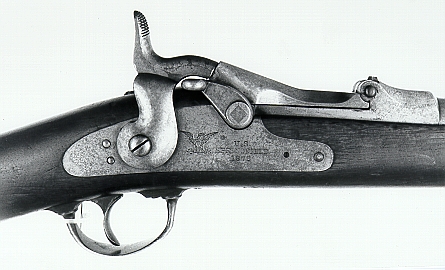
Springfield rifleThe Springfield Trapdoor served as the United States Army’s “warhorse” for at least 20 years. It was held by both sides through the Indian campaigns in the American West and widely used by American troops during the Spanish-American War. The powerful single shot Trapdoor was also quite popular with many famous Indian warriors. Sitting Bull was carrying a Trapdoor Carbine model when he surrendered to American troops at Fort Buford, North Dakota and Geronimo was carrying the same when he was captured by General Miles in Skeleton Canyon, Arizona in 1886.

In the world of weapons and artillery, the Springfield holds the dubious honor of having been carried into the Battle of Little Bighorn by General George A. Custer’s 7th Cavalry on June 25, 1876. While repeating rifles such as the Spencer and Winchester were already available, the U.S. Army chose the Springfield carbine, a single-shot weapon (shorter and more suitable for the cavalry than the rifle) that had to be reloaded after each fired round. Springfield rifle firing mechanismMany officers believed it to be superior because of its considerable accuracy at long ranges. The Springfield Trapdoor came about in 1873, as a redesign of the Army’s Allin Trapdoor rifle. The Springfield was made to hold the new, more powerful .45-70 military cartridge. The .45-caliber cartridge came out of the muzzle at 1,200 feet per second and could make significant hits up to 600 yards. Full-stocked, 32″ barreled rifles as well as half-stocked, short-barreled carbines were produced for the military.

The Wheaton College Archives houses two of these vintage Springfield rifles. They were discovered among articles in Wheaton’s archival collections. With no provenance to speak of, historians can only speculate what dangers of the early Illinois frontier were kept at bay by this intimidating weapon.

Gold-diggers

Charles A. BlanchardIn Paul Bechtel’s Wheaton College: A Heritage Remembered, it is remarked that “Jonathan Blanchard drove himself unsparingly. He traveled, lectured, organized and promoted agencies for social justice, and labored in the cause of Christian higher education. Never a physically robust man, he suffered from chronic dyspepsia and periods of weakness. In the hope that his health might be improved, the trustees granted him a six-month leave of absence in the spring of 1864, enabling him to fulfill a long-held desire to see territory west of the Mississippi. With sixteen-year-old Charles at his side, he set out by covered wagon across Illinois, and pressed on beyond the great river. Since many wagon trains were moving in the same direction, it was easy for father and son to link up with one of them. Having passed through Nebraska, Colorado, Wyoming, Montana, and Idaho, they came finally to Salt Lake City, where the Mormons were building their city and rearing the great temple on the square.”

History’s only records of this grand expedition are the personal letters that Jonathan and Charles wrote home from the frontier. Due to the economic hardships of the time, the promise of gold seemed to add an alluring element to their journey. As an idealistic teenager, young Charlie wrote that he was becoming enamored with pioneer life and proclaimed, “I think it hardly possible to think of going back to Illinois for the remainder of the years I am allotted here on earth.” Obviously, the events of Charles’ life unfolded much differently and he went on to attend Wheaton College and later serve as its second president for the remainder of his life. Below are excerpts from letters written during their journeys out west.

Letter from Charles Blanchard to “Friends at Home” (Platte River. 6/19/1864)

“Some of our boys have found gold here which is in little grains very fine in sand. I heard one say he had made 20 dollars a day mining in no better diggings than these but we must go on until we find a place where we can pick up the pieces for I have got my eye on a place 60 miles this side of Omaha…”

Letter from Jonathan Blanchard to his wife, Mary (Virginia City, Montana. 8/9/1864)

“They have dug down to what they call here ‘pay dirt’ and today or tomorrow expect to try and wash out some gold. But the claim cost little and we expect little more than expenses from it.”

Zeke

Zeke RudolphErwin Paul (Zeke) Rudoph II was a relaxed, vibrant young man of twenty, a student of English literature who also adored sports, particularly baseball. He possessed many friends and much promise. In 1967, after experiencing persistent vision impairment, fatigue and unsteady balance, he consulted his doctor. Enduring one exam after another, Zeke at last received the shocking prognosis. He had developed multiple sclerosis, an incurable disease. In this case, terminal.

A fiercely competitive athlete, he now faced opposition far more threatening than any he had ever encountered on the field. But Zeke held a steady course as he tackled his relentless stalker, first with a measure of frustration and apprehension, then with thanksgiving and confidence, and finally with tranquility, resting faithfully in the triumphant Savior “who hath abolished death” (II Tim 1:10). As Zeke’s stamina steadily diminished, his spiritual strength increased, allowing him to offer comfort to his comforters. With each day moving him closer to eternity, he inspired his family and Wheaton College classmates to deepen their communion with Christ, to assess values and align priorities for the uncertain path ahead.

Surrounded by love and abiding peace, he died quietly at age 21 in Central DuPage Hospital. His pastor, Allyn Sloat of Wheaton Bible Church, performed the funeral. Chaplain Evan Welsh, whose brief visits and wise counsels to the dying boy were like “gentle zephyrs from heaven,” read scripture and commented on the brevity of other sanctified lives: Borden of Yale at 24; Robert Murray M’Cheyne at 29; and Christ himself at 33. The story of Zeke’s brief life and ultimate victory over death is eloquently chronicled by his father, Dr. Erwin Rudolph, in Good-by, My Son (1971). Rudolph, former Professor of English and Chairman of the Division of Languages and Literature at Wheaton College, offers hard-won observations on the nature of affliction. “We do not pretend to understand why God’s time-table differs so markedly from our own. But it was ours which was out of adjustment, not His…I strongly affirm that belief in Divine Providence affords the Christian an undergirding he can ill afford to lose. I also discover that God may personally allow suffering to come upon us for reasons which please Him. When He does, we ought not to demur, for God knows what is best for us.” Rudolph approached his son’s illness as a unique opportunity to serve rather than a hindrance.

John Piper, a student of Erwin Rudolph’s, was struck by the quote, “Zeke called death sweet names.” Underlining that phrase, Piper determined to live life seriously so that when death came upon him he could echo those words, knowing that he had lived well unto Christ.

Rudolph concludes, “To the Christian there is always tomorrow. This hope is based on Christ’s resurrection…Zeke has gone ahead to those green fields of glad service, while we remain to work here a little longer.”

First Fruits — Adeline Eliza Collins

Addie Collins, later in lifeBorn September 19, 1841 in a log cabin in Homer Township near the present Lockport, in Will County, Illinois, Adeline Eliza Collins was the only child of Fredrick and Nancy Mason White Collins. Addie attended Oberlin College in 1858 but transferred to Wheaton because it was nearer home and when she learned that it was open and that women might study there. From materials in the Archives and alumni records it has been established that Addle Collins was Wheaton’s first woman graduate in 1862. Known as “Addie” to her friends and associates she was later to become Principal of the Ladies’ Collegiate Course. When Addie left the principalship in 1865 the young women of the college gave her a set of Browning poems and a letter of appreciation was signed by O.F. Lumry, secretary of the faculty and president, Jonathan Blanchard. Two years later Addie married Henry D. Hatch and lived on a farm near her childhood home. They gave a portion of their land for the building of a Congregational church in which Addie later played the organ and taught a Sunday school class. Henry and Addie had one daughter, Emily Ellen, two grandchildren and two great-grandsons.

Senior Bench

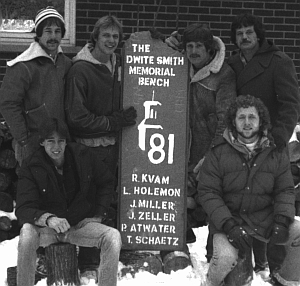
The Senior Bench at Wheaton College is one of the oldest and most legendary rivalries in the school’s 150 year history. According to dusty archives files and whispers of oral tradition, the graduating class of 1912 is believed to have bequeathed a hefty concrete monument to solidify its place in the annals of her alma mater.

Senior BenchAnchored in front of Blanchard Hall and first photographed for the 1934 Tower yearbook, it was intended for seniors only, but through the decades envious undergraduates soon coveted it’s prized status. A great rivalry began in 1949 when juniors from the class of 1950 stole the top two foot by seven foot section while the seniors where away on their annual retreat.

Many ingenious, inventive, and sometimes illegal methods have been employed by rival classes in their passionate pursuit of securing this nearly 800-pound stone slab. During the 1950s an exact replica was cast by the class of 1957 in a fool hearty attempt to trick the other classes, yet to no avail. The class of 1959 is heralded for one of the most amazing bench showings as it suspended the bench from a helicopter and flew it over the Homecoming football game.

Another infamous bench caper was hatched when seniors from the class of 1963 traveled by train to Colorado for their yearly retreat. As the train stopped at Mendota, Illinois the bench was shown by the juniors who had arrived by car to taunt the seniors. A melee ensued and a scheduled thirty second stop erupted into a two hour delay as railroad agents, local police and the Interstate Commerce Commission were all summoned to sort out this violation of federal law.

The current rules surrounding possession of the bench were enacted after seniors from the class of 1966 showed the bench in chapel and were greeted by slashed tires and cut ignition wires in the parking lot. The bench was confiscated by the Dean of Students and mysteriously destroyed while under lock and key. A replica soon surfaced and the tradition was resurrected. Henceforth all bench activity has been limited to the junior and senior classes, the bench must remain within a fifteen-mile radius of Blanchard Hall, half of the bench must be visible at all times, and the bench must be shown twice a year and never in chapel.

In subsequent decades the passionate rivalry has ebbed and flowed as soil analysis kits, airplanes, wiretaps, high-speed car chases, Billy Graham, wishing wells, and even eBay, have all been employed in pursuit of this elusive prize for all Wheaton students.

12 Days of Christmas (Archives-style)

In the waning days of 1858, Jonathan Blanchard, then president of Knox College, wrote home to his wife Mary. Among matters pertaining to the raising of the children, city taxes and sending a turkey to him, Jonathan broaches the topic of Christmas. According to Clyde Kilby’s account in Minority of One, “as long as he lived Jonathan Blanchard believed [Christmas] to be a pagan and Popish festival and [one he] would never recognize.” In his instructions back to the family Blanchard writes, “Maria would please me muchly by denying herself the Christmas frolic because it’s a fool’s day.” In this spirit of foolishness, we counter Jonathan’s ba-humbugs with the College Archives rendition of the “Twelve Days of Christmas.”

On the twelfth day of Christmas
my true love sent to me:
Twelve Trustees Minutes
Eleven Reels of Sports Film
Ten King James Bibles
Nine Centennial Towers
Eight Homecoming Pins
Seven President’s Papers
Six Miles of Shelving
Five Bits of Bench
Four Crusader T-shirts
Three Blanchard Wives
Two Auca Spears
and a Lock of Julia Blanchard’s Hair