Category Archives: Wheaton College Archives

Saint Nicholas

Buswell Library is certainly familiar to staff and students of Wheaton College, but it is relatively unknown that the structure to which it is attached was originally called the Nicholas Building, until expanded in the late 1970s. A portrait and a plaque, until removal in 2006, commemorated the contributions of a man named Robert E. Nicholas.

He was born oldest of eight children on a farm in 1882 in Caledonia, Ontario, Canada. “The village declared no holiday,” he writes, “the whistles did not blow, nor did the church bells ring when it became known that I had made my appearance in a world which already had problems enough.”

Raised among believing Methodist parents, Nicholas early learned the value of hard work as he milked cows, drove horses and plowed soil. After graduating from business college, he visited with an uncle who had attended the 1893 Chicago World Fair. Uncle William confidently stated, “There are a hundred ways of making a living in Chicago.” So Nicholas decided to discover one for himself. Meeting cousins living in the Windy City, Nicholas toured the Art Institute, the Stockyards and the Public Library, accompanied by a warning to avoid the red light district. Eventually he and his friend, George Rogers, using borrowed capital, started a hardware business in Oak Park, Illinois, a small town promising big returns. During this period Nicholas roomed in the home of A.T. Hemingway, General Secretary of the Chicago YMCA and grandfather of Ernest, the novelist. (The attending physician at the birth of Nicholas’ first child was Dr. Clarence Hemingway, Ernest’s father). Nicholas’ store specialized in builders’ hardware for commercial development, and soon he and Rogers enjoyed a sterling reputation among Chicago’s architects and contractors. Nicholas was also instrumental in attracting Loop department stores to establish satellites in Oak Park.
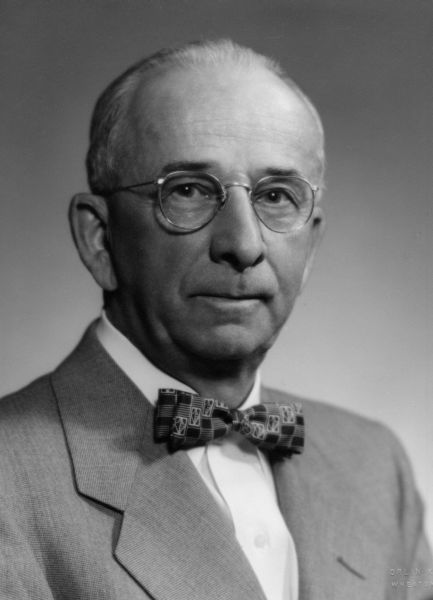
Robert E. NicholasIn addition to local commerce, he influenced community life as a member of the Christian Businessmen’s Committee for Chicago, successfully barring Sunday movies from Oak Park. In 1928 he was invited by Dr. James M. Gray, President of Moody Bible Institute, to join the Board of Trustees of MBI. He was elected, and soon became a member of the Executive and Investment committees. One year later he sold his business to pursue other enterprises, while also joining the Wheaton College Board of Reference. In 1932 he was elected to the Board of Trustees, replacing Fleming H. Revell, D.L. Moody’s brother-in-law, serving as vice-chairmen of the board under Herman A. Fischer. Combining wealth with consecration, Nicholas generously donated funds, usually anonymously, to churches, philanthropic activities and mission agencies. He remarks in his 1962 memoir, Life Has Been Good:

Indeed, I consider among the most rewarding experiences of my life, my association with the presidents, trustees and staff of Wheaton College and Moody Bible Institute. The fine men who comprise the trustee boards and give so freely of their time and means are an inspiration and a blessing. Their leadership, devotion and counsel given in a Christian spirit with independence of viewpoint, but without contention, could well be an example for other Christian organizations. The president of Moody Bible Institute, Dr. William Culbertson, and the president of Wheaton College, Dr. V.R. Edman, are two of the finest men it has been my privilege to know, and my own life has been enriched by working with them. No one could serve actively on the Trustee Boards of Moody Bible Institute and Wheaton College without realizing that the students for whom these institutions are maintained are among the finest in the land.

Nicholas entered unexpected and invigorating spiritual heights when on a Sunday evening his train stalled in Minneapolis. Seeking a church, he wandered downtown until he passed First Baptist, pastored by Dr. W.B. Riley. Stepping in, Nicholas heard the powerful preacher expound on the Second Coming, about which Nicholas knew little. But it was just what he needed. “I realized how hungry I was to hear about the return of the Lord Jesus, now that I had dedicated my life fully to him.”

Dr. Edman devotes to Nicholas a chapter called “The Satisfying Life” in They Found the Secret: Twenty Transformed Lives that Reveal a Touch of Eternity, an examination into the spiritual crisis experienced by prominent Christian men and women. He quotes Nicholas:

By this experience, and by others which have followed, my life has been changed from that of a nominal Christian to one with purpose and convictions. There has been an abiding sense of the Holy Spirit’s presence in my life. He has given me an appetite for the things of God and an appreciation of the Scriptures. In answer to prayer he has given me ability in business, strength under strain, confidence and courage can understand why so many Christians do not have the joy they might have, or do not have overflowing praise in their heart…There must be a full surrender of life to the Savior to have the fullness of the Holy Spirit…

Recognizing his dedicated service, Wheaton College conferred on Robert E. Nicholas an honorary doctorate in 1963, and in 1967 re-named its library, of which he had originally paid all construction costs, after him. He and his wife, Mabel, raised three sons and one daughter. Still appreciative of his good life, he died at 94 in 1977.
Change of Heart

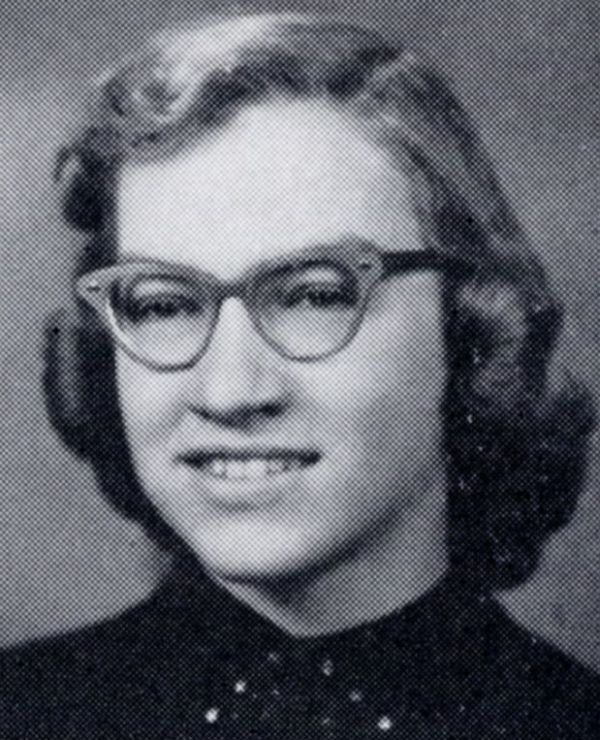
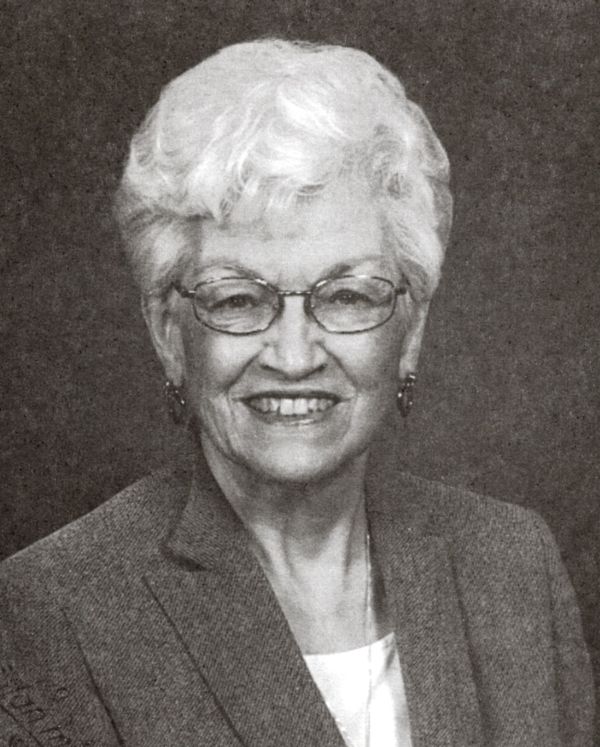
Doris Menzies“Although I am an older person,” begins Doris Dresselhaus Menzies in her memoir, Young At Heart (2007), “I have a much younger heart.” She explains her cryptic remark as the story unfolds.

Born in Decorah, Iowa, in 1932, Doris lived peacefully with her family and worked hard on the farm. At age nine she fully committed to Christ at the local Assemblies of God church. She was baptized in a lake, and shortly thereafter during an evening service received her baptism in the Holy Spirit. In 1951 she enrolled at Wheaton College where she studied elementary education. Because there were no Pentecostal churches in Wheaton at that time, an Assemblies of God campus fellowship provided a venue where Doris could meet students of similar conviction, including her future husband, William Menzies. “Neither of us could imagine the adventures in faith that would be ours when we met at Wheaton College,” he reflects. Later Bill would pen Anointed to Serve (1984), the definitive history of the Assemblies of God.

After their marriage in 1955, Bill and Doris served in various midwestern churches until he was called to teach at Central Bible College in Springfield, Missouri. From there he moved to other teaching positions at home and abroad, until he and Doris were called to be regular missionaries for the Assemblies of God. In 1989 they relocated to the Philippines, where Bill served as president of Asia Pacific Theological Seminary. As he taught and lectured at the school, Doris quietly mingled with the people of Baguio City, personally leading many hungry hearts to Christ. Their lives proceeded busily until one day Doris suffered sharp chest pains, indicating severe cardiac arrest. Transferred to Salt Lake City for specialized care, it was concluded that she required a heart transplant. With that stunning report came the additional bad news that she would need to await a donor. And so for fourteen months she and Bill patiently waited in Salt Lake, until at last it was announced that a heart had been located, belonging to a young man from Oregon who requested that his organs be donated should anything happen to him. Doris MenziesTo the delight of all, the operation was a smashing success. As she writes, “There was thanksgiving and joy in my new heart.”

But Doris was not entirely free of physical affliction. In 2003 she was diagnosed with lymphoma cancer. After an onerous series of chemo and radiation treatments, she lost her strength, appetite and all her hair, but the disease was finally controlled. Her hair has since regrown, and she has regained the weight.

Summing up her eventful life, Doris Menzies expresses her joy: “I have appointments to see my oncology doctor, and also blood tests to send to my heart transplant doctor…I also see my internist, my neurologist, and my foot doctor on a regular basis. But my Great Physician continues to be God Almighty, my Creator and Redeemer. To Him I give all glory for each day!”

Onomasticon arthurianum

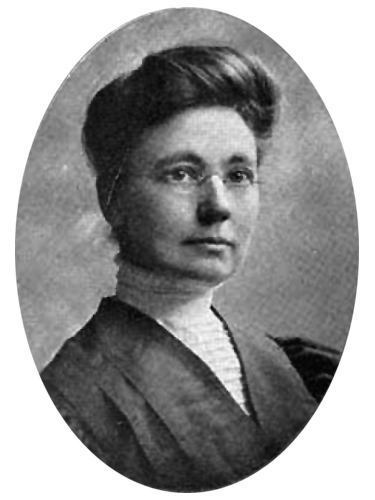
Alma BlountAlma Blount was born in Byron, Illinois on November 29, 1866. She attended local schools and graduated from Byron High School in 1882. Afterward she studied at Wheaton College where she stayed on as an instructor of English after her graduation in 1886. While teaching she continued to take classes and earned a second bachelors degree, the second being a bachelor of science, received in 1890. She left Wheaton in 1893 to pursue further studies at Cornell University where she received her Ph.D. in 1896. Her doctoral work was on “The Original Dialect of the Anglo-Saxon Poem Andreas.” As if this wasn’t enough she also studied at Radcliffe College earning nearly enough credits to receive a masters degree. She also traveled abroad studying at the British Museum, Bibliotheque Nationale and the Sorbonne. She was a member of Kappa Delta Pi, an international education honor society.

Blount taught at the Wheaton Academy, Lawrence University (1900-1901) and finished her teaching career at Michigan State Normal College, which became Eastern Michigan University. She contributed to several books in English and Literature, such as the four volume Progressive Studies in English and Intensive Studies in American Literature. She authored over a dozen articles in English and Education journals.

Being from small, parochial, Wheaton College did not cause Miss Blount to shrink from a significant scholarly task, one that some felt could not be undertaken at all by an individual. Her life work was “Onomasticon Arthurianum” that was never published. Housed at the Widener Library at Harvard, this massive work sought to be a comprehensive index of personal and place names in the medieval Arthurian romance lexicon. During her lifetime her work was considered the only guide to the sizable body of Arthurian literature In English and was regarded as one stage, the first, in an effort to compile a fuller Onomasticon Arthurianum. Blount’s index was focused upon more than two hundred Arthurian works in ten languages and she recorded her data on nearly twenty thousand slips. When she recognized that she would not be able to complete her work she deposited it at Harvard so that it would profit other scholars. There was professional disappointment at it not being completed, but also an understanding of the magnitude of the task, especially for one person. Despite the serious limitations of her index, Miss Blount deserves the gratitude of Arthurians, not only because she was a pioneer in a work of almost unexampled size and complexity but also because the concrete results of her labors afford a guide for developing a sounder plan of procedure. Her experience made it clear that any new attempt to achieve the Onomasticon must be carried out in several stages or units.

After reaching the rank of full professor Blount retired in 1935. After a lengthy, debilitating illness, she died in Tempe, Arizona on December 2, 1950.

May the Mind of Christ My Savior

Dr. Hudson T. Armerding’s A Word to the Wise (Tyndale 1980) was published to bring wisdom and encouragement to fellow Christians everywhere. In the following excerpt he shares some of the wisdom gathered over fifteen years as college president:

Singing hymns together has long been traditional for both congregation and graduates at the annual Baccalaureate Service of Wheaton College. However, in 1968 the printed program carried the words of the beautiful hymn written by Kate B. Wilkinson entitled “May the Mind of Christ My Savior.” Then serving in his third year as president of the college, Dr. Hudson T. Armerding selected this hymn because of the meaningful content of its words for all committed believers –but particularly for young people, who have so much potential. Every year since then, with concurrence by the officers of each graduating class, this hymn has appeared in the printed program for the [Commencement Services]…These are the words that have stirred the hearts of many on those occasions…

May the mind of Christ, my Savior,
Live in me from day to day,
By His love and pow’r controlling
All I do and say.

May the Word of God dwell richly
In my heart from hour to hour,
So that all may see I triumph
Only through His pow’r.

May the peace of God, my Father,
Rule my life in everything,
That I may he calm to comfort
Sick and sorrowing.

May the love of Jesus fill me,
As the waters fill the sea;
Him exalting, self abasing,
This is victory.

May I run the race before me,
Strong and brave to face the foe,
Looking only unto Jesus
As I onward go.

May His beauty rest upon me
As I seek the lost to win,
And may they forget the channel,
Seeing only Him. Amen.

I’m in the money….

As was common in newly established and struggling institutions of higher education in the mid-nineteenth century, the Illinois Institute sold perpetual scholarships. Like the Methodist DePauw, the Illinois Institute sold these scholarships for $100. Not without some sort of restrictions, such as only lineal descendants of the purchaser and only one-at-a-time, these scholarships became a boondoggle and then a financial drain on the school.

According to a report drafted by The Committee on Wheaton College that was established to investigate Congregational involvement in the institute, the Illinois Institute had sold fifty perpetual scholarships for $100 and twenty-five eighteen year scholarships had been sold. DePauw had sold twelve year scholarships for $50 and six year scholarships for $30. As of 2010 Northwestern University still honored perpetual scholarships with their website noting that roughly 400 students had utilized this benefit.

Of the fifty perpetual scholarships sold prior to the Committee’s report, the Illinois Institute was able to cancel twenty-three and convert them into five years of tuition. Of the twenty-five eighteen year scholarships eleven had been converted.

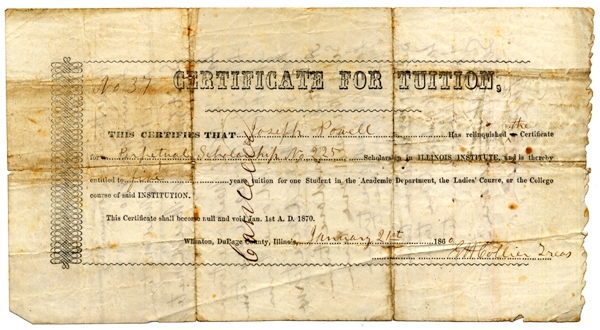
Certificate for Tuition

One of the $100 perpetual scholarships had been sold to Joseph Powell, trustee of the Illinois Institute and father of noted explorer John Wesley Powell. Powell, knowing the financial struggles of the Institute, converted his perpetual scholarship (#225) to one that provided five years of tuition, which Powell utilized each term until the scholarship expired in 1864.

Mortimer to the rescue…

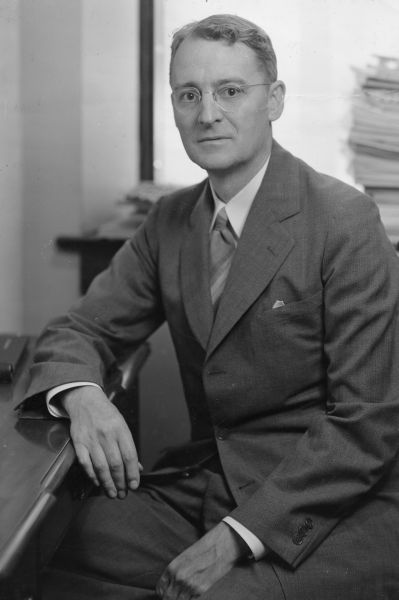
Mortimer B. LaneThe visitor to the second floor of Buswell Memorial Library will spy a sign near the drinking fountain designating an alcove in a short hallway as “Mortimer B. Lane.” Cornered in the quiet byway are the offices of retired professors Gerald Hawthorne and Beatrice Batson. However, before Lane was a place he was a person, hired in 1937 to teach political science and economics. An admirable instructor, he enjoyed relationships beyond the classroom. Dr. Joseph MacKnight (’43) fondly remembers in an oral interview when Lane and his wife, Mary, opened their spacious dining room every Sunday evening, serving cold meats and refreshments to Wheaton College students strolling home from church. MacKnight’s classmate, Billy Graham, also recalls:

As for my homesickness, the Lane family soon came to my rescue. Dr. Mortimer B. Lane taught courses in government and economics at the college. Before that, when he was in government service, he and his wife and their seven children lived in Switzerland. Quite well-off, they entertained students in their large, comfortable Victorian home near the campus. They welcomed me as one of their own. Early on Sunday mornings, as Plymouth Brethren, they hosted a small local assembly in their house. I began to attend that quiet communion service with students from other churches.

As a Brethren adherent accustomed to restrained worship, Lane sent a friendly letter in 1939 to then-president Dr. J. Oliver Buswell, requesting that certain matters be observed during chapel services. Specifically, he objected to 1) prize giving; 2) concerts, unless dedicated to sacred music; 3) frivolous announcements; and 4) clapping. As well, he disliked the presence of “aesthetic decorations” such as candles, widely used by literary societies, since these trappings are used by the Roman Catholic Church to “appeal to the senses instead of to the mind and heart.” Buswell offers a sensible response:

My own background leads me to enjoy the worship atmosphere of a Gospel tabernacle type of meeting in which enthusiastic music, occasional handclapping, and a good many other informal things have a part in worship. I also enjoy the dignified Protestant service of the old orthodox churches in which a considerable amount of art is employed. I think the aesthetic appeal of music and art cannot correctly be set in antithesis to an appeal to the soul, but may correctly be characterized as an appeal to the soul through the musical and artistic sense the Lord has given us.

Celebrating a fruitful 14-year season of mentoring and hospitality, Mortimer B. Lane resigned in 1951 and relocated with his family to Long Beach, Mississippi. Here they opened “Southern States Bible and Christian Supplies,” selling and distributing scripture, Sunday School material, hymnbooks and recordings. Responding to Lane’s departure, Dr. Edman, fourth president of Wheaton College, expressed “deep regret” but also “…sincere appreciation for all that you and your lovely family have meant to us…You have been a pillar of strength to me personally and to all the College, a source of joy and encouragement to many young hearts, especially to those who have come from distant parts of the world.” As a parting gift, Edman and the faculty presented him with a letter case to use for his business. “I don’t need it to remember my associates at Wheaton,” Lane gratefully replies, “but this will make me remember all the more.”

Lane’s Plymouth Brethren assembly, for which he served as an elder, evolved into what is now called Bethany Chapel, situated on the corner of President St. and College Ave. in Wheaton, Illinois. His son, James, later served on the Wheaton College board of trustees.

Samuel Richey Kamm

Each year the campus hosts the Kamm Lecture, a lecture series that dates back nearly three decades and is named after Dr. S. Richey Kamm, a Wheaton College Professor of History, Political Science, and Social Science. For over thirty years, Kamm had a remarkable impact on the lives of many undergraduates. As a teacher of political theory and constitutional history, he stimulated interest in public affairs and encouraged the study and practice of the law. To honor the legacy of this outstanding professor, friends and former students created the Kamm Memorial Fund to support lectures and law-related symposia on campus. Each year the endowed lecture is given on a subject related to jurisprudence by a prominent scholar or practitioner in the legal field. The first annual Kamm Memorial Symposium was held on May 1-2, 1975.

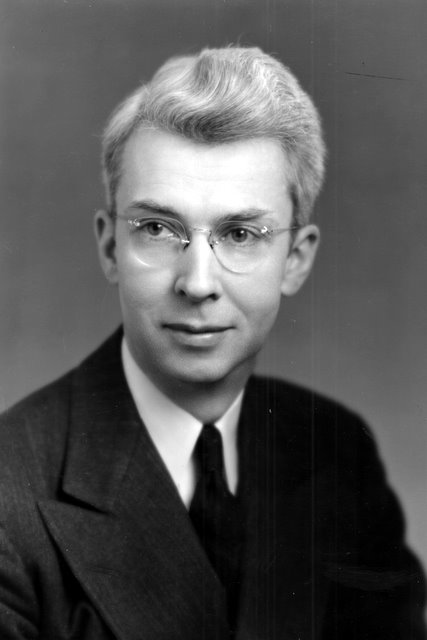
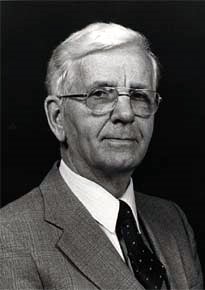
S. Richey KammSamuel Richey Kamm was born in Whitewater, Wisconsin, on July 12, 1903, and grew up in Montfort. He graduated cum laude from Greenville College in 1925 with a major in History and minors in Biology and Greek. Upon graduating, he embarked on his teaching career which would last until he died in 1973. The institutions at which he taught before going to Wheaton were Wessington Springs Junior College (South Dakota), Seattle Pacific College (Washington), Monmouth Junior College (New Jersey), and Haddon Heights High School (New Jersey). While teaching, Dr. Kamm earned an M.A. in History from the University of Michigan and a Ph.D. in American History from the University of Pennsylvania, receiving that honor in 1939. His dissertation entitled, “The Civil War Career of Thomas A. Scott, Vice-President of the Pennsylvania Railroad,” is one illustration of his lifelong interest in railroads.

In 1940, Dr. Kamm began teaching at Wheaton College. By 1943, he had advanced from Assistant Professor to full Professor. His major interest was teaching, especially in Constitutional and Diplomatic American history, but he also found time for numerous other involvements both on and off campus. He was an active member of the Commission on Social Action of the National Association of Evangelicals, and he served as Public School Board President. On campus he served on many committees, among them Educational Policies and Curriculum, and Centennial Historical Projects.

S. Richey KammDuring the 1959-1960 year, Dr. Kamm had the opportunity to be a Fulbright lecturer in Dacca, East Pakistan (Bangladesh). He had the distinguished honor of inaugurating a course in American History at Whitworth College, Seattle Pacific College, and Greenville College. His recognition beyond Wheaton was evidenced by honorary degrees from Greenvile, Seattle Pacific and Whitworth Colleges. He retired from the Wheaton College faculty in May 1973. He was in route to Westmont College (California) to take up duties as a guest professor when he died of a heart attack on August 29, 1973.

Many things can be said of Dr. Kamm. He was an outstanding speaker, a brilliant scholar, and dedicated to all he undertook. Moreover, Dr. Kamm was a favorite classroom teacher and a well-loved man. He inspired many students to combine Christianity with their vocation, and many went into the government service with that in mind. Perhaps the highest tribute can be made by repeating what one of Dr. Kamm’s friends said when he died…

He was one of God’s gentlemen, a rare Christian who fused graciousness and scholarship in a beautiful way.

The Samuel Richey Kamm Papers detail the life and thirty-four year career of a Wheaton College Professor of History, Political Science, and Social Science. The collection also shows his work as a member of the local public school board, which he served as president. The papers are categorized according to biographical, professional and civic involvement. The professional material covers various workshops, committees, seminars and departmental/institutional matters, in addition to material relating to the City of Wheaton and the history of Illinois. Hundreds of file cards, featuring a vast array of research topics such as history, political science, culture, bibliographies, foreign affairs and education, are contained in five boxes and one small metal cabinet. They are available to researchers in the Wheaton College (IL) Archives & Special Collections.

Wheaton’s own NAACP

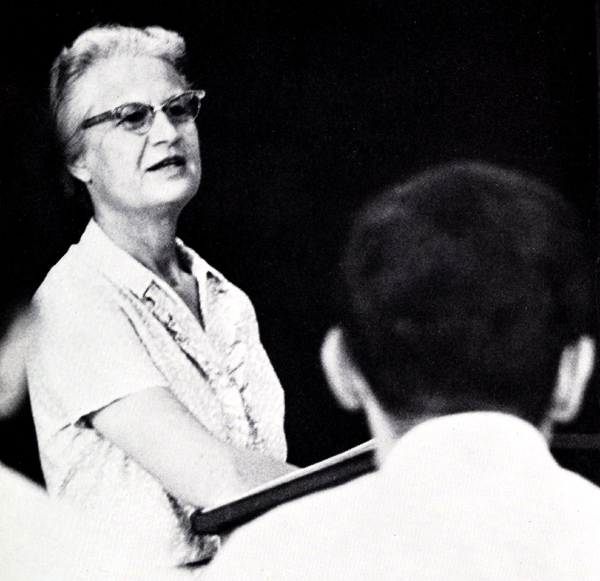
In 1965, coinciding with the increased work of the Civil Rights Movement nationally and the Selma marches, Wheaton College students established a campus chapter of the National Association for the Advancement of Colored People (NAACP). It was established with the purpose of seeking “an end to racial discrimination in areas of public life, to increase student understanding of racial relations through active participation in such projects as surveys and tutorial programs, and to foster student involvement in community projects…” according to Howard Hess, the initial chairman of the chapter. To quell fears, this student-controlled chapter clearly communicated the autonomy that it possessed, as well as noting the jurisdiction of the college Student Council (similar to that of the Young Republicans and the socially-minded Clapham Society). The first faculty advisor to the group, which at its beginning numbered around 30, was Dr. Lamberta Voget, professor of sociology. Voget pioneered the teaching of Sociology at Wheaton College, joining the faculty in 1935. She was know for her urban sociology immersion trips to Chicago, and was popular amongst the students. She retired in 1975.

Lamberta VogetBy 1968, after Wheaton’s NAACP chapter dissolved for lack of interest, according to Paul Bechtel’s Wheaton College: a heritage remembered, Voget had little patience for Evangelicalism’s minimal engagement in racial reconciliation. In an article in Young Life’s Focus on Youth, titled “The Nature of Prejudice,” by Dr. Lamberta Voget, expressed her thoughts on some methods used by white evangelicals. She said, “We will not break down prejudice by having group discussions, by conducting surveys, or appointing, committees.” Voget went on further to call evangelicals to repentance, Christians “must recognize prejudice for the sin that it is. We must let the true word of God reveal our own sickness and we must submit to the healing that comes to those who confront the Jesus Christ of whom the scriptures speak. We must be deeply and genuinely reconciled with or racial brothers and sisters, the consequence of our willingness to change and be changed.” Giving further direction, she said, “To accept a black person here and there is not enough. The whole black community must be accepted. Our prejudices will not disappear merely by having colored people become clean and educated. We will still reject them: we have for a long, long time. They are tired, tired, tired of talk.”

The history of race relations at Wheaton College, of which this NAACP chapter is just a part, awaits fuller treatment and could easily fill a lengthy volume.

The Serialized Adventures of Roy J. Snell

Certain writers are famous for one book, such as Harper Lee and To Kill a Mockingbird or Margaret Mitchell and Gone with the Wind. Others generate saleable wordage as easily as sneezing. For instance, Erle Stanley Gardner, creator of unbeatable lawyer Perry Mason, positioned multiple typewriters around his office and simply switched from one manuscript to another. His colleague, English crime novelist John Creasey, wrote 562 novels; and Barbara Cartland published an astonishing 723 Regency romances, aside from several non-fiction titles.

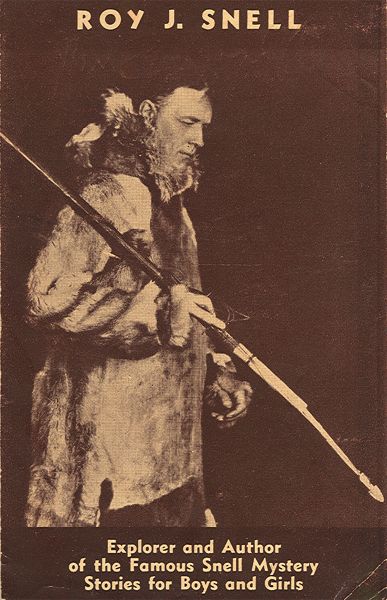
In the world of juvenile fiction, Roy J. Snell wrote somewhat less but lived as large, trekking as hazardously as Ernest Hemingway or Jack London. “Did you ever eat walrus meat?” asked advertisements for Snell’s books. “Did you ever drive a dog team, travel in a boat made of skins, or sleep in a bag?” Gosh, no! replied generations of wide-eyed boys and girls starved for vicarious thrills. But Snell did all this and more, tackling perilous frontiers – deserts, seas and tropics – with gusto and humor. Born in 1880 at Laddonia, Missouri, he moved with his family to northern Illinois where he worked his way through Wheaton Academy and Wheaton College. Graduating in 1906, he enrolled for one year at Harvard Divinity School, then matriculated to Chicago Theological seminary, leaving with his degree in 1916. He received his MA from the University of Chicago in 1917. Moving south he served first as pastor of a small church in rural Illinois, then as principal of the Black Mountain Academy in Evarts, Kentucky, living among the feuding families of the hills. As a missionary he relocated to the Behring Straits, Alaska, where heSnell book cover rode herd, directing 350 Eskimos and 1500 Wales reindeer. At one point he sailed the Arctic Ocean in a boat made of skins. Desiring to write the Great American Novel, Snell settled for adventure and mystery tales, drawing from his vast storehouse of experience. His work began rolling from the presses at breakneck speed as he often composed 2000 words per hour without an outline. He sold his first manuscript, Little White Fox and His Arctic Friends, in 1916. Many of his novels were first serialized in Boy’s Life, American Boy and The Youth’s Companion. During WW I he spent six months in France with the YMCA, serving as a mechanic. Here he met missionary Lucille Ziegler, whom he married in 1920. During their honeymoon he wrote a book. After the war Snell returned to Wheaton, residing with his family at 705 N. Wheaton Ave. For 20 years during the holidays he worked incognito at Marshall Field’s and Carson’s in Chicago, hand-selling his own titles over-the-counter to unsuspecting customers. Further bolstering book and magazine sales, he lectured annually in Detroit schools about Eskimo ways, struggling into a deerskin parka while demonstrating how to throw harpoons, or how to catch a tame monkey gone wild. “A pan of glue is substituted for water,” he explained. “Mr. Monk washes his face with glue. His eyes are stuck fast together and he is easily caught.”

By the end of his life Snell had published 82 novels, with over two million sold. “I also wrote something like a thousand Sunday School stories for the David C. Cook Pub. Co. of Elgin,” he matter-of-factly informs the Wheaton College Alumni Association in a 1959 update. Later that year he suffered chest pains and was taken to DuPage Memorial Hospital in Elmhurst. Four days later his earthly odyssey ended. “I’ve had my day,” Snell once told a reporter, “and got out of it exactly what I wanted.” He was survived by his wife and three sons.

Frank Dyrness

On March 22, 2010, Dr. Nicholas Perrin, Associate Professor of New Testament, gave his inaugural lecture as holder of the Franklin S. Dyrness Chair of Biblical Studies entitled “The Bible from Westminster to Muenster: The Interface between Theological Confession and Free Historical Inquiry.” Dr. Perrin holds degrees from The Johns Hopkins University (B.A. 1986), Covenant Theological Seminary (M.Div. 1994), and Marquette University (Ph.D. 2001). His dissertation was “Thomas and Tatian: The Relationship between the Gospel of Thomas and the Diatessaron.”

Quarryville Presbyterian Retirement HomeThe history of the Franklin Dyrness Chair dates back nearly a quarter-century to 1987 when the Class of ’27 alumnus and founder of the Quarryville Presbyterian Retirement Community contributed funds toward an endowed chair of biblical studies. C. Hassell Bullock was named the first distinguished chair until his retirement in 2009 after thirty-six years as Professor of Old Testament.

Franklin Seth Dyrness was born May 16, 1905 in Chicago, Illinois to Norwegian-born parents who immigrated to the United States. He attended Wheaton College was president of the Beltionian Literary Society, junior class president and played football; he graduated in 1927. He briefly taught science at the Wheaton Academy and was married to fellow classmate, Dorothy Rasmussen in 1931. They would eventually raise five children. Dyrness also graduated from Westminster Theological Seminary in 1931 and pastored the Chestnut Level Presbyterian Church in Quarryville, PA through 1936. He was then installed as the first pastor of an independent Presbyterian Church in later to become Faith Orthodox Presbyterian Church, and then as Faith Reformed Presbyterian Church. He served as pastor for twenty-six years until 1963. Under this pastorate the church helped organize the Quarryville Bible Conference Association for the purpose of organizing summer camps and conferences for all ages. Dyrness served as its president for five years, and executive director for thirty-seven years. In 1948, he and a group of associates founded the Quarryville Presbyterian Home. Franklin held the position of president from 1948 until he retired in December 1985 at eighty-one years old. His honors include election to the Wheaton College Honor Society and the conferring of the degree Doctor of Divinity by Wheaton in its centennial year of 1960. On the 60th anniversary of his graduation from Wheaton, the Home and the College contributed funds to establish the Franklin S. Dyrness Chair of Biblical Studies at Wheaton College.

Surrounded by his family members, Franklin S. Dyrness ’27, D.D. ’60 died June 16, 1990, at the Presbyterian Home he founded in Lancaster County, Pennsylvania. In a letter to the Wheaton College Alumni Association, his son F. Seth, Jr. wrote…

We gathered around his bed and sang some of his favorite hymns for him. As we sang the final verse of ‘Rock of Ages,’ he closed his eyes and went to he with the Lord, It was beautiful and deeply comforting for us as a family. The funeral was a very uplifting time of celebrating God’s abundant faithfulness. Dr. Armerding preached an excellent message challenging us to faithfulness to Christ with eternity’s values in view. We are deeply grateful to God for giving us a father who taught us to put God first in our lives. Together with Mother and Dad, we thank God for the profound impact Wheaton has had on us in nurturing our souls and challenging us to follow Christ.

The Franklin S. Dyrness Papers reside in the Presbyterian Church in America (PCA) Historical Center Archives, St. Louis, Missouri.